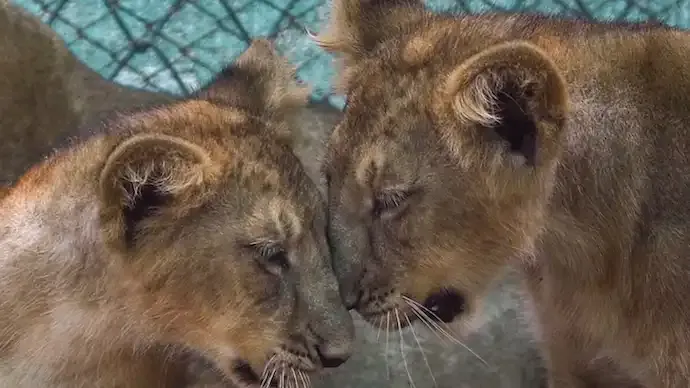
The long-standing demand to relocate Asiatic lions to Kuno National Park gained renewed attention during the visit of President Droupadi Murmu to the wildlife reserve in Madhya Pradesh's Sheopur district.
Members of the Kuno Sangharsh Samiti organized a demonstration and submitted a memorandum urging authorities to implement the long-pending proposal to shift Asiatic lions from Gir National Park to Kuno. The demand has been a subject of discussion for years and remains one of the most significant wildlife conservation issues in India.
The development has once again brought national attention to Kuno's original conservation objectives and its future role in wildlife management.
Protest Held During Presidential Visit
Residents gathered in Sheopur under the banner of the Kuno Sangharsh Samiti to press their demand for lion relocation.
Demonstrators assembled at a public venue, carrying placards and raising slogans in support of bringing Asiatic lions to Kuno National Park. A memorandum outlining their demands was submitted through district authorities for onward communication to the President.
The protest highlighted growing local interest in seeing Kuno fulfill the conservation purpose for which extensive preparations were made over the years.
Kuno's Original Conservation Vision
Kuno National Park has long been associated with plans to establish a second home for Asiatic lions outside Gujarat.
Wildlife experts have historically argued that creating an additional population of Asiatic lions in another location would help safeguard the species against potential threats such as disease outbreaks, natural disasters, or other unforeseen risks affecting a single habitat.
Kuno was identified as a potential relocation site after extensive habitat development and conservation efforts were undertaken over several years.
Villages Relocated for Wildlife Conservation
Supporters of the lion relocation project often point to the significant efforts already undertaken in preparation for the proposal.
Several villages were relocated from within the Kuno landscape as part of long-term conservation planning. Local groups argue that these sacrifices were made with the expectation that the reserve would eventually become a second habitat for Asiatic lions.
Residents continue to cite these historical developments as a reason for moving forward with the original conservation vision.
Economic Benefits Highlighted by Locals
The Kuno Sangharsh Samiti also emphasized the potential economic advantages of introducing Asiatic lions to the region.
According to local representatives, lion relocation could boost tourism, create employment opportunities, and stimulate economic activity across Sheopur and surrounding areas. Wildlife tourism has become an important source of income in several regions of India, and supporters believe Kuno could experience similar benefits.
The committee argued that increased visitor numbers would positively impact local businesses, hospitality services, and transportation sectors.
Conservation Debate Continues
The issue of relocating Asiatic lions has remained a topic of debate among conservationists, policymakers, and wildlife authorities.
Supporters view the move as an important step toward species security and long-term conservation planning. Others emphasize the need for careful ecological assessments and coordination among multiple stakeholders before any relocation takes place.
The matter has also been discussed at various administrative and judicial levels over the years, making it one of India's most closely watched wildlife conservation proposals.
Focus Returns to Kuno's Future
President Murmu's visit has once again drawn attention to Kuno National Park and its evolving role in India's conservation landscape.
The reserve has already gained international recognition for wildlife conservation initiatives and remains an important part of India's efforts to protect endangered species. The renewed demand for Asiatic lion relocation is likely to reignite discussions among policymakers, wildlife experts, and local communities.
As the debate continues, residents of Sheopur remain hopeful that Kuno's long-envisioned role as a potential second home for Asiatic lions will eventually become a reality.
Prev Article
Uttarakhand Gurdwara Standoff Continues as Another Nihang Comes Down From Roof
Next Article
Ram Mandir Donation Row: SIT Probe Puts Champat Rai and Temple Trust Under Scrutiny