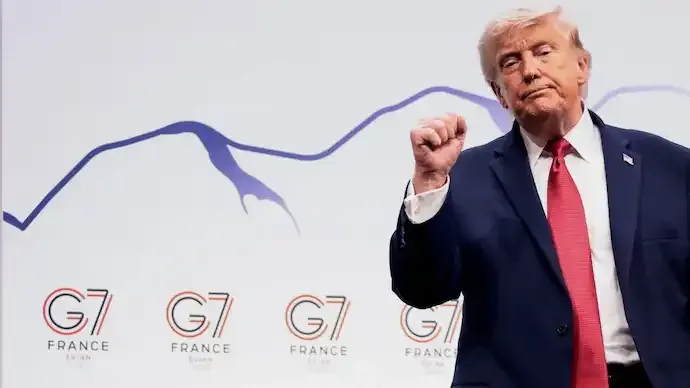
For years, Donald Trump has been one of the most vocal critics of high interest rates, frequently urging the US central bank to lower borrowing costs and support economic growth.
That is why many observers expected tensions to rise after newly appointed Federal Reserve Chair Kevin Warsh decided to leave interest rates unchanged during his first policy meeting in charge.
Instead, Trump surprised many by responding with apparent indifference, brushing off the decision with a simple "whatever" and avoiding the harsh criticism he often directed at previous Fed leadership.
New Fed Chief Delivers Unexpected Message
Kevin Warsh, who assumed leadership of the Federal Reserve last month, concluded his first major policy meeting without announcing any reduction in interest rates.
More significantly, the Federal Reserve suggested that borrowing costs could remain elevated for longer than many investors had anticipated.
According to policymakers, inflation risks remain a concern, and several officials still believe another rate increase could be necessary before the end of the year.
The message was not what financial markets or Trump supporters were hoping to hear.
Why Trump Wanted Lower Rates
Trump has consistently argued that lower interest rates would benefit the US economy.
According to his position, cheaper borrowing costs can:
-
Boost business investment
-
Support consumer spending
-
Encourage housing activity
-
Reduce debt-servicing costs
-
Strengthen economic growth
Throughout his political career, he has frequently pressured Federal Reserve officials to adopt a more accommodative monetary policy.
His criticism of previous central bank leaders often became a major talking point in financial markets.
So Why Didn't Trump React Angrily?
Political and economic analysts believe several factors may explain Trump's unusually restrained response.
Avoiding Conflict With His Own Choice
Unlike previous Federal Reserve leaders whom Trump criticized, Kevin Warsh is widely viewed as a figure aligned with many of the administration's broader economic priorities.
Publicly attacking a Fed chair shortly after supporting his appointment could undermine confidence in the administration's decision.
By avoiding confrontation, Trump may be seeking to preserve credibility while allowing Warsh time to establish his leadership.
Economic Conditions Remain Uncertain
The Federal Reserve continues to face a complex economic environment.
Officials remain concerned about:
-
Inflation persistence
-
Global economic uncertainty
-
Energy market volatility
-
Labor market conditions
-
Geopolitical risks
Given these challenges, Trump may recognize that immediate rate cuts are not politically or economically straightforward.
Federal Reserve Prioritizes Inflation Concerns
The central bank's primary responsibility is maintaining price stability and supporting employment.
Although inflation has moderated from earlier peaks, policymakers remain cautious about declaring victory too soon.
Federal Reserve officials worry that reducing rates prematurely could reignite inflationary pressures and undo progress achieved over recent years.
As a result, maintaining current rates is being viewed as a precautionary measure rather than a sign of economic weakness.
Markets Adjust Expectations
Financial markets closely monitored Warsh's first meeting and his comments regarding future policy.
The decision to keep rates unchanged reinforced expectations that the Federal Reserve will remain cautious in the coming months.
Investors are now paying close attention to:
-
Inflation data
-
Employment reports
-
Economic growth indicators
-
Future Fed communications
Any change in these factors could influence the timing of future rate adjustments.
Political Implications of the Decision
Trump's softer response has generated discussion in political circles.
Some analysts view it as evidence of a more pragmatic approach toward monetary policy, while others believe it reflects confidence that economic conditions may eventually support rate cuts without direct political pressure.
Either way, the reaction marked a noticeable departure from Trump's past confrontations with Federal Reserve leadership.
What Happens Next?
The focus now shifts to upcoming economic data and future Federal Reserve meetings.
If inflation continues to ease, pressure for rate cuts could grow.
However, if price pressures remain elevated, policymakers may continue to prioritize stability over growth concerns.
Kevin Warsh's future decisions will likely play a major role in shaping both economic conditions and political debates heading into the next phase of US policymaking.
Prev Article
Did China Quietly Prevent a Global Oil Crisis? How Beijing's Energy Strategy Helped Stabilise Markets
Next Article
Why Infosys, TCS and HCLTech Shares Are Falling After the Recent Rally