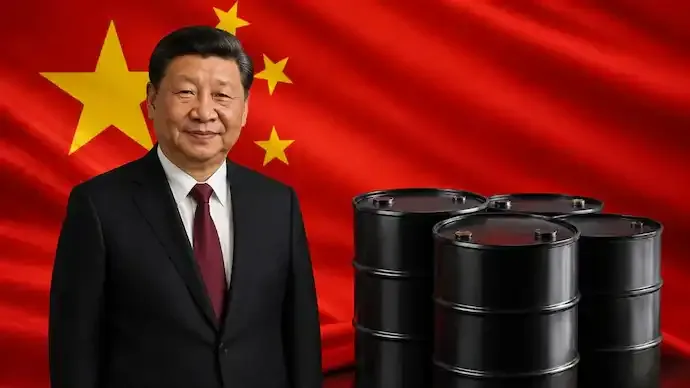
Just weeks ago, fears of a major global energy crisis were spreading across financial markets as tensions involving the United States, Israel and Iran threatened one of the world's most critical oil supply routes.
Analysts warned that any prolonged disruption in the Strait of Hormuz could trigger a sharp spike in crude oil prices, fuel global inflation and slow economic growth across major economies.
Yet despite mounting geopolitical tensions, oil prices remained relatively contained. Some market observers now believe one key factor may have helped prevent a much larger shock: China's energy strategy.
Why the World Feared an Oil Price Surge
The Strait of Hormuz handles roughly one-fifth of the world's oil shipments, making it one of the most important energy corridors on the planet.
Any disruption in the region typically creates fears of:
-
Higher crude oil prices
-
Rising fuel costs
-
Increased inflation
-
Slower economic growth
-
Supply chain disruptions
With tensions escalating in West Asia, traders and policymakers were preparing for significant market turbulence.
However, the worst-case scenario never materialised.
China's Oil Imports Declined
One of the most important developments during the period was China's reduction in crude oil imports.
As the world's largest energy consumer, China has enormous influence over global demand patterns.
By importing less oil than expected, Beijing reduced immediate pressure on international markets at a time when supply concerns were rising.
Lower demand from China effectively helped offset fears of shortages elsewhere in the system.
Strategic Reserves Played a Key Role
China has spent years building extensive strategic petroleum reserves.
These stockpiles allow the country to draw from existing inventories rather than increase purchases during periods of market uncertainty.
Energy analysts suggest that China relied more heavily on stored reserves during the recent geopolitical tensions.
This reduced the need for aggressive buying in international markets, helping prevent additional upward pressure on crude prices.
Alternative Energy Investments Paying Off
China's long-term investment in renewable energy may also have contributed to the stability.
The country has become a global leader in:
-
Solar power
-
Wind energy
-
Electric vehicles
-
Battery storage
-
Clean energy infrastructure
As alternative energy sources account for a larger share of consumption, dependence on imported oil gradually decreases.
This diversification provides Beijing with greater flexibility during periods of global energy uncertainty.
Global Markets Benefit From Reduced Demand Pressure
Energy markets operate on a delicate balance between supply and demand.
Even modest changes in consumption patterns from a major economy such as China can influence global prices.
By limiting additional demand during a period of geopolitical risk, China may have helped stabilize markets and prevent panic buying.
Several analysts believe oil prices could have risen much more sharply if China had increased imports aggressively during the crisis.
Inflation Risks Were Also Reduced
Higher oil prices often translate into broader inflation.
Rising energy costs affect:
-
Transportation
-
Manufacturing
-
Food production
-
Logistics
-
Consumer goods
Because crude prices remained relatively controlled, many economies avoided another major inflationary shock.
This provided relief to central banks already struggling to balance growth and price stability.
China's Energy Strategy Draws Attention
The episode has highlighted how China's energy policies now have global consequences.
Over the past decade, Beijing has focused heavily on:
-
Building strategic reserves
-
Expanding renewable energy capacity
-
Strengthening energy security
-
Diversifying supply sources
These measures were primarily designed to protect China's economy but may also have produced wider benefits for global energy markets.
Not the Only Factor Behind Market Stability
Experts caution that China was not solely responsible for preventing an oil shock.
Other factors also contributed, including:
-
Continued oil production from major exporters
-
Diplomatic efforts to ease tensions
-
Stable shipping operations
-
Improved global energy inventories
However, China's role in moderating demand remains an important part of the overall picture.
A Lesson in Energy Security
The recent episode underscores the growing importance of energy diversification and strategic planning.
Countries that maintain reserves and invest in alternative energy sources are often better positioned to withstand external shocks.
China's approach may increasingly serve as a case study for how large economies can manage energy risks while reducing vulnerability to geopolitical disruptions.
Prev Article
Air India Introduces New Basic Fare on Domestic Flights: What's Included and What's Not
Next Article
Why Trump Shrugged Off Fed Rate Decision After Kevin Warsh Kept Interest Rates Unchanged