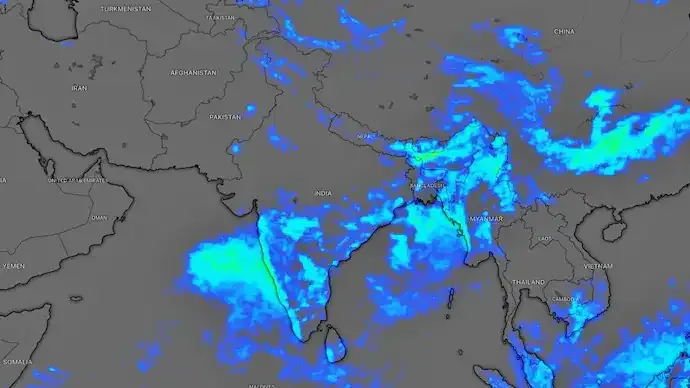
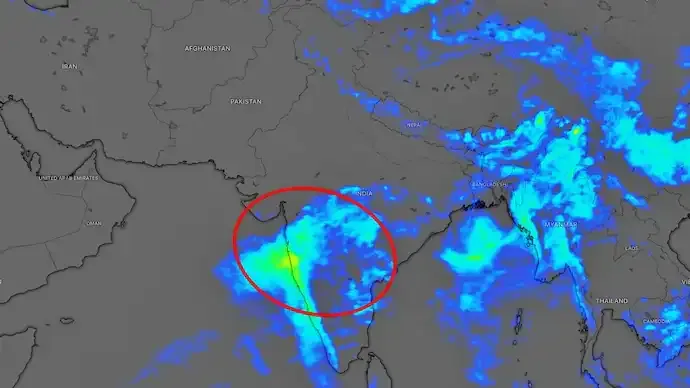
India's southwest monsoon has finally begun advancing again after remaining stalled for nearly two weeks. Moisture-bearing winds from the Arabian Sea have started moving into key regions including Mumbai and parts of Gujarat, bringing renewed hopes for widespread rainfall.
However, meteorologists warn that the revival comes after significant damage has already been done. June 2026 is now being described as one of the driest Junes in modern Indian weather records, with rainfall reportedly running 46 percent below normal levels.
The prolonged dry spell has raised concerns over agriculture, water availability, reservoir levels, and rural livelihoods across several states.
Monsoon Stalled for Nearly Two Weeks
The southwest monsoon normally progresses steadily across the country during June.
This year, however, its advance slowed dramatically after an initial burst of activity. Weather experts observed that monsoon currents weakened, preventing rainfall systems from moving deeper into several regions.
The prolonged pause created unusually dry conditions during a period when much of the country typically receives substantial rainfall.
Rain Finally Returns to Western India
Recent weather developments indicate that monsoon activity is beginning to strengthen once again.
Moisture-rich winds from the Arabian Sea have started reaching Mumbai, surrounding coastal regions, and parts of south Gujarat. Weather agencies expect further advancement of the monsoon over additional areas in the coming days if current atmospheric conditions remain favorable.
The revival could help reduce some of the rainfall deficit during the remainder of the season.
June Rainfall Deficit Reaches 46%
Despite the recent improvement, the cumulative impact of the delay remains severe.
According to weather experts, India has experienced a rainfall shortfall of approximately 46 percent during June. Such a deficit places 2026 among the driest June periods recorded in well over a century.
Meteorologists have described the month as potentially the driest June in around 146 years of available weather records, highlighting the unusual nature of the current season.
Agriculture Faces Growing Pressure
The delayed monsoon has created challenges for farmers across several regions.
June rainfall plays a crucial role in preparing fields and supporting the sowing of major kharif crops such as rice, soybean, cotton, maize, and pulses. Insufficient rainfall during the early monsoon period can delay planting schedules and affect crop productivity.
Agricultural experts are closely monitoring how quickly rainfall normalizes during the coming weeks.
Reservoirs and Water Supplies Under Watch
The rainfall deficit has also raised concerns about water resources.
Lower-than-normal precipitation can affect reservoir storage levels, groundwater recharge, and drinking water availability. Urban areas, rural communities, and irrigation systems all depend heavily on monsoon rainfall to replenish water supplies after the summer season.
Authorities in several states are expected to continue monitoring reservoir conditions closely.
Climate Variability Remains a Concern
Scientists note that extreme weather events and increasing climate variability are making monsoon behavior more difficult to predict.
While a single season cannot be attributed entirely to climate change, researchers have observed growing fluctuations in rainfall patterns, including prolonged dry spells followed by intense precipitation events.
Such variability presents challenges for agriculture, disaster management, and long-term planning.
Can the Monsoon Recover?
Meteorologists emphasize that the monsoon season is far from over.
India receives the majority of its seasonal rainfall between June and September, meaning there is still time for the deficit to narrow if rainfall activity strengthens significantly in July and August. Historically, some monsoon seasons have recovered after weak starts.
However, experts caution that a full recovery becomes more difficult when large deficits accumulate early in the season.
What Lies Ahead
The coming weeks will be critical for determining whether the southwest monsoon can regain momentum.
Farmers, policymakers, businesses, and weather agencies will closely track rainfall patterns as the monsoon advances across the country. While the recent revival offers hope, the unusually dry start to the season has already underscored the importance of timely rainfall for India's economy and food security.
For now, the monsoon appears to be moving again—but the effects of a historically dry June will continue to be felt across many parts of the country.
Prev Article
Europe's Second Heatwave of 2026 Grips England, France and Germany: What's Causing the Extreme Temperatures?
Next Article
Monsoon Revival Brings Rain to Mumbai as India Faces 46% Rainfall Deficit