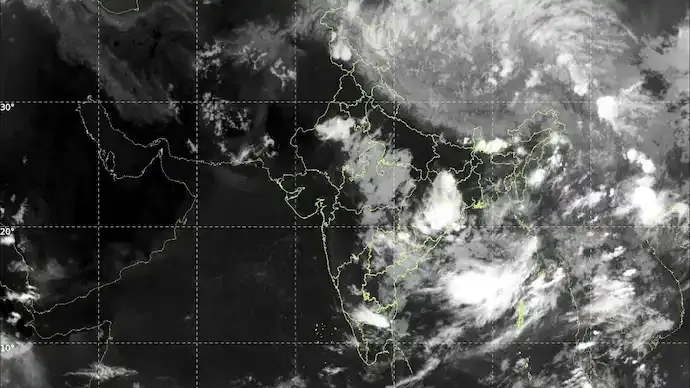
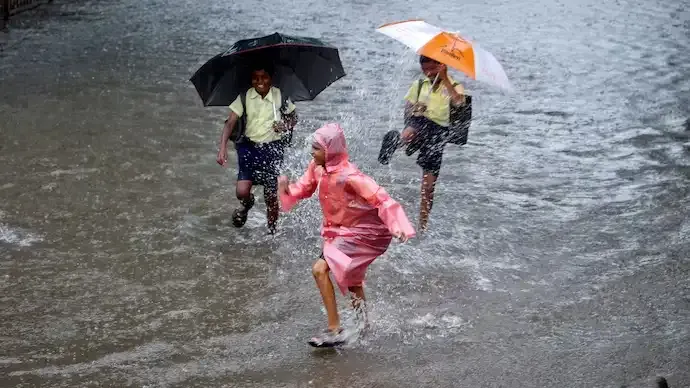
India's southwest monsoon has lost momentum, leading to a significant rainfall shortfall across the country. According to the latest data from the India Meteorological Department (IMD), India recorded a 28% rainfall deficit between June 4 and June 14, raising concerns about the pace of monsoon progress and its impact on agriculture.
The country received 34.3 mm of rainfall against the normal 47.7 mm during the period, indicating that the seasonal rain-bearing system is currently struggling to expand its coverage across large parts of India.
Unusual Atmospheric Pattern Behind Slowdown
Meteorologists have attributed the slowdown to an unusual upper-air circulation pattern affecting the monsoon's movement.
Weather experts say the atmospheric setup has weakened the conditions normally required for the southwest monsoon to advance rapidly and deliver widespread rainfall across central and northern India.
The slowdown has restricted cloud formation and reduced rainfall intensity across several regions that would typically receive more consistent precipitation during this period.
Monsoon Advances But Rainfall Remains Weak
Despite the rainfall deficit, the monsoon has continued advancing into additional parts of southern and central India.
However, meteorologists note that advancement alone does not guarantee substantial rainfall.
In many regions, monsoon clouds have moved in without producing the widespread and sustained showers usually associated with the season.
This has resulted in:
-
Reduced rainfall accumulation
-
Delayed agricultural activities
-
Increased dependence on future monsoon phases
-
Concerns among farmers in rain-fed areas
Agriculture Sector Closely Monitoring Situation
The monsoon remains crucial for India's agricultural economy, with nearly half of the country's cultivated land dependent on seasonal rainfall.
A prolonged rainfall deficit can affect:
-
Kharif crop sowing
-
Soil moisture levels
-
Reservoir storage
-
Groundwater recharge
-
Rural incomes
Agricultural experts, however, note that it is still early in the season and recovery remains possible if rainfall activity improves during the second half of June.
IMD Watching Easterly Jet Development
Forecasters are closely monitoring the behaviour of the easterly jet stream, a key atmospheric feature that influences monsoon strength and rainfall distribution.
According to weather experts, strengthening of the easterly jet could help revive monsoon activity and improve rainfall coverage across the country.
Current projections suggest that conditions may become more favorable after June 20.
Revival Expected After June 20
Meteorological models indicate the possibility of a monsoon revival during the latter part of June.
If atmospheric conditions improve as expected, India could witness:
-
Increased rainfall activity
-
Faster monsoon advancement
-
Better cloud formation
-
Improved moisture transport
-
Reduction in the rainfall deficit
Such a revival would be important for both agriculture and water resource management.
Regional Variations Continue
While some regions have experienced below-normal rainfall, others have received isolated heavy showers.
Weather experts caution that monsoon performance should not be judged solely by national averages, as rainfall distribution often varies significantly between states and districts.
Certain areas of eastern and northeastern India have reported relatively better rainfall activity compared to parts of central and northwestern India.
Reservoirs and Water Resources Under Focus
The progress of the monsoon is also critical for maintaining reservoir levels and ensuring adequate water availability during the year.
Below-normal rainfall during the early phase of the season can affect:
-
Drinking water supplies
-
Hydropower generation
-
Irrigation systems
-
Urban water management
Authorities are therefore monitoring both rainfall and reservoir storage levels closely.
Historical Perspective Offers Reassurance
Weather experts point out that temporary monsoon slowdowns are not uncommon.
In previous years, the monsoon has occasionally experienced pauses before regaining strength later in the season.
Several seasons that began with weak rainfall eventually recorded near-normal precipitation after revival phases in July and August.
This historical pattern offers some reassurance despite the current deficit.
All Eyes on the Next Week
The coming days are expected to be crucial for determining the trajectory of the 2026 monsoon season.
With a 28% rainfall deficit currently recorded and atmospheric conditions under constant observation, meteorologists remain hopeful that strengthening weather systems could restore momentum after June 20.
Until then, farmers, policymakers, and weather experts will continue monitoring developments closely as India waits for the monsoon to regain its strength.
Prev Article
Monsoon Advances Across East India, Heavy Rain Likely in Bihar, Jharkhand and Odisha
Next Article
India's Renewable Energy Push Faces Hidden Challenge as Smart Grid Optimisation Gap Costs Projects Millions