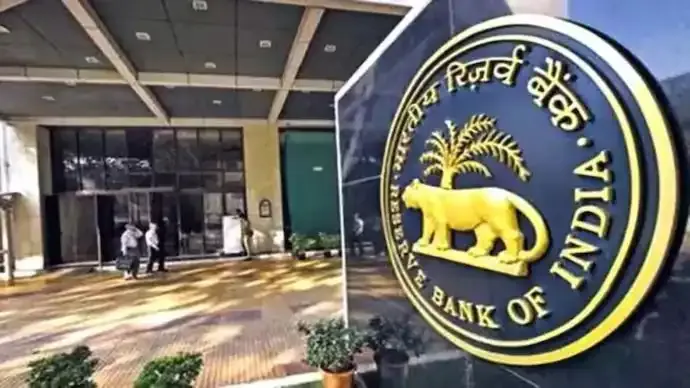
In a landmark move aimed at strengthening consumer protection in India's banking sector, the Reserve Bank of India (RBI) has introduced sweeping new regulations to curb mis-selling, forced product bundling and deceptive digital sales practices by commercial banks. The new framework is expected to significantly change how banks market loans, insurance, investment products and other financial services to customers.
The regulations, formally notified under the Reserve Bank of India (Commercial Banks — Responsible Business Conduct) Second Amendment Directions, 2026, will come into effect from January 1, 2027. The RBI has given banks more than six months to align their systems, policies and sales practices with the new requirements.
RBI Defines Mis-Selling for the First Time
One of the most significant aspects of the new directions is the formal legal definition of "mis-selling". The RBI has clarified that mis-selling occurs when a bank sells an unsuitable financial product, provides incomplete or misleading information, obtains consent improperly, or forces customers to purchase one product in order to receive another.
Under the new rules, customers who become victims of mis-selling will have stronger rights. If a complaint is found to be valid, banks may be required to refund the full amount paid by the customer and compensate them for any losses suffered.
The move is expected to provide major relief to millions of customers who have long complained about aggressive sales tactics employed by banks and their agents.
Forced Insurance Bundling with Loans Now Prohibited
A common grievance among borrowers has been the practice of banks insisting on insurance purchases as a condition for approving home loans, personal loans and other credit products.
The RBI has now formally prohibited compulsory bundling of financial products. Banks will no longer be allowed to make the purchase of insurance or any third-party product mandatory for obtaining a loan.
While lenders may still recommend insurance as a risk-mitigation measure, customers must be free to choose any insurer rather than being forced to buy policies from the bank's preferred partners.
This change is expected to increase competition in the insurance market while reducing costs for borrowers.
Explicit Customer Consent Becomes Mandatory
The central bank has also introduced stricter consent requirements designed to eliminate hidden approvals and misleading authorizations.
Banks will now need explicit, separate and recorded consent for each product they wish to offer or sell. Consent for one service cannot automatically be treated as approval for another product.
Importantly, digital forms and interfaces must default to "No" or "I Do Not Agree." Customers must actively choose to opt in rather than being enrolled through pre-selected options or hidden clauses.
Banks will also be required to clearly disclose fees, charges, risks, lock-in periods and exit conditions before obtaining consent.
Direct Selling Agents Face Tougher Oversight
The RBI has brought Direct Selling Agents (DSAs) and Direct Marketing Agents (DMAs) under a stricter compliance framework.
Banks must maintain updated public records of their authorized agents, ensure they are clearly distinguishable from bank employees and require them to follow a formal code of conduct.
Agents will no longer be allowed to visit customers without permission or contact them outside specified hours. They must also avoid making false promises or misleading claims while marketing financial products.
The bank itself will remain responsible for any misconduct committed by agents acting on its behalf.
RBI Bans 11 Digital Dark Patterns
Perhaps the most revolutionary aspect of the new framework is the prohibition of 11 specific digital "dark patterns" used in banking apps and websites.
These include:
-
False urgency through countdown timers and pressure tactics
-
Automatic addition of insurance products during loan applications
-
Misleading opt-out messages designed to shame users
-
Loan advertisements disguised as account alerts
-
Hidden charges revealed only at the final stage
-
Difficult cancellation processes
-
Repeated prompts after users decline offers
-
Confusing consent wording
-
Manipulative interface designs favoring specific choices
-
Misleading pricing claims
-
Forced redirects to promotional products
Banks will be required to conduct regular audits of their digital platforms to ensure compliance with the new standards.
Suitability Assessment Required Before Selling Products
Another major reform requires banks to determine whether a financial product is actually suitable for a customer before selling it.
Factors such as age, income, financial literacy, investment experience and risk tolerance must now be considered when recommending complex financial products.
Product documents must also be made available in regional languages or languages understood by customers, helping improve transparency for consumers in semi-urban and rural areas.
What Changes for Customers in 2027?
From January 1, 2027, bank customers will enjoy significantly stronger protections. They cannot be forced to purchase insurance for loan approval, cannot be enrolled into products through hidden consent mechanisms and cannot be targeted using manipulative digital sales techniques.
Banks will also be required to gather post-sale customer feedback and review sales practices regularly to identify potential issues.
Industry experts believe these reforms represent one of the most comprehensive consumer protection overhauls ever introduced in India's banking sector.
The RBI's new directions mark a major shift toward customer-first banking in India. By targeting mis-selling, forced bundling, hidden consent practices and manipulative digital designs, the central bank aims to restore trust and transparency in financial product distribution.
As banks prepare for implementation before January 2027, millions of customers stand to benefit from stronger safeguards, greater choice and improved accountability across the financial system.
Prev Article
Sensex Rises Over 300 Points, Nifty Nears 24,000 as Falling Oil Prices Boost Market Sentiment
Next Article
Government Raises Windfall Tax on Diesel and ATF Exports Amid West Asia Tensions and Rising Oil Prices