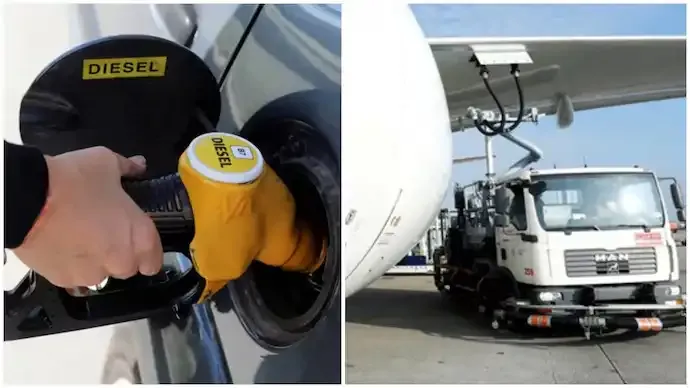
The Indian government has increased the windfall profit tax on diesel and aviation turbine fuel (ATF) exports in a move aimed at safeguarding domestic fuel supplies and capturing additional revenue from elevated global energy prices.
The revised tax structure comes amid ongoing geopolitical tensions in West Asia, which have contributed to volatility in international crude oil markets and raised concerns over energy security worldwide. The decision reflects the government's efforts to balance domestic fuel availability with the profits earned by exporters during periods of high global prices.
Higher Export Duty on Diesel and Aviation Fuel
According to the latest notification issued by the Finance Ministry, the Special Additional Excise Duty (SAED), commonly known as the windfall profit tax, has been increased on key petroleum exports.
The duty on diesel exports has been raised from Rs 13.5 per litre to Rs 14 per litre. Meanwhile, the export duty on Aviation Turbine Fuel (ATF) has been increased significantly from Rs 9.5 per litre to Rs 12.5 per litre.
The revised rates came into effect on June 16, 2026.
However, the government has chosen to maintain the windfall tax on petrol exports at Rs 1.5 per litre without any change.
Why the Government Increased the Windfall Tax
Windfall taxes are imposed when energy companies earn unusually high profits due to sharp increases in global commodity prices rather than operational improvements.
The government uses such taxes to capture a portion of these extraordinary gains while also discouraging excessive exports that could impact domestic fuel availability.
With crude oil prices experiencing fluctuations due to geopolitical developments in West Asia, policymakers are closely monitoring the potential impact on India's energy security and inflation outlook.
The latest adjustment indicates that authorities are seeking to ensure adequate supplies within the country while benefiting from increased revenues generated by elevated export earnings.
Impact of West Asia Tensions on Oil Markets
Global energy markets have remained highly sensitive to developments in West Asia, one of the world's most important oil-producing regions.
Any disruption to production facilities, shipping routes, or supply chains in the region can quickly influence international oil prices. Rising tensions have already triggered concerns among investors and policymakers about possible supply shortages and higher energy costs.
For India, which imports a large portion of its crude oil requirements, maintaining a stable fuel supply remains a strategic priority. The government's decision is being viewed as part of broader efforts to manage potential risks associated with volatile global energy markets.
What It Means for Refiners and Exporters
The increase in windfall taxes may impact the profitability of refiners and fuel exporters operating in India.
Companies exporting diesel and aviation fuel could face slightly lower margins due to the higher tax burden. However, strong global demand and elevated international fuel prices may continue to support export activity.
Industry analysts believe exporters will closely monitor global price trends to assess how the revised duties affect their competitiveness in international markets.
At the same time, domestic consumers are unlikely to see an immediate impact from the export duty changes, as the measure primarily targets overseas sales rather than domestic fuel pricing.
Government's Strategy on Energy Security
India has periodically revised windfall taxes on petroleum products based on changing market conditions. The rates are reviewed regularly and adjusted depending on international crude oil prices, refining margins, and export economics.
The latest revision demonstrates the government's continued focus on balancing revenue generation, consumer interests, and energy security.
Experts note that maintaining adequate domestic fuel supplies becomes especially important during periods of geopolitical uncertainty and market volatility.
Global Investors Watching India's Energy Policy
The decision is also being closely watched by international investors and energy market participants. India's approach to windfall taxation has become an important factor for companies involved in refining, fuel exports, and energy investments.
Policy stability and transparency remain key considerations for businesses operating in the sector.
Future adjustments to the tax structure will likely depend on developments in crude oil prices, global supply conditions, and geopolitical events.
India's decision to increase the windfall profit tax on diesel and aviation fuel exports highlights the government's proactive approach to managing energy security during a period of global uncertainty. With tensions in West Asia continuing to influence oil markets, policymakers are seeking to protect domestic supplies while capturing additional revenue from elevated export profits.
As global energy markets remain volatile, further policy adjustments may be considered depending on crude oil prices and broader economic conditions.
Prev Article
RBI Cracks Down on Mis-Selling: Banks Barred from Forcing Insurance, Hidden Charges and Manipulative Sales Tactics
Next Article
India-US Trade Deal Nears First Milestone as Fresh Bilateral Talks Scheduled for June 23-24