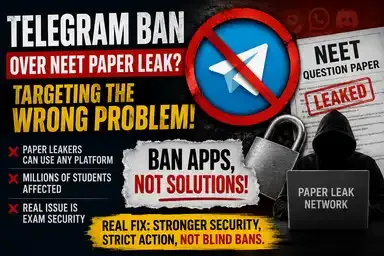
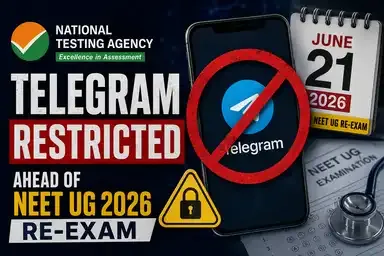
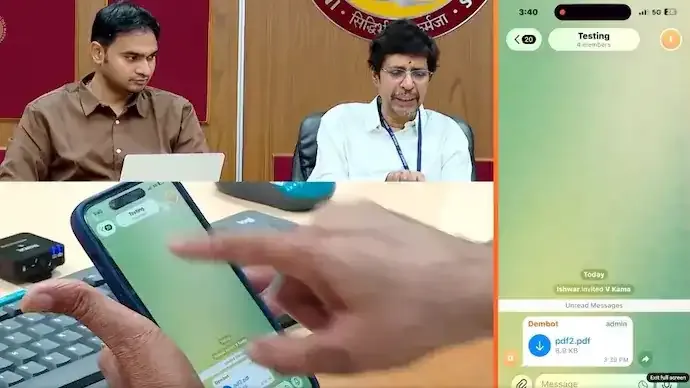
The decision to restrict Telegram over concerns related to NEET paper leak allegations has sparked intense debate across India. While authorities argue that the move is necessary to protect exam integrity, the ban raises an important question: does blocking a messaging platform actually solve the problem of paper leaks?
The answer is likely no.
The Real Issue Is Exam Security, Not Telegram
If an examination paper is leaked before an exam, the failure occurs long before the content reaches a messaging app. The leak can originate from printing facilities, transportation networks, storage systems, insider access, or organized criminal groups.
Telegram is merely a communication channel. It does not create the leak itself.
Focusing on the platform instead of the source risks diverting attention from the deeper vulnerabilities that allow confidential exam materials to be compromised in the first place.
Paper Leakers Can Easily Move Elsewhere
One of the biggest flaws in a Telegram ban is that determined actors can migrate to other platforms within hours.
They can use WhatsApp, Signal, Discord, Instagram direct messages, email groups, cloud-sharing services, or private websites. Criminal networks rarely depend on a single platform.
As a result, banning Telegram may create temporary disruption, but it does little to eliminate the underlying network responsible for distributing leaked materials.
Millions of Legitimate Users Pay the Price
Telegram is used by students, educators, businesses, professionals, and communities across India.
Many NEET aspirants rely on Telegram for study groups, doubt-solving discussions, educational resources, and exam preparation materials. Restricting access affects a large number of legitimate users who have no connection to any alleged wrongdoing.
A broad platform ban effectively punishes ordinary users while the actual perpetrators often find alternative methods of communication.
A Dangerous Policy Precedent
Blocking an entire platform because some users misuse it sets a concerning precedent.
Every major communication service can be exploited for illegal activities. Fraudsters use phone calls, scammers use email, and misinformation spreads across multiple social media platforms. Yet governments typically target the offenders rather than shutting down the communication medium itself.
A more balanced approach would involve identifying specific channels, groups, accounts, and individuals responsible for distributing illegal content.
Target the Criminals, Not the Platform
Instead of imposing platform-wide restrictions, authorities should focus on:
- Strengthening exam security procedures.
- Investigating the original source of any leak.
- Prosecuting individuals involved in selling or distributing papers.
- Monitoring and removing specific channels engaged in illegal activity.
- Improving coordination between law enforcement and digital platforms.
Such measures directly address the problem without disrupting millions of innocent users.
The Telegram ban may appear decisive, but it risks becoming a symbolic solution to a much larger issue. If exam papers are leaking, the priority should be identifying how they escaped secure systems and who is responsible.
Technology platforms can facilitate distribution, but they are not the root cause of exam security failures. Unless authorities focus on the source of leaks rather than the tools used to spread them, the same problem will continue to resurface on different platforms.
A successful response to exam fraud requires stronger security, targeted enforcement, and accountability—not broad bans that are easy to bypass and costly for ordinary users.
Prev Article
Telegram to Be Blocked in India Until June 22 Ahead of NEET UG 2026 Re-Exam, NTA Announces Major Anti-Cheating Action
Next Article
NEET UG 2026 Re-Test: IIT Madras Director Explains Telegram Edit Scam, Urges Students Not to Fall for Fake Leaks