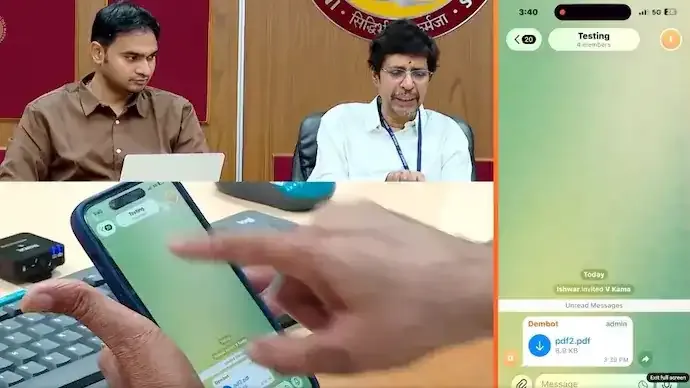
As the NEET UG 2026 Re-Examination approaches, V Kamakoti has issued a strong warning to students about a little-known Telegram feature that can be exploited to create false claims of exam paper leaks.
In explanatory videos shared by the National Testing Agency (NTA), the IIT Madras Director demonstrated how Telegram allows users to edit previously sent messages and attached PDF files while retaining the original timestamp. According to officials, this feature can potentially be misused to spread misinformation and panic among students ahead of major examinations.
IIT Madras Director Demonstrates Telegram Editing Feature
In the videos released through NTA's official social media channels, Kamakoti explained how a message or PDF file can be modified after it has already been posted in a Telegram channel or group.
The key concern is that the edited content may continue to display the original posting time, creating the impression that the information was shared before an examination took place.
According to experts, this can be used to falsely claim that examination papers were leaked in advance, even when the content may have been uploaded only after the exam was conducted.
How the Alleged Telegram Scam Works
The process highlighted by Kamakoti involves several steps:
-
An administrator posts an ordinary message or document before an examination.
-
After the exam concludes, the same message is edited.
-
The original file is replaced with the actual question paper or related content.
-
The original timestamp remains visible.
-
Screenshots are circulated claiming the paper was available before the examination.
This creates a misleading narrative that a paper leak occurred, despite no such leak actually taking place.
Experts say many students and parents may not be aware of how message editing functions work on messaging platforms.
NTA Issues Warning Ahead of Re-Exam
The National Testing Agency has urged students to remain cautious about unverified content circulating online.
Officials have repeatedly emphasized that candidates should rely only on information published through official NTA platforms and verified communication channels.
The agency warned that fraudsters often exploit examination anxiety by spreading rumors, fake screenshots and misleading claims designed to create confusion.
Authorities believe awareness is one of the strongest tools against misinformation campaigns.
Why NEET Students Are Being Targeted
Competitive examinations such as NEET attract millions of students across India every year.
The high stakes involved make students particularly vulnerable to misinformation, fake promises of leaked papers and fraudulent schemes.
Cybercrime investigators have previously identified multiple groups and channels attempting to exploit candidates by claiming access to question papers or answer keys.
Officials continue to advise students not to trust such claims.
Growing Concern Over Digital Misinformation
The controversy has highlighted broader concerns regarding the misuse of digital platforms.
Experts argue that while messaging applications provide valuable communication tools, certain features can be manipulated by bad actors to spread false narratives.
Educational authorities are increasingly working with cybersecurity agencies and technology experts to identify and counter such activities.
The goal is to protect students and maintain confidence in examination processes.
Students Urged to Focus on Preparation
Kamakoti emphasized that students should concentrate on their preparation rather than becoming distracted by rumors circulating online.
Education experts note that misinformation often intensifies in the days leading up to major examinations, creating unnecessary stress among candidates.
By understanding how such scams operate, students can avoid becoming victims of manipulation and misinformation.
Measures Taken to Protect Exam Integrity
Authorities have strengthened monitoring efforts ahead of the NEET UG 2026 re-examination.
These measures include:
-
Cyber monitoring of suspicious online activity
-
Coordination with law enforcement agencies
-
Awareness campaigns for students
-
Action against fraudulent channels and groups
-
Enhanced examination security protocols
Officials maintain that protecting the integrity of the examination remains a top priority.
IIT Madras Director V Kamakoti's explanation of Telegram's editing feature has brought attention to a potential method of creating fake paper leak evidence. With the NEET UG 2026 re-test approaching, authorities are urging students to remain vigilant, avoid unverified information and trust only official updates.
As digital misinformation becomes increasingly sophisticated, awareness and caution remain essential for students navigating one of India's most competitive examinations.
Prev Article
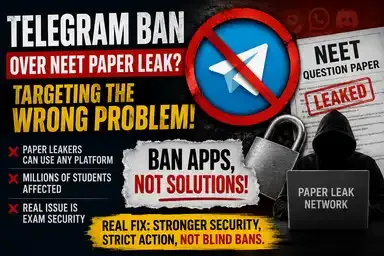
Telegram Ban Over NEET Paper Leak Claims Misses the Real Problem
Next Article
ICAI CA Final Result 2026 Declared: Check May Exam Scorecard at Official Website