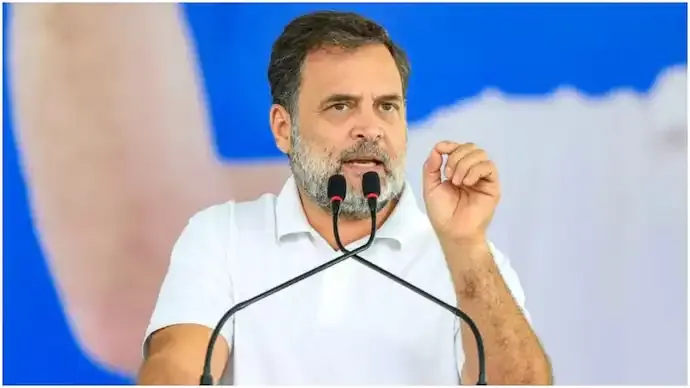
Leader of Opposition Rahul Gandhi has strongly criticised the government's decision to temporarily restrict access to Telegram ahead of the NEET-UG 2026 re-examination, arguing that the move targets students rather than addressing the root cause of examination fraud.
The Congress leader described the restriction as a misplaced response to a much larger problem, urging authorities to focus on dismantling organised paper leak networks instead of imposing limitations on a platform widely used by students for education, communication and exam preparation.
His remarks have added a new political dimension to the ongoing debate surrounding examination security and the government's efforts to prevent malpractice during one of India's most important entrance examinations.
Rahul Gandhi Questions Effectiveness of Telegram Restriction
Reacting to the temporary restriction imposed ahead of the NEET-UG re-test scheduled for June 21, Rahul Gandhi argued that blocking a communication platform would not solve the underlying issue of organised cheating operations.
According to the Congress leader, authorities should concentrate their efforts on identifying and prosecuting those responsible for paper leaks and examination fraud rather than restricting access to a platform used by millions of legitimate users.
He suggested that the move addresses the symptoms of the problem rather than its source.
"Target the Mafia, Not the Students"
Rahul Gandhi's criticism centered on the government's approach to combating exam-related fraud.
He argued that the focus should be on dismantling the networks allegedly involved in leaking examination papers and exploiting students rather than restricting access to digital platforms.
The Congress leader compared the move to punishing victims instead of taking action against those responsible for the crime, a remark that quickly gained attention across social media and political circles.
His comments have resonated with sections of students and opposition leaders who have questioned the effectiveness of platform-level restrictions.
NEET Re-Examination Scheduled for June 21
The controversy comes just days before the NEET-UG 2026 re-examination, which is scheduled to be conducted on June 21.
Authorities have implemented several security measures to ensure the integrity of the examination process following concerns regarding paper leak attempts and online fraud operations targeting candidates.
Government agencies have stated that temporary restrictions are intended to prevent the spread of misinformation and fraudulent claims related to examination papers during the critical examination period.
Officials maintain that the measures are designed to protect students and preserve the credibility of the examination.
Debate Over Exam Security Intensifies
The Telegram restriction has triggered a broader debate about how governments should respond to examination fraud in the digital age.
Supporters of the move argue that online platforms have been exploited by fraudsters and cheating syndicates to mislead students and circulate fake claims about leaked question papers.
Critics, however, contend that platform restrictions may inconvenience genuine users while doing little to eliminate the underlying criminal networks responsible for exam-related fraud.
The issue has become one of the most discussed topics among students, educators and policymakers ahead of the re-test.
Students and Parents Watching Closely
With thousands of candidates preparing for the upcoming examination, many students and parents are closely monitoring developments.
The temporary restriction has generated mixed reactions, with some viewing it as a necessary precaution and others expressing concerns about its impact on communication and study resources.
Educational experts continue to emphasize the importance of relying only on official examination updates and avoiding unverified information circulating online.
Government Defends Security Measures
Authorities have maintained that the restrictions are temporary and aimed solely at ensuring a fair and secure examination environment.
Officials argue that preventing the misuse of digital platforms during sensitive examination periods is essential to protecting candidates from fraud and misinformation.
The government has also highlighted ongoing efforts by law enforcement agencies to investigate paper leak networks and cyber fraud operations linked to examination scams.
Political Reactions Continue
Rahul Gandhi's remarks have intensified political discussion around the issue, with opposition leaders questioning whether platform restrictions represent the most effective strategy for addressing examination-related misconduct.
The debate is expected to continue in the lead-up to the NEET re-examination as stakeholders weigh concerns about exam security, digital freedom and student welfare.
Rahul Gandhi's criticism of the Telegram restriction ahead of the NEET-UG 2026 re-examination has reignited debate over how authorities should combat examination fraud. While the government argues that temporary restrictions are necessary to prevent misuse of digital platforms, critics believe the focus should remain on dismantling organised paper leak networks and prosecuting those responsible.
As the June 21 re-test approaches, the discussion highlights the growing challenge of balancing examination security with the interests of millions of students who depend on digital platforms for learning and communication.
Prev Article
Land Subsidence Damages Homes and Roads in Jammu and Kashmir's Rajouri, Residents Demand Geological Survey
Next Article
Uddhav Sena Crisis Deepens: Key MP Meeting Begins Amid Rebel Camp Claims and Split Speculation