

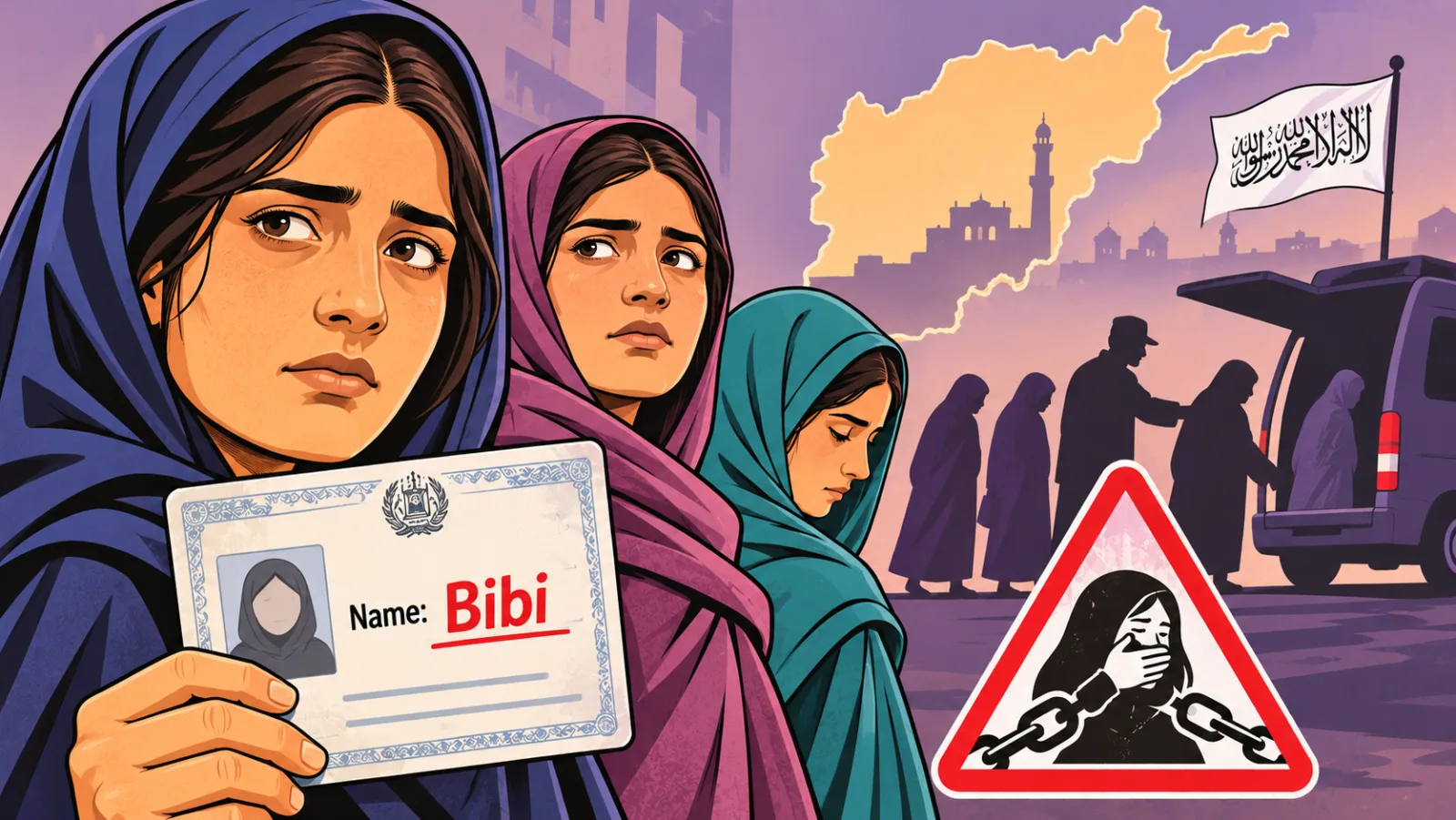

Afghan women’s names replaced with the generic term “Bibi” in official and medical records in northern Balkh province have raised fresh concerns about women’s identity and protection amid Afghanistan’s worsening human rights situation.
According to reports by Afghan media outlet Zan Times and international publications, Taliban officials instructed hospitals, clinics and public employees in Balkh to stop using women’s first names, including on medical prescriptions. The directive was reportedly issued in May and applies to official records. There is no confirmation that the order has been extended nationwide.

The term “Bibi” is traditionally used as a respectful form of address for older women. However, Afghan activists have also reported cases in which women were referred to using degrading terms such as “goat” and “cow.” Activists say the practice risks erasing women’s individual identities and creating confusion in medical records.
Afghanistan’s trafficking crisis
The concerns come amid broader risks of human trafficking, forced marriage and exploitation. The 2026 US Trafficking in Persons Report kept Afghanistan in Tier 3, its lowest category, stating that authorities did not report investigations, prosecutions or convictions for trafficking crimes, or identify and protect trafficking victims.
The report says trafficking within Afghanistan is more prevalent than cross-border trafficking. Women, girls and children face risks including sex trafficking, domestic servitude, bonded labour and forced marriage. Some impoverished families reportedly marry off underage daughters in exchange for payments or to escape debt. Traffickers also use social media and false employment promises to recruit vulnerable people.
Restrictions increase vulnerability
The US report says restrictions on women’s movement, education and employment significantly increase their vulnerability to exploitation. Returnees from Iran and Pakistan, internally displaced people and families with limited economic options are also at risk.
UN Women reported in August 2026 that Taliban authorities had issued more than 100 decrees affecting women and girls, restricting education, work, healthcare and public life. The agency warned that poverty and the closure of women-led organisations could further weaken support for those at risk.
UN Women Australia
The reported naming directive has not been shown to directly cause trafficking. However, rights advocates fear that reducing women’s recognition in official records could make it harder to identify victims, trace missing women and document abuse if such restrictions spread.





Conversation
Be kind and stay on topic. Comments are moderated; abuse, spam and personal attacks are removed. Report a problem