


NEW DELHI, November 12, 2026: Artificial intelligence has the potential to transform scientific research, but the technology industry must look beyond its growing focus on chatbots and large language models, Caltech professor Anima Anandkumar said on Thursday.
Speaking at the 24th Hindustan Times Leadership Summit (HTLS 2026), Anandkumar urged countries, particularly India, to invest in AI systems capable of understanding and simulating the physical world.
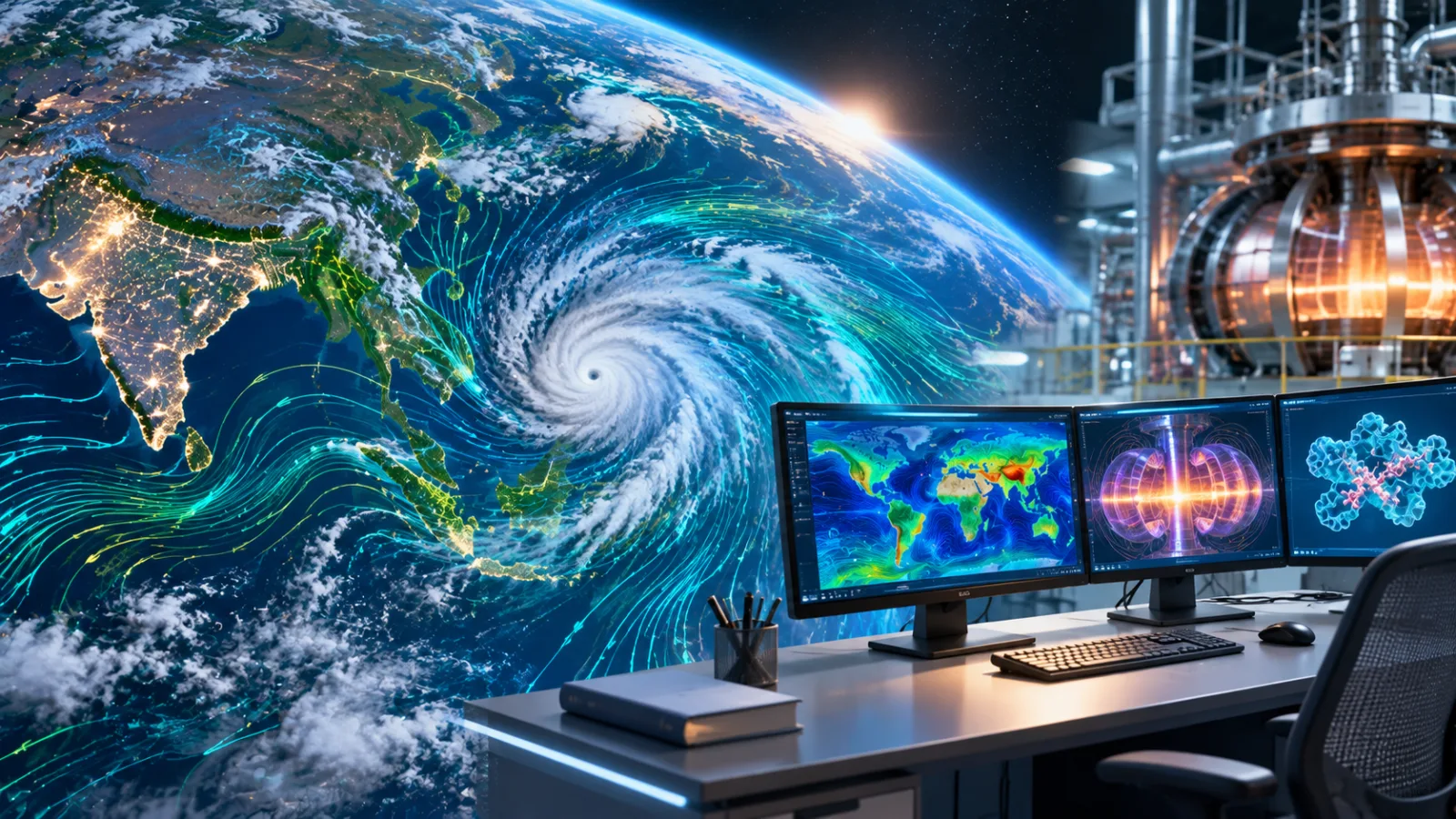
The researcher highlighted the potential of artificial intelligence in weather forecasting, nuclear fusion, medical research and engineering, arguing that some of the most consequential advances could emerge from combining scientific disciplines.

She also called for greater efforts to digitise India's cultural heritage and develop AI technologies that support regional languages.
Her central message was that large language models are useful, but they represent only one part of what artificial intelligence can achieve.
Anima Anandkumar Urges AI Industry to Look Beyond LLMs
During her conversation with Hindustan Times Technology Editor Vishal Mathur, Anandkumar questioned the industry's heavy concentration on language-based artificial intelligence.
Large language models, or LLMs, are trained on substantial collections of text and other data to perform tasks such as answering questions, writing software and generating content.
However, Anandkumar argued that generating convincing text is different from understanding the physical processes governing the natural world.
Scientific research frequently requires computers to model complex interactions involving matter, energy, fluids and other physical systems.
These problems cannot always be addressed effectively through language generation alone.
Anandkumar said AI research should therefore include systems designed specifically for scientific modelling.
Such models could help researchers simulate physical processes, explore possible outcomes and reduce the time required to test scientific ideas.
Her remarks were not a call to abandon language models entirely. Instead, she advocated a broader research strategy that supports different types of artificial intelligence.
Why Scientific AI Matters More Than Generating Text
Much of the recent public attention surrounding artificial intelligence has focused on tools that generate written responses, images and software.
Anandkumar's work explores another direction: using machine learning to understand how physical systems behave.
These systems can involve phenomena at vastly different scales, from interactions between molecules to movements in Earth's atmosphere.
Traditional scientific simulations often use mathematical equations to calculate how conditions change over time.
Such calculations can be extremely demanding, requiring powerful computers and considerable processing time.
Scientific AI models attempt to learn patterns from physical data and use them to make predictions or accelerate simulations.
The objective is not simply to produce an answer that sounds convincing.
A useful scientific model must generate predictions that can be compared with observations, established physical principles and experimental results.
This distinction is particularly important in fields where inaccurate predictions could lead to serious consequences.
What Are Neural Operators and How Do They Work?
Anandkumar is known for her research on neural operators, a class of machine learning methods designed to model complex physical processes.
Neural operators learn relationships between functions, rather than only predicting individual numbers or categories.
In practical terms, they can learn how a physical system changes under different conditions.
For example, a model could learn how temperature, pressure and wind patterns interact across the atmosphere.
Once trained, it may be able to produce predictions considerably faster than repeatedly running some conventional numerical simulations.
The technology has potential applications in several fields:
- Weather forecasting: Modelling changes in atmospheric conditions.
- Nuclear fusion: Predicting complex plasma behaviour inside reactors.
- Engineering: Simulating fluid flow and other physical processes.
- Medical research: Supporting the design of drugs, medical devices and biological systems.
- Aviation: Improving the modelling of conditions affecting autonomous aircraft.
These applications require different datasets and validation methods.
Neural operators should not be viewed as a universal replacement for every traditional scientific simulation.
Instead, they provide researchers with additional computational tools that can accelerate selected tasks.
AI Weather Forecasting Could Help Predict Extreme Events
Weather forecasting was one of the main examples Anandkumar discussed at the summit.
She explained that predicting the movement of hurricanes and other extreme weather systems is difficult because atmospheric conditions involve numerous interactions.
Small changes in temperature, pressure and wind can affect how a weather system develops.
Traditional forecasting methods use mathematical models to calculate these interactions.
However, running detailed simulations can require substantial computing resources.
Anandkumar and her research collaborators developed FourCastNet, an AI-based system designed to generate high-resolution weather forecasts.
Research published through Caltech demonstrated that FourCastNet could produce forecasts tens of thousands of times faster than conventional numerical methods in specific benchmark comparisons.
Some published studies reported speed improvements approaching 100,000 times, depending on the hardware and methodology used.
The results demonstrate significant potential for faster forecasting, although they do not mean AI predictions are automatically more accurate in every situation.
How Faster AI Models Could Improve Disaster Preparedness
The benefits of faster forecasting extend beyond saving computing time.
A forecasting agency needs to understand not only the most likely weather outcome but also the uncertainty surrounding that prediction.
For example, authorities preparing for a cyclone may need to examine several possible storm paths.
Anandkumar explained that faster AI models could make it practical to run hundreds or thousands of simulations representing different possible conditions.
These simulations, known as forecast ensembles, can help estimate the probability of particular outcomes.
They may provide useful information about:
- Possible cyclone tracks.
- Extreme rainfall.
- Strong wind conditions.
- Heatwaves and other severe weather.
- The uncertainty associated with forecasts.
Such information can support emergency planning and risk assessment.
However, the usefulness of these forecasts depends on the quality of the underlying data, model accuracy and the way results are interpreted by meteorologists.
AI systems must be evaluated carefully before being relied upon in critical public safety decisions.
FourCastNet Research Helped Shape Nvidia Earth-2
Anandkumar previously held senior artificial intelligence research positions at Nvidia.
Her research on neural operators and weather modelling contributed to developments in AI-driven atmospheric simulation.
The FourCastNet framework became part of the broader technological foundation supporting Nvidia's Earth-2 initiative.
Earth-2 includes AI models, software libraries and tools intended to support weather and climate research.
In January 2026, Nvidia announced an expanded collection of open Earth-2 models, including systems for global forecasting and local weather prediction.
The initiative reflects increasing interest in using specialised AI technologies alongside established scientific methods.
It also demonstrates how research developed in universities and industrial laboratories can influence practical computing infrastructure.
AI Could Help Scientists Study Nuclear Fusion and Medical Problems
Beyond weather forecasting, Anandkumar discussed the possibilities of applying AI to difficult scientific challenges.
One example is nuclear fusion.
Fusion research involves studying extremely hot plasma, whose behaviour can be difficult to predict and control.
AI-based simulations could help scientists examine how plasma evolves under different conditions.
Such tools may accelerate research, although commercial nuclear fusion still faces major scientific and engineering challenges.
Anandkumar's research has also explored applications in medical devices, molecular modelling and drug discovery.
These fields involve complex physical and biological interactions that require careful experimentation.
AI may help identify promising designs or simulate selected processes before physical testing.
However, any medical application must still undergo the necessary experimental, clinical and regulatory evaluation.
The potential value of scientific AI lies in making research more efficient without removing the need for evidence.
Caltech Professor Links AI Research to India's Arthashastra Heritage
Anandkumar also drew a personal connection between artificial intelligence and the preservation of India's intellectual history.
At the summit, she described scholar R. Shamasastry, who brought Kautilya's Arthashastra back to scholarly attention in the early twentieth century, as her great-great-grandfather.
The Arthashastra is an ancient Sanskrit work dealing with governance, administration, economics and political strategy.
Shamasastry discovered the manuscript in 1905 and subsequently published and translated the text.
The historical work received renewed attention this month.
On November 5, 2026, Indian authorities announced that an ancient palm-leaf manuscript of the Arthashastra had been inscribed on UNESCO's Memory of the World Asia-Pacific Regional Register.
The manuscript is preserved at the Oriental Research Institute in Mysuru.
Anandkumar used the connection to highlight why India should invest in digitising historical materials and making them more accessible for study.
AI could potentially assist researchers in examining manuscripts, identifying patterns and working with multilingual historical records.
However, such work requires accurate digitisation and expert scholarly interpretation.
Historical research cannot depend solely on automatically generated interpretations.
Why India Should Build AI for Local Languages and Scientific Research
Anandkumar argued that India should avoid concentrating its entire AI strategy on developing increasingly powerful chatbots.
She acknowledged the importance of language technologies, particularly in a country with substantial linguistic diversity.
AI tools that understand Indian languages could make digital services more accessible to people who do not primarily use English.
However, she said the country should also invest in scientific applications.
India has a large engineering workforce, a growing startup ecosystem and expanding technology infrastructure.
Anandkumar suggested that these strengths could support developments in:
- Space technology and scientific research.
- Battery technology and energy storage.
- Weather and climate modelling.
- Manufacturing and semiconductor development.
- Healthcare research and medical technology.
- Local language AI and digitisation of cultural material.
A broader approach would allow investment in research that addresses practical challenges rather than concentrating exclusively on conversational AI.
Why Anandkumar Is Cautious About Autonomous AI Scientists
Anandkumar also expressed reservations about claims that autonomous AI agents can independently carry out scientific discoveries.
Such systems are increasingly being promoted as tools that can generate research hypotheses, review scientific papers and suggest experiments.
However, producing a large number of possible ideas does not necessarily mean those ideas are scientifically valid.
Researchers still need to establish whether a hypothesis is supported by reliable evidence.
AI-generated explanations can contain errors or unsupported claims, making independent verification essential.
Anandkumar warned that the burden of checking large amounts of automatically generated research could become a significant problem.
Her broader argument was that useful scientific AI should help researchers test ideas and understand real-world processes, rather than simply producing more unverified possibilities.
Scientific Discovery Could Define the Next Phase of AI
Looking ahead, Anandkumar suggested that major advances in artificial intelligence may come from systems connecting different areas of scientific research.
Weather, energy, medicine and manufacturing may appear to involve separate challenges, but many depend on similar mathematical and physical principles.
AI models capable of working across these fields could potentially help researchers identify connections that are difficult to discover using existing methods.
Such progress could accelerate engineering design, reduce the cost of some simulations and support new scientific discoveries.
However, these are possibilities rather than guaranteed outcomes.
The value of future systems will depend on their accuracy, efficiency, accessibility and ability to produce verifiable results.
At HTLS 2026, Anandkumar's message offered a different perspective on the ongoing AI race.
The next major breakthrough in artificial intelligence may not be a chatbot that produces better answers, but a scientific model that helps researchers understand and solve difficult real-world problems.
Editorial note: This report is based on Anima Anandkumar's remarks at the Hindustan Times Leadership Summit on November 12, 2026, the official HTLS programme, Caltech research publications and Nvidia technical documentation. All India Story did not independently attend the discussion or interview the researcher.






Conversation
Be kind and stay on topic. Comments are moderated; abuse, spam and personal attacks are removed. Report a problem