

Shopping cart
Your cart empty!
Terms of use dolor sit amet consectetur, adipisicing elit. Recusandae provident ullam aperiam quo ad non corrupti sit vel quam repellat ipsa quod sed, repellendus adipisci, ducimus ea modi odio assumenda.
Lorem ipsum dolor sit amet consectetur adipisicing elit. Sequi, cum esse possimus officiis amet ea voluptatibus libero! Dolorum assumenda esse, deserunt ipsum ad iusto! Praesentium error nobis tenetur at, quis nostrum facere excepturi architecto totam.
Lorem ipsum dolor sit amet consectetur adipisicing elit. Inventore, soluta alias eaque modi ipsum sint iusto fugiat vero velit rerum.
Sequi, cum esse possimus officiis amet ea voluptatibus libero! Dolorum assumenda esse, deserunt ipsum ad iusto! Praesentium error nobis tenetur at, quis nostrum facere excepturi architecto totam.
Lorem ipsum dolor sit amet consectetur adipisicing elit. Inventore, soluta alias eaque modi ipsum sint iusto fugiat vero velit rerum.

Dolor sit amet consectetur adipisicing elit. Sequi, cum esse possimus officiis amet ea voluptatibus libero! Dolorum assumenda esse, deserunt ipsum ad iusto! Praesentium error nobis tenetur at, quis nostrum facere excepturi architecto totam.
Lorem ipsum dolor sit amet consectetur adipisicing elit. Inventore, soluta alias eaque modi ipsum sint iusto fugiat vero velit rerum.
Sit amet consectetur adipisicing elit. Sequi, cum esse possimus officiis amet ea voluptatibus libero! Dolorum assumenda esse, deserunt ipsum ad iusto! Praesentium error nobis tenetur at, quis nostrum facere excepturi architecto totam.
Lorem ipsum dolor sit amet consectetur adipisicing elit. Inventore, soluta alias eaque modi ipsum sint iusto fugiat vero velit rerum.
Do you agree to our terms? Sign up
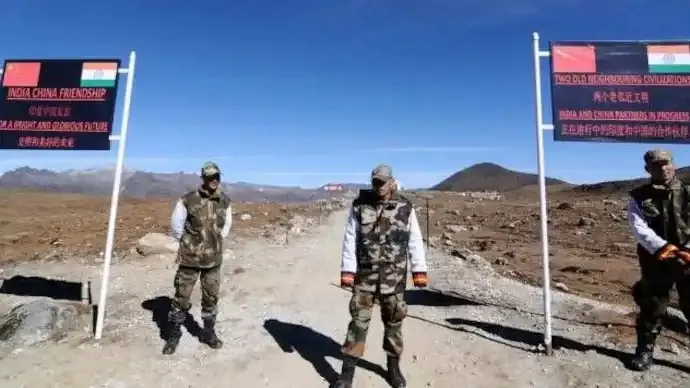
China has elevated its territorial claims over Arunachal Pradesh to the level of “core interests,” placing the Indian state alongside Taiwan and disputed areas in the South China Sea, according to a recent United States Department of Defense report submitted to the US Congress.
The Pentagon’s assessment warns that while India and China have eased tensions along the Line of Actual Control (LAC) in eastern Ladakh, Arunachal Pradesh could emerge as a major future flashpoint in bilateral relations. The report links Beijing’s hardened stance on Arunachal to its broader strategic objective of achieving the so-called “great rejuvenation” by 2049, which includes building a “world-class military” capable of winning modern wars.
India has consistently rejected China’s claims, reiterating that Arunachal Pradesh “was, is and will always remain” an integral part of the country.
Although New Delhi and Beijing agreed last year to disengage troops from remaining friction points in eastern Ladakh, recent incidents suggest renewed tensions around Arunachal Pradesh. Last month, an Indian citizen travelling via Shanghai was reportedly detained after Chinese officials questioned her passport because it listed Arunachal Pradesh as her birthplace. The issue was resolved only after intervention by the Indian consulate.
Earlier this week, a YouTuber was also detained in China after posting content asserting that Arunachal Pradesh is an inalienable part of India. These incidents underline what analysts describe as Beijing’s increasing use of coercive tactics to reinforce its territorial narrative.
China refers to Arunachal Pradesh as “southern Tibet” or Zangnan, rejecting the McMahon Line drawn in 1914. While Beijing initially focused its claim on Tawang, it has since expanded its position to cover the entire state and has periodically issued lists of renamed locations to press its claim.
Former diplomat Mahesh Sachdev said Washington’s explicit reference to Arunachal in the Pentagon report was significant. He noted that earlier US assessments focused largely on Ladakh, and the latest report indicates growing awareness in Washington of China’s pressure tactics in India’s northeast.
The Pentagon report also cautioned India about China’s broader regional strategy, noting that de-escalation along the LAC appears to be part of a dual-track approach. According to the assessment, Beijing seeks tactical calm with India while maintaining strategic pressure through its close military partnership with Pakistan.
The report highlighted that during Operation Sindoor, Pakistan relied heavily on Chinese-origin weapons and air defence systems. At the same time, China’s effort to stabilise the LAC is seen as an attempt to prevent New Delhi from moving closer to Washington.
Overall, the Pentagon’s findings suggest that while immediate border tensions may have eased, China’s inclusion of Arunachal Pradesh among its core interests points to a long-term strategic challenge for India.
111
Published: Dec 25, 2025