

Shopping cart
Your cart empty!
Terms of use dolor sit amet consectetur, adipisicing elit. Recusandae provident ullam aperiam quo ad non corrupti sit vel quam repellat ipsa quod sed, repellendus adipisci, ducimus ea modi odio assumenda.
Lorem ipsum dolor sit amet consectetur adipisicing elit. Sequi, cum esse possimus officiis amet ea voluptatibus libero! Dolorum assumenda esse, deserunt ipsum ad iusto! Praesentium error nobis tenetur at, quis nostrum facere excepturi architecto totam.
Lorem ipsum dolor sit amet consectetur adipisicing elit. Inventore, soluta alias eaque modi ipsum sint iusto fugiat vero velit rerum.
Sequi, cum esse possimus officiis amet ea voluptatibus libero! Dolorum assumenda esse, deserunt ipsum ad iusto! Praesentium error nobis tenetur at, quis nostrum facere excepturi architecto totam.
Lorem ipsum dolor sit amet consectetur adipisicing elit. Inventore, soluta alias eaque modi ipsum sint iusto fugiat vero velit rerum.

Dolor sit amet consectetur adipisicing elit. Sequi, cum esse possimus officiis amet ea voluptatibus libero! Dolorum assumenda esse, deserunt ipsum ad iusto! Praesentium error nobis tenetur at, quis nostrum facere excepturi architecto totam.
Lorem ipsum dolor sit amet consectetur adipisicing elit. Inventore, soluta alias eaque modi ipsum sint iusto fugiat vero velit rerum.
Sit amet consectetur adipisicing elit. Sequi, cum esse possimus officiis amet ea voluptatibus libero! Dolorum assumenda esse, deserunt ipsum ad iusto! Praesentium error nobis tenetur at, quis nostrum facere excepturi architecto totam.
Lorem ipsum dolor sit amet consectetur adipisicing elit. Inventore, soluta alias eaque modi ipsum sint iusto fugiat vero velit rerum.
Do you agree to our terms? Sign up
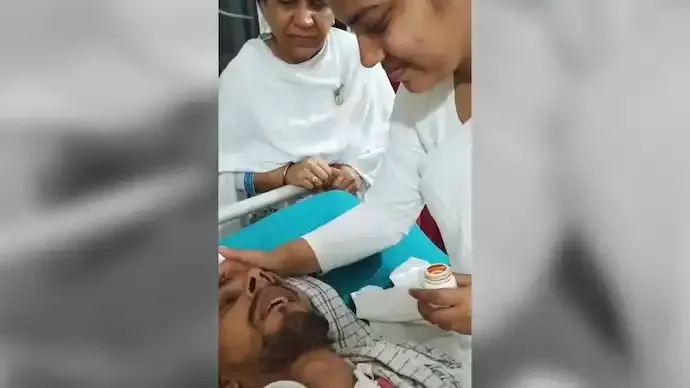
An emotional video showing the final moments of Harish Rana with his family has gone viral across social media, drawing widespread attention and sympathy. The video emerged days after the Supreme Court permitted passive euthanasia for the 32-year-old man, marking one of the most significant right-to-die cases in India.
Harish Rana has been living with severe and irreversible brain damage for the past 13 years following a tragic accident. According to medical assessments, the injury left him in a state where he could no longer communicate or move voluntarily. The only movements visible were occasional blinking and swallowing, which became the only signs of responsiveness he displayed over the years.
The Supreme Court’s decision allowing him to die with dignity came after medical experts confirmed that his condition was irreversible and that recovery was medically impossible. Doctors stated that the life-support systems and feeding tubes sustaining him were not improving his health but merely prolonging his suffering.
The court’s ruling is considered historic because it is one of the rare instances where passive euthanasia has been approved through a judicial order in India. Passive euthanasia refers to the withdrawal of life-sustaining treatment under strict medical supervision when a patient has no possibility of recovery and continued treatment only extends suffering.
In the video that surfaced online, Harish Rana can be seen surrounded by his family members as they bid him an emotional farewell before he was shifted to a palliative care unit at the All India Institute of Medical Sciences (AIIMS) in Delhi. Palliative care focuses on providing comfort and pain management for patients facing serious medical conditions.
Family members are seen speaking to him, offering prayers, and sharing their final moments together in an atmosphere filled with emotion and grief. The footage shows Rana blinking and gulping, movements that have been his only form of physical response for more than a decade.
The case has triggered a nationwide conversation about medical ethics, the right to die with dignity, and the legal framework surrounding euthanasia in India. While many people have expressed deep sympathy for Rana and his family, others are discussing the broader implications of the court’s decision.
Legal experts say the ruling reinforces the importance of patient dignity and acknowledges situations where medical science cannot reverse a condition. The decision also highlights the role of medical boards and courts in carefully evaluating such sensitive cases before granting permission for passive euthanasia.
As Harish Rana remains under medical supervision in the palliative care unit, the focus now shifts to ensuring that his final days are peaceful and free from pain. The case has become a powerful reminder of the difficult decisions families and doctors sometimes face when dealing with irreversible medical conditions.
The story continues to resonate across the country, sparking discussions about compassion, medical responsibility, and the legal rights of patients facing terminal or irreversible conditions.
3
Published: 9h ago