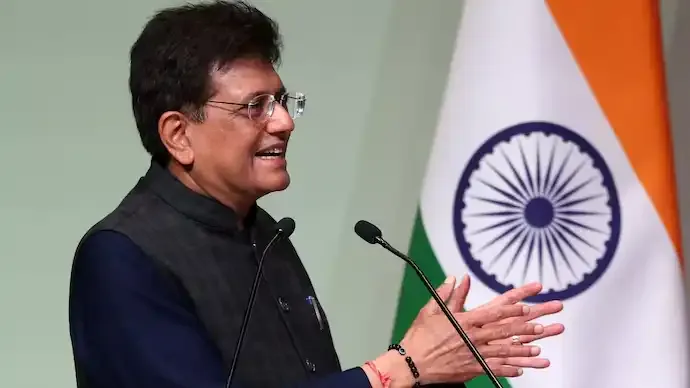
India and the United States are moving closer to finalising a long-awaited bilateral trade agreement, but one major issue continues to delay the deal. Union Commerce and Industry Minister Piyush Goyal has made it clear that India will not move forward unless the United States offers tariff benefits that give Indian exporters a competitive advantage over neighbouring countries.
The statement highlights New Delhi's strategy of prioritising long-term gains for Indian businesses rather than rushing to conclude the agreement.
What Is Delaying the India-US Trade Deal?
According to Piyush Goyal, the broad framework of the trade agreement has already been negotiated with the administration of US President Donald Trump.
However, India wants the agreement to come into force only after Washington introduces a tariff structure that offers preferential treatment for Indian products compared to competing Asian economies.
The government believes such an arrangement is essential to ensure that Indian exporters receive meaningful commercial benefits from the agreement.
Why Are Tariffs the Biggest Issue?
Tariffs directly affect the cost of goods entering foreign markets.
If Indian products face lower import duties than goods from competing countries, Indian exporters can:
- Offer more competitive prices.
- Increase exports to the US.
- Expand market share.
- Improve profitability.
- Create more employment opportunities in export-oriented sectors.
Without this advantage, India believes the agreement may not deliver its intended economic benefits.
Impact of US Legal Changes
The negotiations have also been influenced by recent legal developments in the United States.
Changes affecting reciprocal tariff policies have required both countries to revisit how the agreement will be implemented.
As a result, negotiators are working to ensure that the final framework complies with updated legal and trade requirements before the agreement is formally signed.
Why India Is Taking a Cautious Approach
India has repeatedly stated that it prefers a balanced and mutually beneficial agreement rather than a quick deal.
The government is seeking to protect the interests of sectors such as:
- Manufacturing
- Textiles
- Pharmaceuticals
- Engineering goods
- Agriculture
- Information technology
Officials believe that securing better tariff access could significantly improve India's export competitiveness in the US market.
Why the Trade Deal Matters
The proposed India-US trade agreement is expected to strengthen economic cooperation between the world's two largest democracies.
A successful agreement could:
- Increase bilateral trade.
- Expand investment opportunities.
- Improve supply chain cooperation.
- Create employment.
- Strengthen manufacturing.
- Boost exports from both countries.
Business leaders and investors are closely monitoring the negotiations because of their potential impact on global trade.
What Happens Next?
Both governments are expected to continue discussions on tariff structures and implementation details before announcing the final agreement.
Once the United States finalises a tariff framework that meets India's expectations, the agreement could move towards formal approval and implementation.
No official signing date has been announced.
Conclusion
The India-US trade agreement appears to be close to completion, but tariff policy remains the biggest obstacle. Commerce Minister Piyush Goyal has made it clear that India will proceed only if the final framework gives Indian exporters a competitive edge over regional rivals. As negotiations continue, both countries are working to create an agreement that supports stronger trade, investment and long-term economic cooperation.
FAQs
1. Why is the India-US trade deal being delayed?
India wants the United States to introduce a tariff framework that provides Indian exporters with an advantage over competing regional economies.
2. What did Piyush Goyal say?
The Commerce Minister said India will implement the agreement only after favourable tariff conditions are established.
3. Why are tariffs important in trade agreements?
Lower tariffs reduce the cost of exports, making products more competitive in international markets.
4. Has the India-US trade deal been finalised?
The broad framework has reportedly been negotiated, but implementation depends on resolving tariff-related issues.
5. Which sectors could benefit from the agreement?
Manufacturing, textiles, pharmaceuticals, engineering goods, agriculture and information technology are among the sectors expected to benefit.
6. How could the agreement impact India's economy?
A successful deal could increase exports, attract investment, strengthen supply chains and create new employment opportunities.
Prev Article
United Spirits May Cut 100 Jobs as Diageo Plans Global Cost Reduction
Next Article
SEBI May Allow Celebrity Endorsements for Financial Brands With Strict Conditions