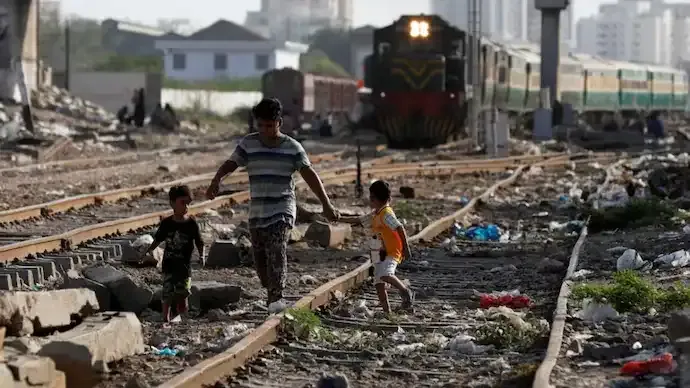
Pakistan is facing mounting economic and social challenges, with nearly three out of every ten citizens now living in poverty, according to findings highlighted in the Pakistan Economic Survey 2025-26.
The report paints a concerning picture of the country's economic condition, showing a sharp rise in poverty levels alongside a significant decline in government spending on education.
According to data cited in the survey, Pakistan's national poverty rate increased to 28.9 percent in 2024-25, compared to 21.9 percent in 2018-19, indicating that millions of people have slipped below the poverty line over the past several years.
Economic Pressures Deepen Household Struggles
The survey notes that rising living costs have placed considerable strain on households across the country.
Many families that were previously able to meet their basic needs are now struggling to keep up with:
-
Food expenses
-
Utility bills
-
Healthcare costs
-
Transportation expenses
-
Education-related spending
While certain segments of society have managed to absorb economic shocks, the report indicates that vulnerable groups have fallen further behind.
The findings suggest that economic recovery has not been experienced equally across different sections of the population.
Poverty Rises Significantly Since 2018-19
One of the most striking findings in the survey is the increase in poverty levels.
The report shows:
| Year | Poverty Rate |
|---|
| 2018-19 | 21.9% |
| 2024-25 | 28.9% |
The increase represents millions of additional people living under difficult economic conditions.
Analysts say persistent inflation, currency pressures, unemployment concerns, and slower economic growth have contributed to the rise in poverty.
Education Spending Falls to 0.8% of GDP
Alongside rising poverty, the survey highlights a dramatic decline in public investment in education.
Government expenditure on education reportedly fell to 0.8 percent of Gross Domestic Product (GDP), one of the lowest levels recorded in the country's history.
Education experts have long argued that sustained investment in schools, universities, teacher training, and educational infrastructure is essential for long-term economic development.
The decline in funding has raised concerns about the future quality and accessibility of education across Pakistan.
Experts Warn of Long-Term Consequences
Economists and education specialists frequently point to a strong relationship between education investment and economic growth.
Reduced spending on education can potentially affect:
-
Literacy rates
-
Skill development
-
Workforce productivity
-
Employment opportunities
-
Innovation and competitiveness
At a time when many countries are increasing investment in human capital, the decline in education spending has attracted significant attention.
Growing Economic Challenges
Pakistan has faced several economic difficulties in recent years, including:
-
High inflation
-
Fiscal pressures
-
Debt servicing obligations
-
Currency volatility
-
Energy-related challenges
These factors have placed additional pressure on government finances and household incomes.
The survey suggests that the impact of these challenges has been felt most strongly by lower-income families.
Uneven Recovery Across Society
According to the report, economic conditions have affected different groups in different ways.
While some households and businesses have adapted to changing economic circumstances, others have struggled to recover from successive shocks.
The survey indicates that income disparities remain a major concern, with vulnerable communities facing increasing financial stress.
This uneven recovery has contributed to the widening gap between different sections of society.
Education and Poverty Linked
Development experts often emphasize that poverty reduction and education investment are closely connected.
Higher educational attainment generally improves:
-
Employment prospects
-
Income levels
-
Social mobility
-
Economic resilience
The simultaneous rise in poverty and decline in education spending highlighted in the survey has therefore sparked concern among policy analysts.
Many believe stronger investments in education could play a critical role in addressing long-term economic challenges.
Major Policy Questions Ahead
The findings of the Pakistan Economic Survey 2025-26 are likely to fuel debate about economic priorities and public spending.
Policymakers now face important questions regarding:
-
Poverty alleviation strategies
-
Social welfare programs
-
Education funding
-
Economic reforms
-
Employment generation
Addressing these challenges may prove crucial for improving living standards and supporting sustainable economic growth.
Survey Highlights Difficult Economic Reality
The latest survey underscores the difficult reality facing millions of Pakistanis.
With poverty approaching 29 percent and education spending falling to historic lows, the report highlights the scale of the economic and social challenges confronting the country.
As policymakers consider future reforms, the findings are expected to remain central to discussions about Pakistan's development priorities and economic direction.
Prev Article
US-Iran Draft Deal Offers Sanctions Relief, Reopens Hormuz While Nuclear Talks Continue
Next Article
Texas Shooting Leaves 1 Dead, 9 Injured in Midland; Gunman Found Dead After Police Standoff