
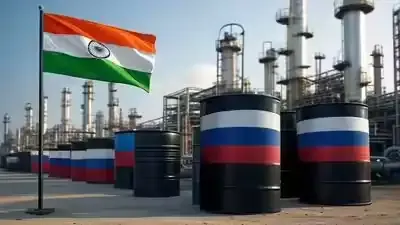
Reliance Industries has halted imports of Russian crude oil for its export-oriented Jamnagar SEZ refinery in Gujarat, complying with fresh sanctions imposed by the European Union and the United States on key Russian oil majors Rosneft and Lukoil. The mandated wind-down period for processing crude from these companies ends today, November 21.
In a statement, Reliance said it will “stay aligned with the Government of India’s policy” on crude sourcing and sanctions compliance. The shift marks a significant operational change for Reliance, which had been one of the largest buyers of discounted Russian crude through long-term supply arrangements.
Refinery to Source Crude From West Asia, EU
Starting December 1, all exports from the Jamnagar SEZ refinery will be produced exclusively from non-Russian crude. Reliance will now tap suppliers across West Asia, Africa, and Europe to meet its feedstock requirements for the fully export-oriented facility.
The company will continue to process Russian crude at its Domestic Tariff Area (DTA) refinery, which caters to the Indian market, as it remains outside the scope of EU and US sanctions on exported petroleum products.
Long-Term Rosneft Deal Impacted
The decision disrupts Reliance’s long-standing arrangement with Rosneft, which has supplied a significant volume of crude to the Jamnagar complex since 2022, when Russian oil became a major part of India’s energy basket due to deep discounts.
The new sanctions framework specifically restricts refining and export of petroleum products made from crude supplied by sanctioned Russian entities. For export-focused units like the Jamnagar SEZ refinery, compliance is mandatory to maintain access to Western markets and international banking channels.
Broader Impact on Trade Flows
Energy analysts note that this shift may temporarily raise crude procurement costs for Reliance as discounted Russian barrels are replaced by costlier grades from other regions. However, they add that diversifying the crude slate will protect the company’s export business from regulatory disruption.
India continues to import Russian crude for domestic consumption, with government officials reiterating that procurement will remain guided by national interest.


Conversation
Be kind and stay on topic. Comments are moderated; abuse, spam and personal attacks are removed. Report a problem