



As artificial intelligence (AI) transforms education worldwide, the question of whether India’s schools are prepared for AI-powered classrooms is taking centre stage. Experts highlight both progress and persistent gaps in infrastructure, teacher training, and equitable access.
Global Shifts in Learning
At a Harvard forum, psychologist Howard Gardner predicted that by 2050, the traditional classroom model where “everyone does the same thing” may seem outdated. AI-driven learning is already reshaping how students access knowledge globally.
???????? India’s Scale and Challenge
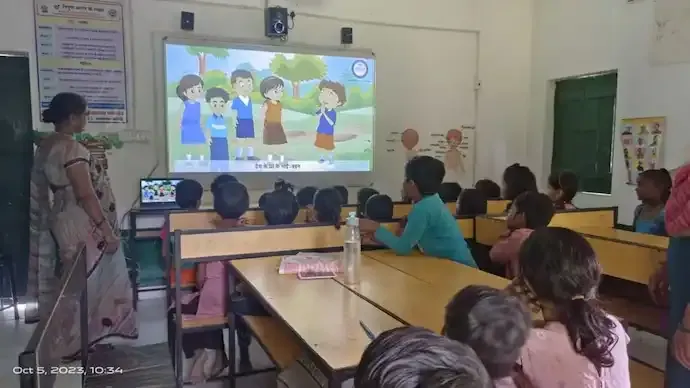
India operates one of the largest school education systems in the world, with nearly 15 lakh schools and 24.7 crore students. According to UDISE+ data, computer access rose from 57.2% in 2023–24 to 64.7% in 2024–25, while internet availability grew from 53.9% to 63.5%. Despite gains, a third of schools still lack digital infrastructure.

Educator Perspectives
-
Harish Sanduja (Jaipuria Group): “Technology cannot replace teachers. AI must be human-first and tech-forward to support social and emotional learning.”
-
Ajay Singh (Scindia School): “The challenge lies in bridging infrastructure and training gaps, or AI may deepen inequalities.”
-
Alka Kapur (Modern Public School): “Classrooms without walls are becoming reality, but hybrid models must preserve the teacher’s role.”
-
Aditi Misra (Dharav High School): “Without foundational infrastructure, AI classrooms remain aspiration, not reality.”
-
Ashish Munjal (Sunstone): “Without equal access, India risks a two-tier education system where only privileged children benefit from AI.”
Government Initiatives
India has launched several schemes to close the readiness gap:
-
DIKSHA: digital infrastructure for learning resources
-
PM e-VIDYA: multimode access to digital education
-
NDEAR: National Digital Education Architecture
-
Samagra Shiksha: financing ICT in schools and teacher training
While these platforms provide the framework, uneven rollout across states means progress is inconsistent.
Key Bottlenecks
-
Connectivity & Devices: A third of schools still lack computers or internet.
-
Teacher Capacity: AI literacy and blended pedagogy training remain limited.
-
Equity & Inclusion: Gaps in accessibility and resources risk widening divides.
What Experts Recommend
International guidance from UNESCO suggests India should:
-
Fast-track connectivity and devices in underserved districts.
-
Scale teacher training in AI literacy and blended learning.
-
Pilot and evaluate AI-based models before mass rollout.
-
Preserve schools’ social and emotional roles while scaling digital access.
The Road Ahead
The vision of “classrooms without walls” is no longer theoretical. For India, the challenge is ensuring AI-powered classrooms become tools of inclusion, not division. The nation’s ability to bridge its digital and training gaps will decide whether AI-driven education expands opportunities for all children—or leaves many behind.





Conversation
Be kind and stay on topic. Comments are moderated; abuse, spam and personal attacks are removed. Report a problem