

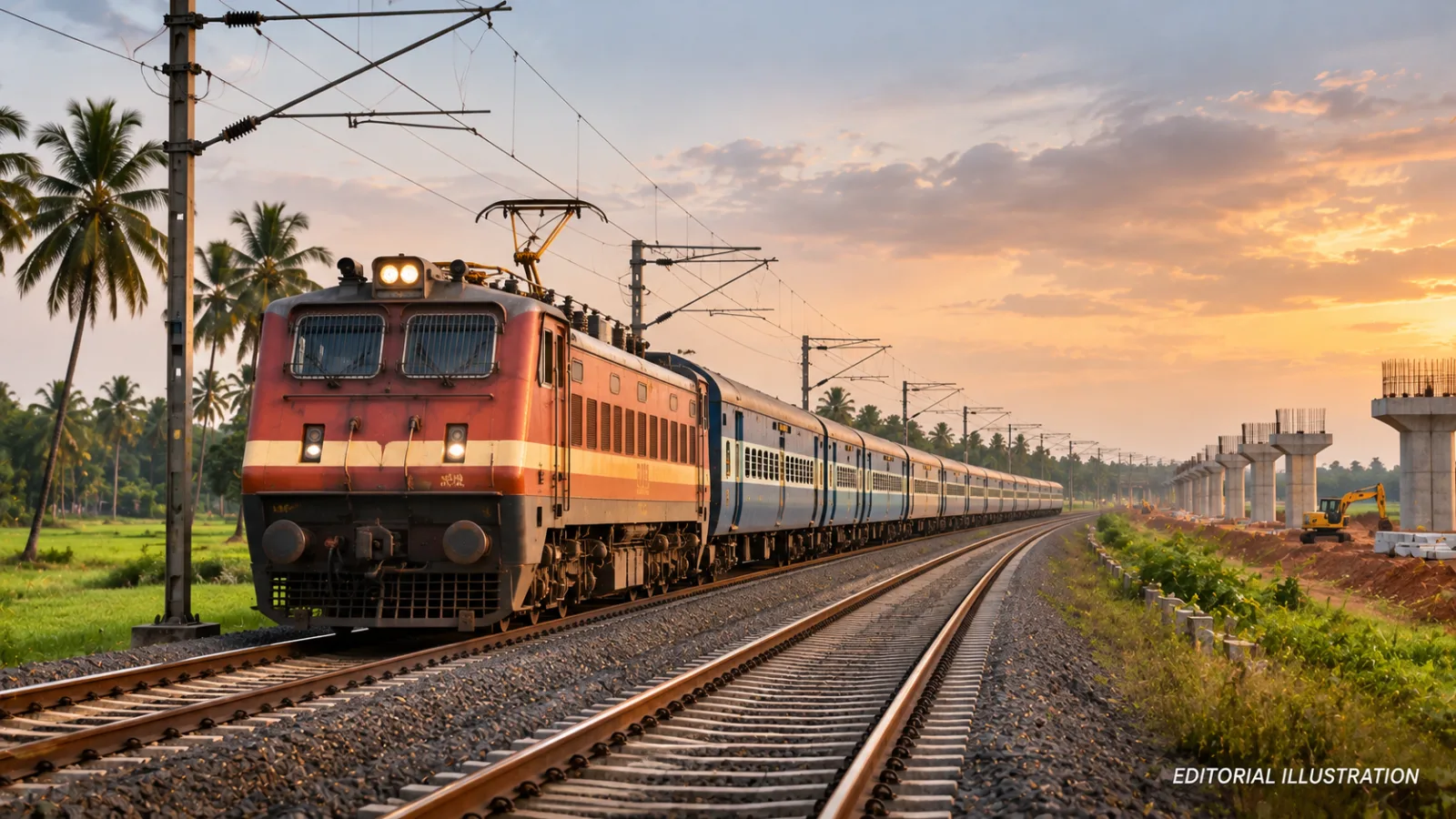

CHENNAI, November 10, 2026: Pattali Makkal Katchi (PMK) president Anbumani Ramadoss has urged Union Railway Minister Ashwini Vaishnaw to intervene in the prolonged delays affecting 19 railway infrastructure projects in Tamil Nadu, warning that increased budget allocations have yet to translate into adequate progress on the ground.
In a letter sent on Tuesday, Ramadoss called for urgent action on new railway lines, track doubling and gauge conversion works across the state. He proposed a joint monitoring committee involving the Union and Tamil Nadu governments to resolve funding and land acquisition difficulties.
The appeal comes as Tamil Nadu receives ₹7,611 crore in railway budget allocations for the 2026–27 financial year, a figure confirmed earlier by the Railway Ministry.

19 Railway Projects Pending in Tamil Nadu, Says PMK
According to figures cited by Ramadoss, 19 sanctioned railway projects remained incomplete in Tamil Nadu as of April 1, 2026.
The projects include:
- Eight new railway line projects
- Eight track doubling projects
- Three gauge conversion projects
The total estimated cost of these projects is ₹27,282 crore.
However, cumulative expenditure stands at only ₹8,811 crore, according to the PMK leader. This represents approximately 32.3% of their combined estimated cost.
He argued that spending has been too slow to deliver meaningful improvements in connectivity, particularly when rising construction costs and inflation are taken into account.
The figures cited in the letter describe the status of the identified projects. They do not mean that the entire state's annual railway allocation remains unspent.
Only 24 km of 811 km New Railway Lines Completed, Claims Ramadoss
The most serious concerns raised in the letter relate to eight sanctioned new railway line projects.
Together, these projects cover a proposed distance of 811 kilometres and carry an estimated cost of ₹15,653 crore.
Ramadoss said only ₹1,514 crore had been spent on them so far, less than 10% of the estimated investment.
He also claimed that just 24 kilometres of the proposed new lines had been completed.
That amounts to approximately 3% of the planned 811-kilometre network.
Some of the projects were approved more than two decades ago, making their limited progress particularly concerning, the PMK leader said.
He argued that such delays affect residents and businesses in regions that still depend on limited rail connectivity.
Tamil Nadu Receives ₹7,611 Crore Railway Allocation for 2026–27
Ramadoss acknowledged that the Union government had substantially increased railway funding for Tamil Nadu.
In February, the Ministry of Railways announced that the state's allocation for the 2026–27 financial year had reached ₹7,611 crore.
The ministry said this represented an increase of more than eight times compared with the allocation in 2014.
Ramadoss welcomed the higher funding but questioned how effectively it was reaching projects that had remained unfinished for years.
His letter argued that allocating more money at the state level was not sufficient unless individual projects received adequate funds and progressed according to a clear schedule.
The distinction is important because the ₹7,611 crore figure refers to an annual allocation across railway activities in Tamil Nadu, while ₹27,282 crore is the combined estimated cost of the 19 projects cited in his letter.
Why Are Railway Projects in Tamil Nadu Facing Delays?
Ramadoss identified two major obstacles behind the slow execution of railway works.
The first is inadequate funding directed towards specific new railway line projects.
The second is the delay in acquiring and handing over land required for construction.
The land acquisition issue has also been highlighted by the Union Railway Ministry.
In a February 9 statement, the ministry said that only 1,052 hectares of the 4,326 hectares required for ongoing railway projects in Tamil Nadu had been handed over.
That represented approximately 24% of the land required.
The ministry also said ₹1,465 crore had already been paid to the Tamil Nadu government for land acquisition.
It maintained that pending land acquisition was holding up several important railway projects.
The figures illustrate how project completion can depend on both government funding and coordination between railway authorities and state agencies.
PMK Calls for Special Committee to Monitor Railway Projects
To address these obstacles, Ramadoss proposed establishing a dedicated committee involving officials and technical experts from both levels of government.
He suggested including representatives from district administrations to help resolve local issues affecting construction.
The proposed committee would be responsible for:
- Reviewing the progress of all 19 pending projects
- Coordinating project-specific funding
- Accelerating land acquisition and transfer
- Identifying administrative and technical bottlenecks
- Monitoring delays against implementation schedules
- Submitting monthly progress reports
- Recommending corrective measures when projects fall behind
Ramadoss argued that regular monitoring could help prevent further delays and improve coordination between agencies.
The proposal remains a request to the Railway Ministry. No announcement establishing such a committee was identified in the reports reviewed.
Why Better Railway Connectivity Matters for Tamil Nadu
The PMK leader also linked the pending railway projects to Tamil Nadu's wider economic development.
He said improved rail connectivity to tier-two cities and underserved regions was essential for expanding industrial activity and strengthening links with other parts of India.
New railway lines can improve access between towns, employment centres and markets, while track doubling can increase the capacity of existing routes.
Gauge conversion projects may also improve network compatibility by bringing older sections of railway infrastructure into the broader system.
However, the benefits depend on timely completion and the availability of connecting services.
Ramadoss urged the Centre to prioritise long-pending works rather than allow sanctioned projects to remain unfinished for additional years.
What Happens Next to the 19 Pending Railway Projects?
The immediate issue is whether the Railway Ministry and Tamil Nadu government will agree on a coordinated mechanism to accelerate the projects.
Ramadoss has sought a special committee and monthly progress reviews, but the letter does not establish any new deadline for completing the railway lines.
The ministry's earlier statements show that land acquisition remains a significant concern, while the PMK leader has also drawn attention to the distribution of project-specific funding.
For now, the 19 projects remain the focus of his demand for government intervention.
Further progress will depend on funding decisions, land availability and the ability of central and state authorities to resolve outstanding implementation issues.
Source attribution: Based on PTI reporting of Anbumani Ramadoss's November 10 letter, additional Tamil-language coverage of the letter and the Ministry of Railways' February 9, 2026 statement on railway funding and land acquisition.






Conversation
Be kind and stay on topic. Comments are moderated; abuse, spam and personal attacks are removed. Report a problem