

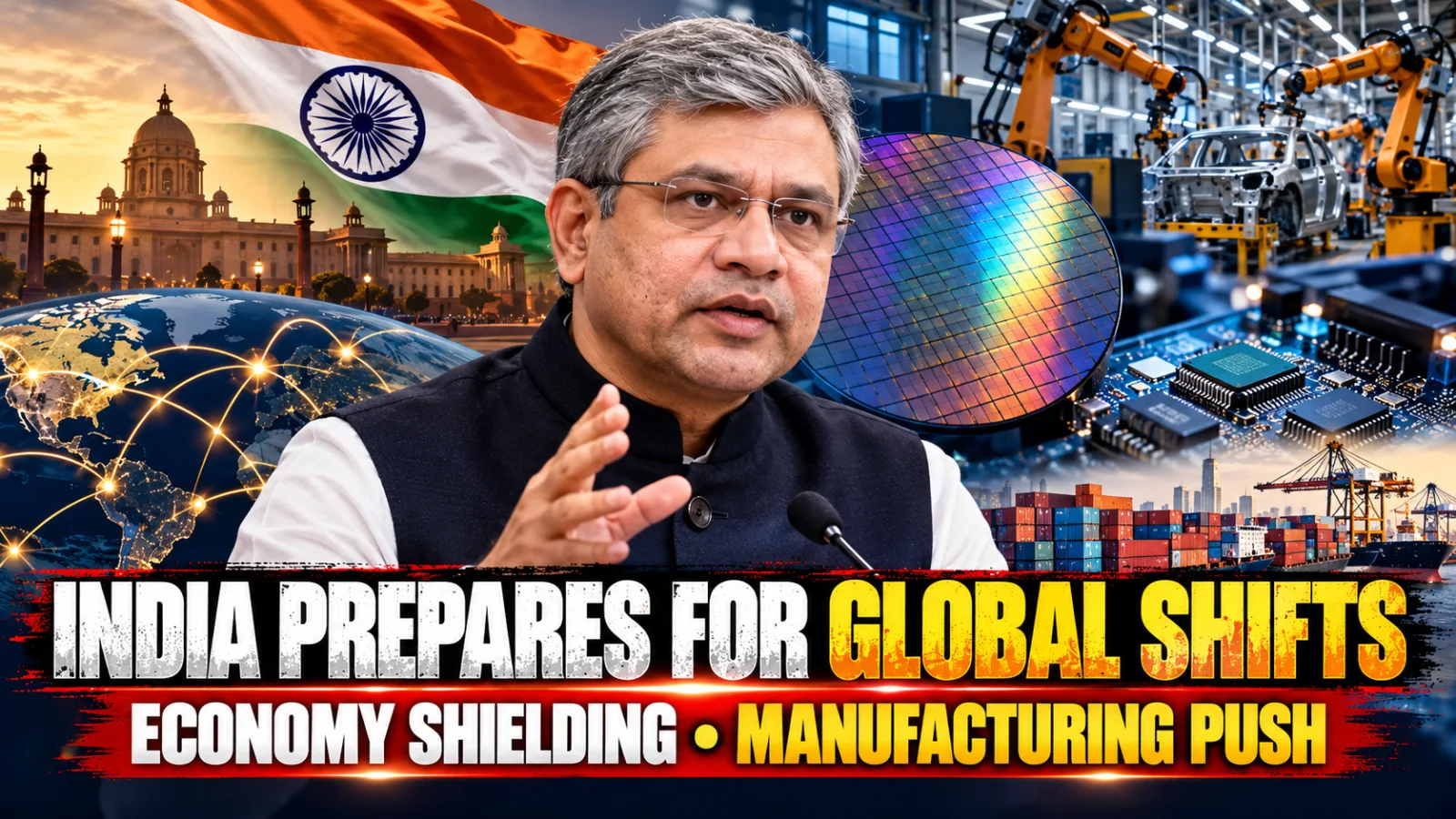

Union Minister Ashwini Vaishnaw has called for India to prepare systematically for changes in global geopolitics, warning that international relationships can shift over time. Emphasising the need for strategic flexibility, he said, “There are times when friends will become foes.”
Vaishnaw highlighted the importance of continuously reassessing India's national strategy to respond to changing geopolitical and economic conditions. He said the country was planning for the future across multiple time horizons, with goals extending from three years to 25 years.
His remarks underscore the importance of anticipating international developments rather than relying solely on existing partnerships and economic arrangements.

Long-Term Planning for Strategic Resilience
Vaishnaw stressed that India must identify the factors that could leave its domestic production and economy vulnerable to decisions taken by foreign governments.
Changes in trade policies, international partnerships and geopolitical priorities can affect supply chains and access to critical resources. His comments point to the need for policymakers to assess these risks and strengthen the country's ability to respond to external disruptions.
Planning across different time horizons can also help align immediate policy decisions with longer-term economic and strategic objectives. The approach requires identifying vulnerabilities while ensuring that domestic capabilities can support India's future requirements.
Manufacturing at the Centre of India's Ambitions
The minister also highlighted India's civilisational strengths in manufacturing, arguing that the country has the potential to reclaim a historical position of leadership in production.
He linked this ambition to the historical changes associated with the Industrial Revolution, during which India fell behind in manufacturing compared with emerging industrial powers.
Rebuilding domestic manufacturing capacity remains an important part of efforts to strengthen economic resilience. A stronger production base can help reduce exposure to external policy changes and support the development of domestic industrial capabilities.
Balancing Global Engagement With Domestic Strength
Vaishnaw's remarks emphasise the relationship between geopolitical preparedness and economic self-reliance. While international partnerships remain important, his comments suggest that India must also build the capacity to manage situations in which overseas relationships or policies change.
The broader challenge is to combine long-term planning with practical measures that strengthen domestic production, protect critical economic interests and improve resilience to global disruptions.
His emphasis on planning over periods ranging from three to 25 years reflects the importance of preparing for both near-term developments and structural changes that may unfold over decades.
For official information on India's industrial and economic initiatives, visit the Government of India portal.





Conversation
Be kind and stay on topic. Comments are moderated; abuse, spam and personal attacks are removed. Report a problem