
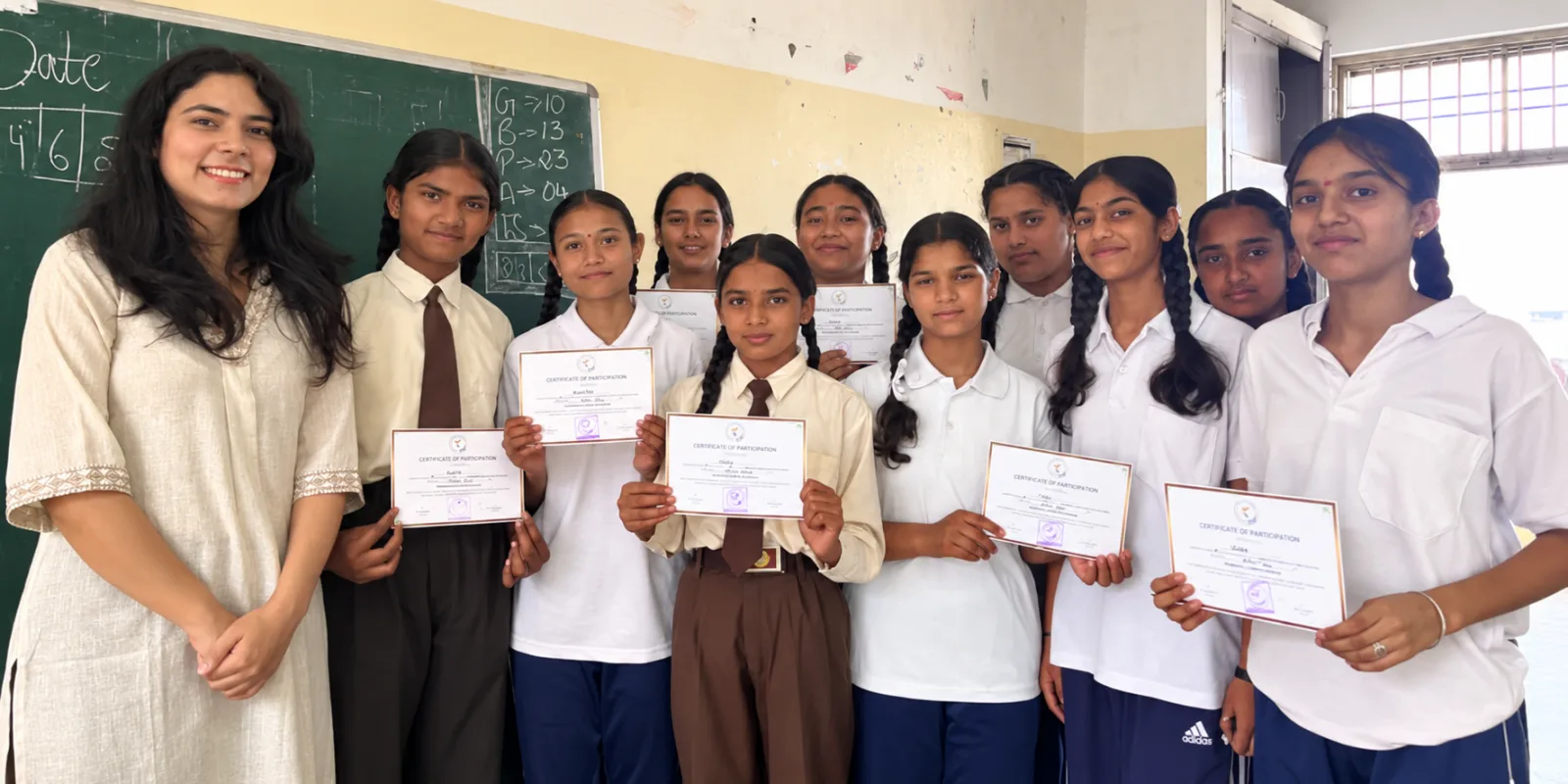
Growing up in a village near Shamli, Uttar Pradesh, Smita Choudhary saw how education and opportunities often differed for boys and girls. That experience later inspired her to co-found the Enlightened India Foundation (EIF), a self-funded grassroots nonprofit focused on empowering rural girls through education, leadership and civic participation.
Building confidence beyond textbooks
During the COVID-19 lockdown, Smita and her friend Shivati Jastoria began working with children in Kangra, Himachal Pradesh. They found that families with limited access to smartphones often prioritised boys for online classes, while girls were expected to handle household and farm responsibilities.
EIF responded by creating learning hubs offering Mathematics, English, Science, coding, sports and life-skills training. The organisation also focused on confidence-building and awareness of legal rights, encouraging girls to participate in village-level decision-making.
The initiative has since engaged more than 800 households and reached 3,500 children across over 46 villages, with girls accounting for about 70% of those impacted. EIF currently has five village-level community leaders and one field associate trained through its programmes.
Turning village problems into civic action
EIF's work extends beyond education. During learning sessions, children document problems such as damaged roads, water shortages and poor internet connectivity. The organisation digitises and categorises these complaints before compiling them into reports for relevant government departments.
Women leaders also conduct surveys and civic workshops covering rights, duties and local governance. The organisation has completed surveys across villages in Kangra and presented findings at district and state levels.
Digital safety has become another focus. Girls trained through EIF conduct awareness sessions for mothers and caregivers on online fraud and OTP scams. The organisation has also supported students facing online harassment by helping them preserve evidence, report incidents and seek institutional support.
One participant, Priyanka, joined EIF at 17 after scoring 93% in Class X. She later became a Project Coordinator for Kangra district, supporting research and governance initiatives across around 50 villages while pursuing her studies.
Expanding the model
EIF has faced resistance from some schools, particularly around digital-safety programmes, but says official engagement with district authorities helped secure permissions.
The foundation currently operates using the founders' savings and salaries, with panchayat leaders among its key supporters. It plans to expand to more villages across Himachal Pradesh, Uttar Pradesh and Uttarakhand.





Conversation
Be kind and stay on topic. Comments are moderated; abuse, spam and personal attacks are removed. Report a problem