

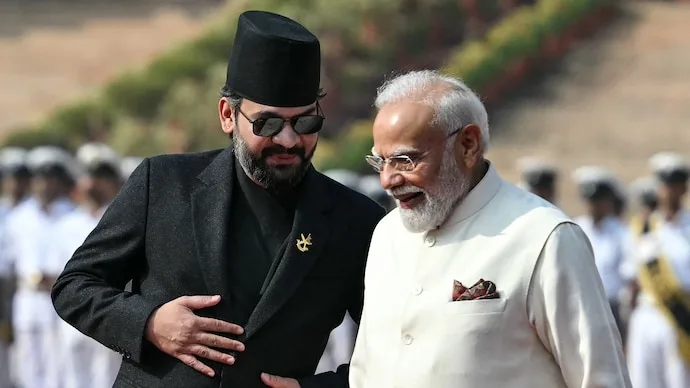

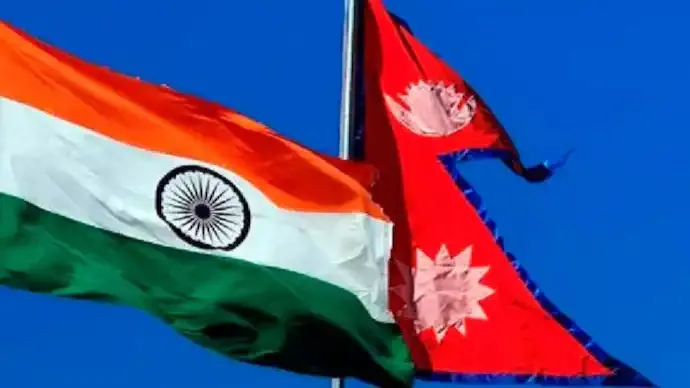
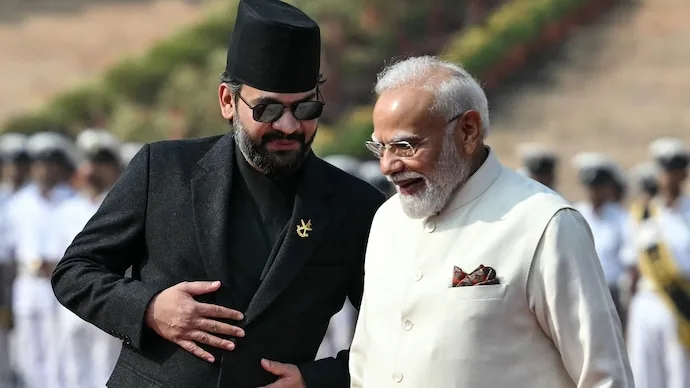
The Balen Shah India visit marked a notable shift in Nepal’s approach to its longstanding territorial disputes with India, as the country’s Prime Minister prioritised economic cooperation, connectivity and development during his maiden state visit to New Delhi on November 22 and 23.
Shah, who had previously been vocal about Nepal’s territorial claims, returned from the visit with a Rs 15,000-crore development assistance package, additional air and port connectivity commitments and progress on major infrastructure projects.
However, his decision not to prominently raise the boundary dispute during formal discussions triggered criticism from political opponents and sections of Nepal’s diplomatic circles.

From Greater Nepal Map to Development Diplomacy
In June 2023, when Shah was Kathmandu’s mayor, he displayed a “Greater Nepal” map in his office following controversy over an “Akhand Bharat” mural in India’s new Parliament building.
The map depicted territories that were once under the Gorkha kingdom before Nepal ceded them to the British under the Treaty of Sugauli in 1816.
Shah also criticised India and China in August 2025 over their decision to resume trade through Lipulekh Pass, alleging that Nepal’s sovereignty had been infringed.
But as Prime Minister, Shah adopted a more pragmatic approach during his India visit. According to reports, he had instructed officials to remove contentious issues from the formal agenda, fearing that raising the border dispute could jeopardise the visit.
Boundary Dispute Remains on Diplomatic Agenda
The boundary question was not entirely excluded from discussions between Shah and Prime Minister Narendra Modi.
According to the joint statement, the two leaders noted progress in the maintenance and repair of boundary pillars and directed their foreign secretaries to work on outstanding boundary issues.
India and Nepal have longstanding territorial disputes involving Kalapani, Lipulekh and Limpiyadhura in the western Himalayas, as well as Susta along the Bihar-Nepal border.
Indian Foreign Secretary Vikram Misri said Nepal’s objections to India-China trade through Lipulekh were not discussed during the visit.
Economic Cooperation Takes Centre Stage
India announced Rs 3,500 crore in grants and a Rs 11,500-crore concessional line of credit for energy projects, taking the development assistance package to Rs 15,000 crore.
The visit also secured additional port access, progress on a bidirectional air route through Bhairahawa and commitments on railway and petroleum connectivity. India will also establish an IIT campus in Nepal.
Experts said the outcomes reflected the economic realities of Nepal’s relationship with India, its biggest trade and transit partner.
While Shah has faced criticism for not pressing Nepal’s territorial claims more forcefully, analysts see his focus on development as a move towards pragmatic diplomacy. His government appears to be prioritising areas of cooperation while leaving contentious issues to formal negotiations.






Conversation
Be kind and stay on topic. Comments are moderated; abuse, spam and personal attacks are removed. Report a problem