



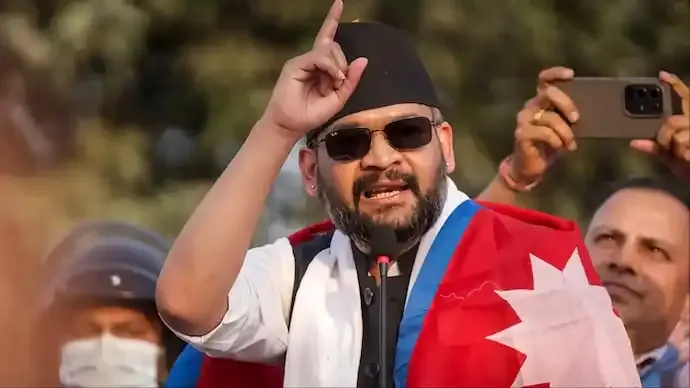
Just five months ago, Balendra “Balen” Shah represented a dramatic break from Nepal's traditional political establishment. A former Kathmandu mayor, civil engineer and rapper, Shah emerged as the face of a Gen Z-driven political wave that challenged Nepal's long-dominant political class.
However, 150 days after taking office as Nepal's Prime Minister on March 27, Shah is facing a very different political reality. Public protests, governance controversies, diplomatic tensions and questions over his engagement with Parliament and his own party have weakened the momentum that initially brought him to power.
From Gen Z Icon to Prime Minister
Balen Shah entered national politics as an outsider promising a break from the familiar cycle of Nepalese politics.

His appeal among younger voters was built around accountability, anti-establishment politics and frustration with traditional political leadership. After his electoral victory, Shah became one of the most prominent symbols of a new generation seeking greater transparency and change in Nepal's political system.
But translating the popularity of an outsider into effective governance has proved far more difficult.
Within months of taking office, Shah's government faced a series of controversies that gradually eroded the political goodwill surrounding his rise.
Customs Rules Triggered Public Backlash
One of the early challenges came in April when the government moved to strictly enforce customs duties on goods brought into Nepal from Indian markets.
The policy affected ordinary Nepalis who regularly depend on Indian border markets for groceries, medicines and household products. The decision triggered public anger, forcing the government to eventually reverse its position.
The episode raised questions about policy planning and the government's understanding of the economic dependence of many Nepali communities on cross-border trade.
India-Nepal Border Remarks Created Diplomatic Controversy
Shah also faced criticism over his comments related to the long-running India-Nepal boundary dispute involving Kalapani, Lipulekh and Limpiyadhura.
During a parliamentary discussion, Shah reportedly suggested that historians, surveyors and even the United Kingdom could potentially help examine colonial-era maps connected to the dispute.
India has consistently maintained that the boundary issue should be addressed bilaterally and that the disputed territories remain under its administration.
Shah's remarks triggered political backlash within Nepal, with student groups and opposition parties accusing him of mishandling an issue closely linked to national sovereignty.
The controversy also put pressure on Nepal's government to clarify its position.
Questions Over Balen Shah's Engagement With Parliament
Another major concern surrounding Shah's leadership has been his limited presence in Parliament.
According to reports, Shah attended only five of the 39 parliamentary sittings held since he assumed office in March.
His absence became a political issue after opposition lawmakers repeatedly raised concerns and demanded his presence in the House.
Speaker DP Aryal subsequently directed Shah to appear for a question-and-answer session scheduled for August 26.
The situation has raised broader questions about the relationship between Nepal's new political leadership and its democratic institutions.
Distance From His Own Party Raises Questions
Shah's relationship with the Rastriya Swatantra Party (RSP), the political force that supported his rise, has also come under scrutiny.
Reports suggested that Shah skipped an important RSP Central Committee meeting on August 21, which focused on preparations for upcoming local-level elections.
His relatively limited participation in party activities since joining the organisation has reportedly fuelled speculation about tensions between Shah and party leadership, including RSP president Rabi Lamichhane.
Some party leaders have reportedly questioned Shah's approach towards the party system, while disagreements have also emerged over the political mandate secured during the March elections.
For a Prime Minister who entered office as an outsider, maintaining political support within his own governing structure may now be becoming an increasingly important challenge.
Rabi Lamichhane's India Visit Added to Political Speculation
The political situation became more complicated when Rabi Lamichhane travelled to India and held meetings with senior political leaders.
The high-profile reception and meetings generated discussion in Nepal about the relationship between New Delhi and the RSP leadership.
The visit came shortly after Shah's comments on the India-Nepal border issue and his earlier reluctance to hold certain meetings with foreign officials.
By August, Shah appeared to soften his earlier position and held separate meetings with the Indian and Chinese ambassadors in Kathmandu.
The developments highlighted the importance of managing Nepal's relationships with its two powerful neighbours, India and China.
Gorkha Recruitment Remains an Important India-Nepal Issue
Another challenge in Nepal's relationship with India has been the continuing uncertainty over the recruitment of Nepali Gorkhas into the Indian Army under the Agnipath scheme.
Former Gorkha soldiers and supporters have protested in Nepal, demanding the resumption of recruitment opportunities for young Nepalis.
The issue gained further attention during Indian Army Chief General Dhiraj Seth's visit to Nepal.
Although defence relations between India and Nepal continue to maintain strong historical links, the question of Gorkha recruitment remains unresolved and politically sensitive.
When Balen Shah's Supporters Turned Against Him
Perhaps the biggest political challenge for Shah emerged when sections of the same youth population that once supported him returned to the streets in protest.
The death of a ride-share driver, Ganesh Nepali, following an incident involving Kathmandu metropolitan authorities became a major flashpoint.
The incident intensified criticism of government enforcement policies and sparked wider conversations about the treatment of informal workers and the role of municipal authorities.
Protests were also held over eviction drives affecting landless communities and informal settlements, with critics accusing the government of failing to provide adequate rehabilitation.
The government's response included investigations, suspensions and compensation measures, but the incidents had already caused significant political damage.
Communal Violence Added to Government Pressure
In late July, communal clashes involving Hindu and Muslim groups in Nepal's southern districts of Sunsari and Siraha created another major crisis for Shah's government.
The violence, which followed tensions surrounding religious processions and public displays, resulted in three deaths and led authorities to impose curfews in several areas.
The crisis forced Shah to make one of his most significant public addresses since becoming Prime Minister.
He appealed for calm, promised an investigation and called for national unity.
However, the unrest added to growing concerns about the government's ability to manage simultaneous political, social and administrative challenges.
Can Balen Shah Recover His Political Momentum?
Balen Shah's rise demonstrated the political power of Nepal's younger generation and their frustration with the country's established political system.
But his first 150 days in office have also highlighted the difference between leading a political movement and governing a country.
From policy reversals and diplomatic controversies to protests, communal tensions and questions about his relationship with Parliament and the RSP, Shah is now navigating multiple challenges simultaneously.
The coming months could determine whether Balen Shah can rebuild the political momentum that made him Nepal's most prominent Gen Z political figure or whether his rapid rise will be followed by an equally dramatic decline.
For now, Nepal's youngest political movement has entered its most difficult phase: governing.






Conversation
Be kind and stay on topic. Comments are moderated; abuse, spam and personal attacks are removed. Report a problem