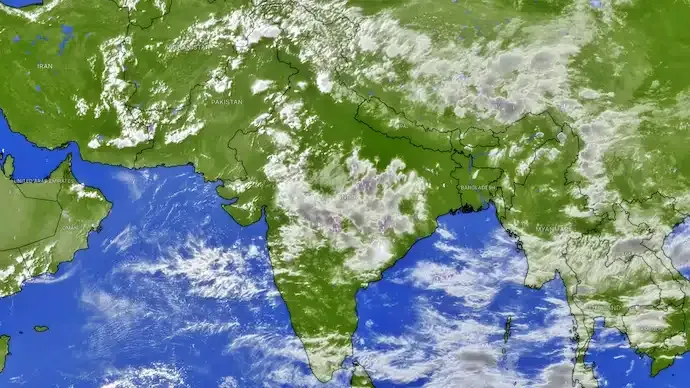
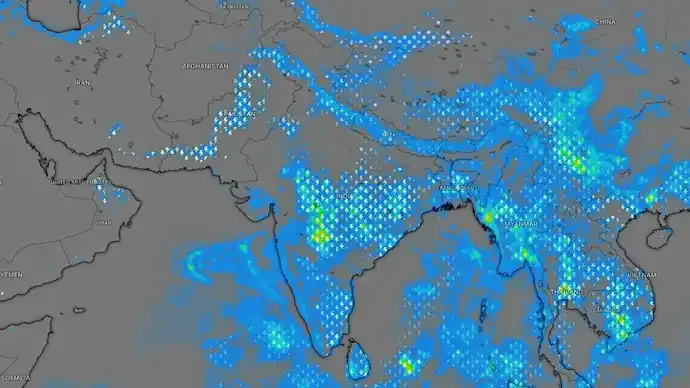
The India Meteorological Department (IMD) has announced that conditions are favourable for the southwest monsoon to advance into more parts of Gujarat, Madhya Pradesh, Chhattisgarh, Jharkhand, Bihar, Uttar Pradesh and Uttarakhand over the next few days.
However, many people across North India are asking the same question: If the monsoon has arrived, why is it still so dry?
According to weather experts, the answer lies in understanding the difference between the advance of the monsoon and the occurrence of widespread rainfall. Although the monsoon circulation is moving northward, the atmospheric conditions needed to produce heavy and continuous rain are not yet fully in place.
Monsoon Advance Does Not Always Mean Heavy Rain
The declaration of monsoon advancement simply means that the seasonal winds carrying moisture have progressed into a new region.
It does not automatically guarantee widespread rainfall.
For heavy monsoon showers to occur, several weather systems must work together, including:
- Moisture-laden monsoon winds.
- Strong low-pressure systems.
- Favourable wind circulation.
- Cloud formation.
- Atmospheric instability.
At present, while the monsoon winds are advancing, some of these supporting systems remain weak or absent across much of North India.
Lack of Strong Low-Pressure Systems
Meteorologists say the biggest reason for the limited rainfall is the absence of strong low-pressure systems over central and northern India.
Low-pressure areas play a crucial role by drawing moisture inland and helping clouds develop into widespread rain-bearing systems.
Without these weather disturbances, rainfall often remains scattered, light or confined to isolated regions despite the official advance of the monsoon.
What Is Happening Over the Indian Ocean?
Weather models indicate that a large tropical weather system is developing over the eastern Indian Ocean, north of the equator.
As this system strengthens, it may improve moisture flow towards the Indian mainland and help create the low-pressure conditions required for more widespread rainfall in the coming days.
Meteorologists are closely monitoring its development to assess its impact on India's monsoon pattern.
Which States Could See Monsoon Progress Soon?
The IMD expects the southwest monsoon to advance further into parts of:
- Gujarat
- Madhya Pradesh
- Chhattisgarh
- Jharkhand
- Bihar
- Uttar Pradesh
- Uttarakhand
These regions may witness increasing cloud cover and rainfall activity as atmospheric conditions become more favourable.
Why North India Is Experiencing a Rainfall Deficit
Many parts of North India continue to record below-normal rainfall because the advancing monsoon has not yet been supported by organised rain-producing weather systems.
This has resulted in:
- Delayed widespread showers.
- Higher daytime temperatures.
- Dry conditions in several districts.
- Uneven rainfall distribution.
The rainfall deficit is expected to improve if stronger monsoon systems develop over the coming week.
What Happens Next?
Meteorologists believe rainfall activity could increase once low-pressure systems become active and interact with the advancing monsoon winds.
If current weather models remain accurate, North India may experience more consistent monsoon rainfall during the next several days as atmospheric conditions improve.
The IMD continues to monitor developments and will issue updated forecasts as the situation evolves.
Conclusion
Although the southwest monsoon is steadily advancing across India, its arrival does not automatically result in widespread rainfall. The lack of strong low-pressure systems has delayed significant showers across much of North India despite favourable monsoon conditions. With a developing tropical weather system over the eastern Indian Ocean, meteorologists expect rainfall activity to gradually increase in the coming days, offering relief to regions experiencing a rainfall deficit.
FAQs
1. Why isn't North India receiving rain despite the monsoon advancing?
The monsoon winds have advanced, but strong low-pressure systems needed for widespread rainfall have not yet fully developed.
2. What is the difference between monsoon advance and rainfall?
Monsoon advance refers to the movement of moisture-bearing winds, while rainfall depends on additional atmospheric conditions such as low-pressure systems and cloud development.
3. Which states are expected to receive the monsoon next?
The IMD expects further advancement into Gujarat, Madhya Pradesh, Chhattisgarh, Jharkhand, Bihar, Uttar Pradesh and Uttarakhand.
4. What role do low-pressure systems play?
They help draw moisture inland, strengthen cloud formation and trigger widespread monsoon rainfall.
5. Is a weather system developing over the Indian Ocean?
Yes. Meteorologists are monitoring a tropical weather system over the eastern Indian Ocean that may strengthen the monsoon in the coming days.
6. Will North India receive more rain soon?
Current weather models suggest rainfall activity could increase as atmospheric conditions become more favourable and stronger low-pressure systems develop.
Prev Article
Monsoon Gains Momentum but India Still Faces 42% Rainfall Deficit
Next Article
Green Transition Needs Investment, Not Just Promises, Say Climate Leaders