Key Highlights
-
Nearly 2 lakh people were evacuated as massive wildfires spread across south-western France and central Spain.
-
The fires threatened major population centres, including Bordeaux in France and areas around Madrid in Spain.
-
France requested emergency assistance from European Union partners as firefighters battled rapidly spreading flames.
-
Spain declared a national wildfire emergency for the first time amid record-breaking fires.
-
Authorities linked the extreme conditions to an intense heatwave, while experts warned that climate change has increased wildfire risks.
Massive Wildfires Trigger Large-Scale Evacuations in France and Spain
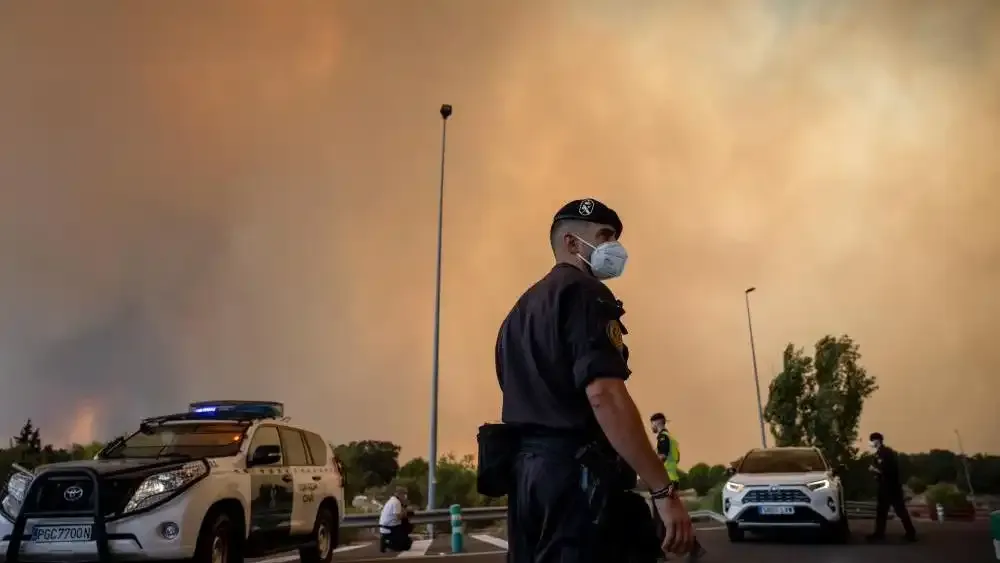
France and Spain are battling some of the most destructive wildfires in recent years, with nearly 200,000 people forced to evacuate as flames spread rapidly across both countries.
The fast-moving fires, fueled by soaring temperatures and dry conditions, have threatened communities near Bordeaux in south-western France and Madrid in central Spain, prompting large-scale emergency responses and international assistance.
Although no deaths have been reported so far, dozens of firefighters have been injured, and authorities warn that the situation remains highly dangerous.
France Battles Massive Fire Moving Towards Bordeaux
France has witnessed its largest wildfire emergency in years, with approximately 141,000 residents evacuated from the Gironde and Landes departments.
The largest blaze, which began near the Cap Ferret peninsula on Wednesday, has already burned around 140 square kilometres and continues moving towards the Bordeaux metropolitan region.
Authorities said shifting winds transformed the fire into a self-sustaining blaze that became increasingly difficult to control.
The wildfire has already:
-
Destroyed 53 homes and a campsite.
-
Injured 42 firefighters.
-
Forced more than 110,000 people to evacuate from the Gironde region.
Many residents escaped by road, while around 1,500 people were evacuated by boats and water taxis across France's Atlantic coast.
France Requests European Assistance
As the wildfire intensified, French President Emmanuel Macron activated the national crisis response mechanism and ordered additional military support for firefighting operations.
France also sought assistance from several European Union countries, which responded by deploying:
-
Two Canadair firefighting aircraft from Croatia.
-
Two Air Tractor firefighting aircraft from Portugal.
-
Two Black Hawk heavy-lift helicopters from the Czech Republic and Slovakia.
Officials described the reinforcements as essential to slowing the advance of the fires toward densely populated areas.
Spain Declares National Wildfire Emergency
Spain also faced an unprecedented wildfire crisis, with approximately 60,000 people evacuated from communities near Madrid and Ávila.
The Spanish government declared a national wildfire emergency for the first time as multiple fires spread rapidly across central Spain.
Two major fires west of Madrid merged into a single blaze that had already consumed around 30 square kilometres, while another wildfire in Ávila burned approximately 90 square kilometres.
Authorities warned that additional evacuations could become necessary if weather conditions worsen.
International Support Arrives for Spain
Spain has also requested international assistance as firefighting operations continue.
European partners responded by sending additional aerial firefighting resources, including Canadair water-bombing aircraft from Italy and Greece.
More than 1,000 Spanish soldiers have also been deployed to assist firefighters and emergency services battling the blazes.
Prime Minister Pedro Sánchez expressed support for affected families and confirmed he would visit the impacted areas.
Heatwave and Dry Conditions Fuel the Crisis
Authorities say the fires have been intensified by an ongoing heatwave, with temperatures forecast to exceed 39°C across parts of France and Spain.
Wildfire experts also pointed to long-term environmental changes as major contributing factors.
In Spain, specialists noted that the abandonment of farmland in rural regions has removed natural firebreaks around villages, allowing fires to spread more rapidly once they begin.
Investigators believe some of the fires may have started accidentally, while Spanish authorities are also examining whether prohibited machinery operations during high-risk conditions contributed to one of the blazes.
Historic Fires Raise Fresh Climate Concerns
The current wildfire season has become one of Spain's worst on record.
Officials say more than 1,140 square kilometres have already burned across Spain this year—over five times the area affected during the same period in 2025.
The country is also continuing to battle one of its largest recorded wildfires in Guadalajara province, while earlier this month a separate blaze claimed 13 lives, marking Spain's deadliest wildfire in recent memory.
Scientists continue to warn that rising temperatures, prolonged droughts and changing weather patterns are increasing both the frequency and intensity of wildfires across southern Europe.
Emergency Response Continues
Firefighters across France and Spain remain focused on protecting populated areas and preventing further destruction.
With weather forecasts predicting continued high temperatures and dry winds, emergency services have urged residents in affected regions to follow evacuation orders and official safety advisories.
Authorities say the coming days will be critical in determining whether the blazes can be brought under control.
Frequently Asked Questions (FAQs)
Why were nearly 2 lakh people evacuated?
Large wildfires spreading rapidly across south-western France and central Spain threatened residential communities, forcing authorities to evacuate nearly 200,000 people as a precaution.
Which areas are most affected?
The worst-hit regions include Gironde and Landes near Bordeaux in France, along with areas around Madrid and Ávila in Spain.
Has anyone died in the wildfires?
As of the latest official updates, no deaths have been reported in these ongoing fires, although dozens of firefighters have been injured.
Why are the fires spreading so quickly?
High temperatures, strong winds, extremely dry vegetation and prolonged heatwave conditions have accelerated the spread of the fires.
Has Europe provided assistance?
Yes. Several European countries have sent firefighting aircraft, helicopters and other emergency resources to assist both France and Spain.
What role does climate change play?
Many scientists say climate change contributes to more frequent and intense heatwaves and drought conditions, increasing the risk and severity of large wildfires. While climate change is widely recognized as a factor that raises wildfire risk, individual fires typically result from a combination of weather, vegetation, terrain and ignition sources.