



India has completed its ambitious dedicated rail freight network nearly two decades after the project was approved, with the final sections of the Western Dedicated Freight Corridor set to make the entire 1,506-km route operational.
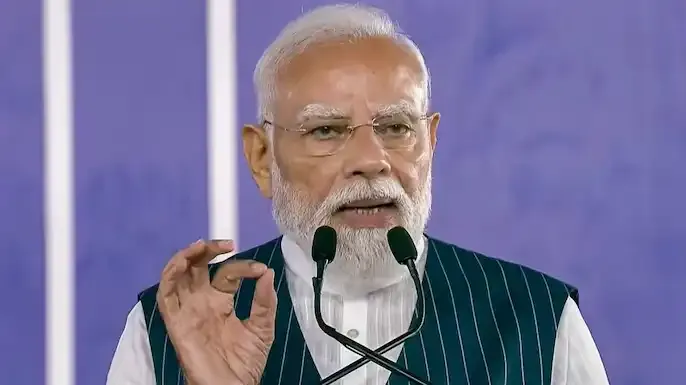
Prime Minister Narendra Modi dedicated the remaining 326 route-km sections of the Western Dedicated Freight Corridor, including the New Sanand North-New Makarpura, New Umbergaon-New Saphale and New Saphale-New JNPT stretches. Built at a cost of more than Rs 20,700 crore, the inauguration completes the Western corridor and takes India's total dedicated freight network to 2,843 km when combined with the Eastern Dedicated Freight Corridor.
The completion gives India a distinction unmatched at this scale. The Western Dedicated Freight Corridor is the world's first fully electrified dedicated freight corridor designed for regular commercial operations of double-stack container trains.

The Dedicated Freight Corridor project was approved in 2006 to create separate rail routes for freight and reduce pressure on India's heavily congested conventional railway network. Land acquisition challenges, contract delays and construction hurdles pushed the project beyond its original deadlines, making it nearly 20 years in the making.
The completed freight network is expected to help goods move faster, reduce logistics costs and free up capacity on existing railway lines for additional passenger services.
The Western Dedicated Freight Corridor stretches from Dadri in Uttar Pradesh to Jawaharlal Nehru Port near Mumbai. Passing through Haryana, Rajasthan and Gujarat, the 1,506-km route connects industrial centres in northern and western India directly with one of the country's most important container ports.
The corridor is designed mainly for container traffic and will provide an uninterrupted dedicated rail route for export and import cargo moving between JNPT and industrial hubs in Gujarat, Rajasthan, Haryana, Delhi-NCR and western Uttar Pradesh.
One of the WDFC's biggest technological features is its ability to run double-stack container trains using electric traction. Two containers can be stacked vertically on a single wagon, allowing trains to transport significantly more cargo in one trip.
While double-stack freight trains operate in several countries, they generally rely on diesel locomotives because conventional overhead electric wires do not provide enough clearance for stacked containers. India addressed this challenge by installing specially designed high-rise overhead equipment on the Western Dedicated Freight Corridor.
The overhead contact wires on the route are positioned at around 7.45 metres above rail level, allowing specially equipped electric locomotives with high-reach pantographs to operate beneath them while hauling double-stack containers.
This combination of electric traction and routine double-stack operations makes the WDFC unique among major freight rail networks worldwide.
The heavy-haul capability of the corridor is supported by WAG-12B electric locomotives manufactured at Madhepura in Bihar. Rated at 12,000 horsepower, these locomotives can haul around 6,000 tonnes and operate at speeds of up to 120 kmph while using regenerative braking to improve energy efficiency.
The Dedicated Freight Corridor project was conceived to separate freight trains from passenger services on some of India's busiest railway routes, particularly the Delhi-Mumbai and Delhi-Howrah corridors.
The Eastern Dedicated Freight Corridor, stretching 1,337 km from Ludhiana in Punjab to Sonnagar in Bihar, became fully operational in October 2023. It primarily carries bulk commodities including coal, steel, foodgrain and other mineral freight.
With the Western corridor now completed, India has a combined 2,843-km network of dedicated freight routes.
The WDFC is built for freight trains operating at speeds of up to 100 kmph, significantly faster than the average commercial speeds historically achieved by goods trains on mixed passenger and freight routes. Dedicated tracks reduce delays caused by passenger train priority and allow for heavier and more efficient freight operations.
The route also connects with existing and planned feeder networks serving ports such as Mundra, Kandla, Pipavav and Hazira in Gujarat. Together with logistics parks, cargo terminals and the Delhi-Mumbai Industrial Corridor, the WDFC is expected to strengthen India's wider port-to-factory logistics network.
Japan, through the Japan International Cooperation Agency, provided major financial and technical support for the Western Dedicated Freight Corridor.
The completion of the Eastern and Western Dedicated Freight Corridors is also expected to create more space on conventional railway tracks. With freight trains shifting to dedicated routes, Indian Railways can potentially increase passenger services and improve capacity across busy rail corridors.
The success of the two freight corridors has also encouraged plans for further expansion. The government has announced a proposed 2,052-km Dankuni-Surat dedicated freight corridor, while detailed project planning is underway for future freight routes across eastern, western and central India.
After nearly 20 years of construction and planning, India's dedicated freight network now represents a major transformation in railway logistics. The Western Dedicated Freight Corridor's electric double-stack technology offers a combination of higher cargo capacity, faster movement, lower energy consumption and improved connectivity between industrial regions and major ports.






Conversation
Be kind and stay on topic. Comments are moderated; abuse, spam and personal attacks are removed. Report a problem