

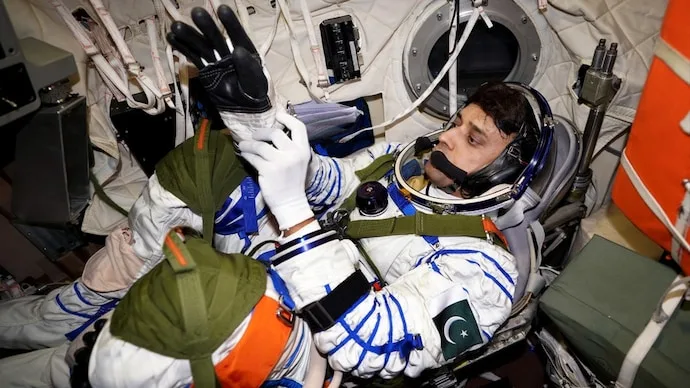

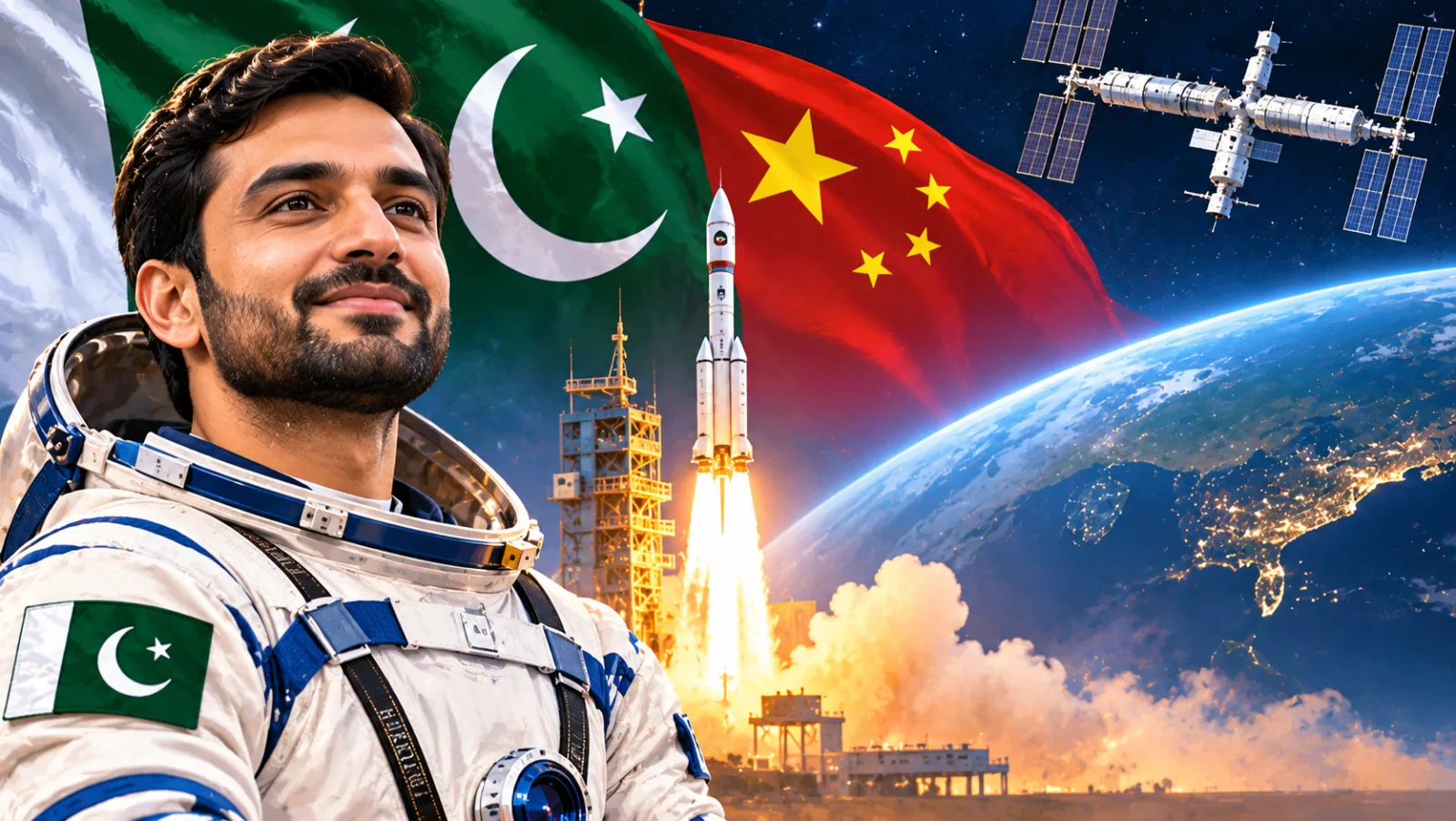
Pakistan's first astronaut, Muhammad Zeeshan Ali, has reached China’s Tiangong space station and is participating in scientific experiments under a joint China-Pakistan space cooperation programme, according to the supplied report.
Ali, a 40-year-old former Pakistan Air Force pilot, travelled aboard the Shenzhou-24 spacecraft on November 25, 2026. The report describes him as the first Pakistani to travel into space and the first foreign astronaut to board China’s space station.
He is part of a three-member crew with Chinese astronauts Tang Hongbo and Wu Yi. After launching from the Jiuquan Satellite Launch Center in northwestern China, the spacecraft docked with Tiangong, where the crew joined three astronauts already living aboard the station.

Ali is expected to spend between five and 10 days in orbit before returning to Earth, according to the report.
What experiments will Pakistan’s first astronaut conduct?
Ali’s main responsibility is to assist with scientific experiments conducted under the China-Pakistan space cooperation programme.
According to the China Manned Space Agency, the mission includes four joint projects involving biotechnology and materials research. Ali will help install experiment samples and equipment, operate them in space and carry out scheduled research activities.
One of his key assignments involves studying photosynthetic cyanobacteria. These microscopic organisms use sunlight to produce energy, similar to plants.
Scientists want to understand how cyanobacteria behave in space, where conditions such as weightlessness can affect biological processes. The findings could contribute to research on living organisms and materials beyond Earth.
The wider Shenzhou-24 mission is expected to include more than 90 scientific experiments and technology tests.
Why does China have a space station?
Tiangong, meaning “Heavenly Palace”, is China’s permanently occupied space station and a major orbital research facility.
Unlike a spacecraft designed for a journey, a space station remains in orbit and provides astronauts with a place to live and work for extended periods. It enables scientists to conduct experiments under conditions that are difficult to reproduce on Earth.
The station has three main sections: a central module used for living and controlling the station, and two laboratory modules equipped for scientific research.
China uses Tiangong to study biology, materials science and the effects of long-duration spaceflight on the human body. The research also supports preparations for future crewed missions to the Moon.
China-Pakistan space cooperation
Ali’s participation is significant beyond the experiments. The report says his flight follows a February 2025 agreement between China and Pakistan on astronaut selection and training.
The mission could create opportunities for Pakistani scientists and researchers to participate more directly in China’s human spaceflight programme.
The report says Ali is expected to return aboard the Shenzhou-23 spacecraft with two members of the earlier crew. His mission marks a new phase in space cooperation between the two countries, combining astronaut training with scientific research in orbit.







Conversation
Be kind and stay on topic. Comments are moderated; abuse, spam and personal attacks are removed. Report a problem