

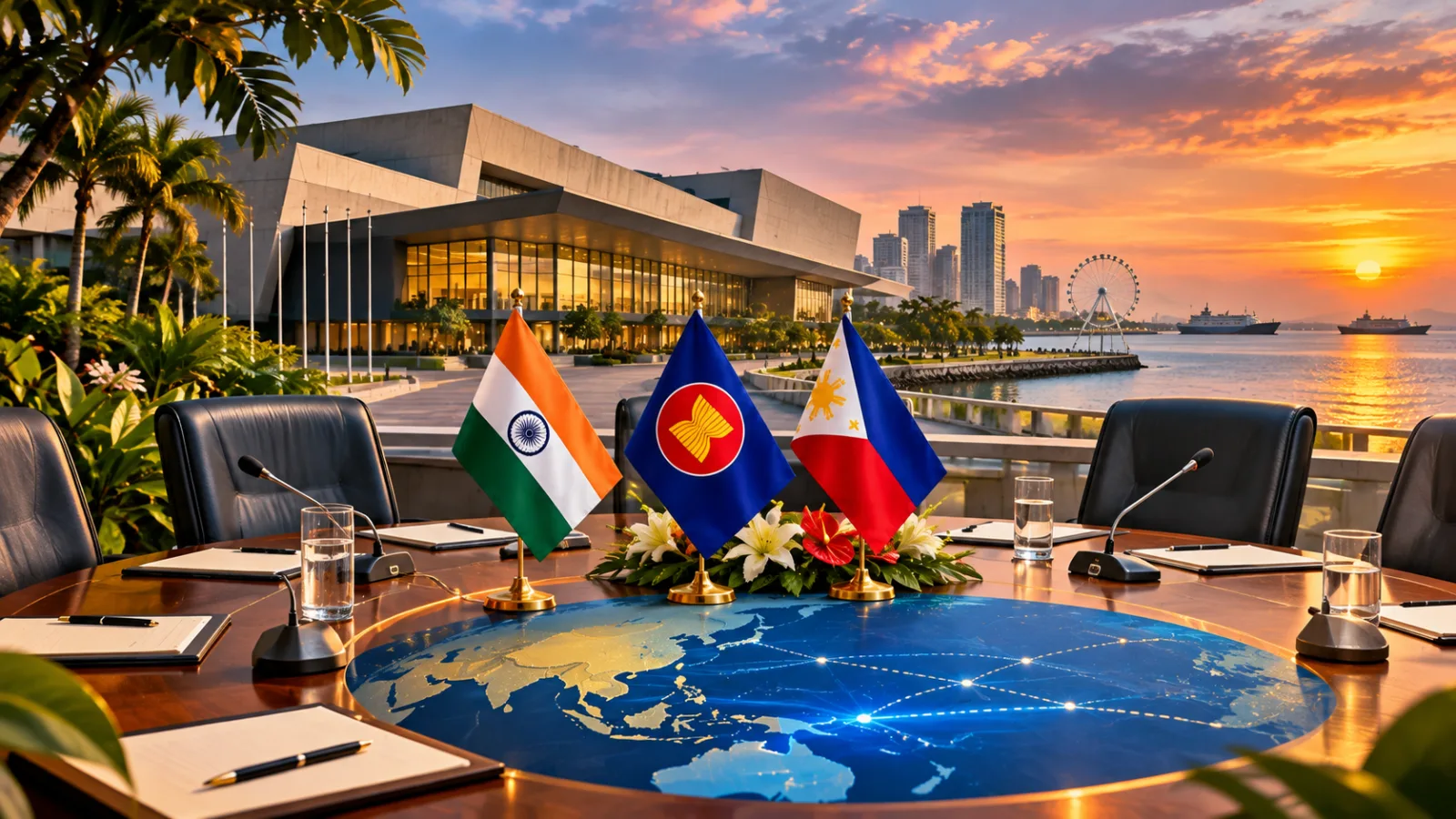

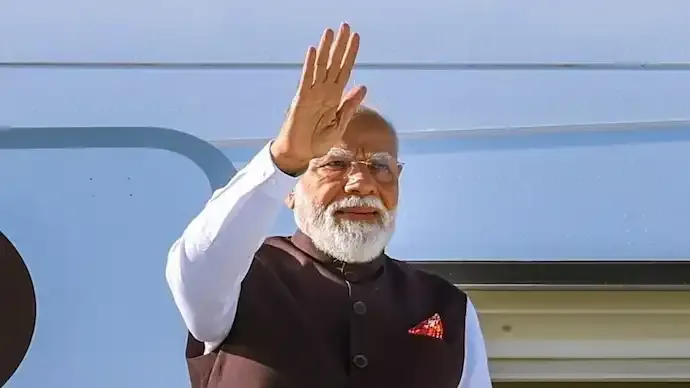
NEW DELHI, November 12, 2026: Prime Minister Narendra Modi will visit Manila, Philippines, from November 16 to 18 to attend the ASEAN-India Summit and East Asia Summit, with trade, maritime security and regional stability expected to dominate discussions.
The Ministry of External Affairs (MEA) confirmed the visit on Thursday, describing India's engagement with Southeast Asian countries as an important part of its Act East policy and broader Indo-Pacific strategy.
During the three-day visit, Modi is scheduled to participate in the 23rd ASEAN-India Summit and the 21st East Asia Summit. He is also expected to hold bilateral meetings with several world leaders and attend a dinner hosted by Philippine President Ferdinand Marcos Jr.

The meetings will take place alongside the 49th ASEAN Summit, bringing together leaders from Southeast Asia and major international partners amid changing geopolitical and economic conditions.
PM Modi's Philippines Visit: Schedule and Key Meetings
Announcing the visit at a special media briefing in New Delhi, MEA Secretary (East) Rudrendra Tandon said India's relationship with the Association of Southeast Asian Nations (ASEAN) remains central to its foreign policy.
The Prime Minister's programme will include several diplomatic engagements.
The main scheduled developments are:
- November 16, 2026: Modi is expected to arrive in Manila and participate in engagements associated with the ASEAN meetings.
- November 17, 2026: The 23rd ASEAN-India Summit and 21st East Asia Summit are scheduled.
- November 16 to 18: Bilateral meetings with international leaders are expected during the visit.
- Official dinner: Philippine President Ferdinand Marcos Jr will host visiting dignitaries.
- Quad engagement: A meeting involving India, the United States, Japan and Australia is being planned, although the exact schedule remains unconfirmed.
The summit will provide India with an opportunity to discuss trade, regional security and cooperation with Southeast Asian countries.
The Philippines is chairing ASEAN in 2026, with the summit programme focused on strengthening cooperation and preparing the region for emerging challenges.
Why ASEAN Is Important to India's Act East Policy
ASEAN has become one of India's most important regional partnerships.
Established in 1967, the organisation promotes economic cooperation, political dialogue and regional stability among Southeast Asian countries.
The grouping currently has 11 members following Timor-Leste's admission in 2025.
The members are:
- Brunei
- Cambodia
- Indonesia
- Laos
- Malaysia
- Myanmar
- Philippines
- Singapore
- Thailand
- Timor-Leste
- Vietnam
India considers ASEAN central to its Act East policy, which seeks to strengthen economic, strategic and cultural relations with countries across Southeast Asia and the wider Indo-Pacific.
Tandon described ASEAN as an important contributor to regional peace, stability and economic prosperity.
According to the MEA, stronger cooperation would help India and Southeast Asian countries respond more effectively to rapidly changing international conditions.
The relationship is particularly significant because India and ASEAN member states are connected through major maritime trade routes.
India-ASEAN Trade Reaches $128.38 Billion in 2025-26
Economic cooperation is expected to be a major focus of the Manila meetings.
During Thursday's briefing, Tandon referred to annual trade between India and ASEAN of approximately $122 billion.
However, India's Ministry of Commerce and Industry reported that bilateral merchandise trade reached $128.38 billion during the financial year 2025-26.
According to the ministry's September 2026 figures, ASEAN accounted for approximately 10.55% of India's total global trade.
The figures demonstrate the scale of economic engagement between India and Southeast Asia.
Major areas of trade and investment include:
- Electronics and industrial products.
- Machinery and manufacturing.
- Petroleum and energy products.
- Agricultural commodities and food products.
- Pharmaceuticals and healthcare.
- Technology and digital services.
Trade cooperation also has implications for Indian companies seeking access to Southeast Asian markets.
However, both sides continue to face challenges involving tariffs, market access and the movement of goods across borders.
India Pushes for Review of ASEAN-India Trade Agreement
One of India's important economic priorities is the review of the ASEAN-India Trade in Goods Agreement, commonly known as AITIGA.
The agreement entered into force in 2010 and was designed to facilitate trade by reducing tariffs on a wide range of products.
However, India has raised concerns about growing trade imbalances and the need to make the agreement more beneficial for domestic businesses.
New Delhi wants the review to address issues including market access, rules of origin and trade facilitation.
At Thursday's briefing, Tandon said India wanted the process completed as soon as possible.
He acknowledged that negotiations involving multiple countries can be difficult because an agreement requires consensus among participating governments.
The review remains underway.
In October 2026, India and ASEAN held the 15th AITIGA Joint Committee meeting in Jakarta, Indonesia.
The participating countries agreed to accelerate work on outstanding issues and continue negotiations.
The next Joint Committee meeting is planned for January 2027.
Alongside the regional agreement, India is also pursuing bilateral trade discussions with individual ASEAN countries.
These efforts are intended to expand commercial opportunities even while the wider review continues.
Maritime Security to Feature in India-ASEAN Discussions
Maritime cooperation is expected to be another important part of Modi's visit.
India and Southeast Asian countries are connected through shipping routes that carry commercial goods, energy supplies and other essential cargo.
Security challenges in these waters can affect international trade and regional economic activity.
Tandon identified several areas where India and ASEAN could strengthen cooperation.
These include:
- Maritime domain awareness and information sharing.
- Coordinated maritime patrols and cooperation between relevant agencies.
- Measures to address piracy.
- Action against illegal, unreported and unregulated fishing.
- Training and capacity building for maritime security agencies.
- Cooperation on maritime safety and disaster response.
Maritime domain awareness refers to the ability to monitor activities at sea, including vessel movements and potential security threats.
Improved information sharing can help authorities respond more effectively to emergencies and suspicious activities.
India and ASEAN designated 2026 as the ASEAN-India Year of Maritime Cooperation, reflecting the growing importance of their maritime partnership.
However, discussions about potential cooperation should not be interpreted as confirmation of new agreements until they are formally announced.
BrahMos Missile Deal Highlights India-Philippines Defence Ties
India's defence relationship with the Philippines is an important part of its growing engagement with Southeast Asia.
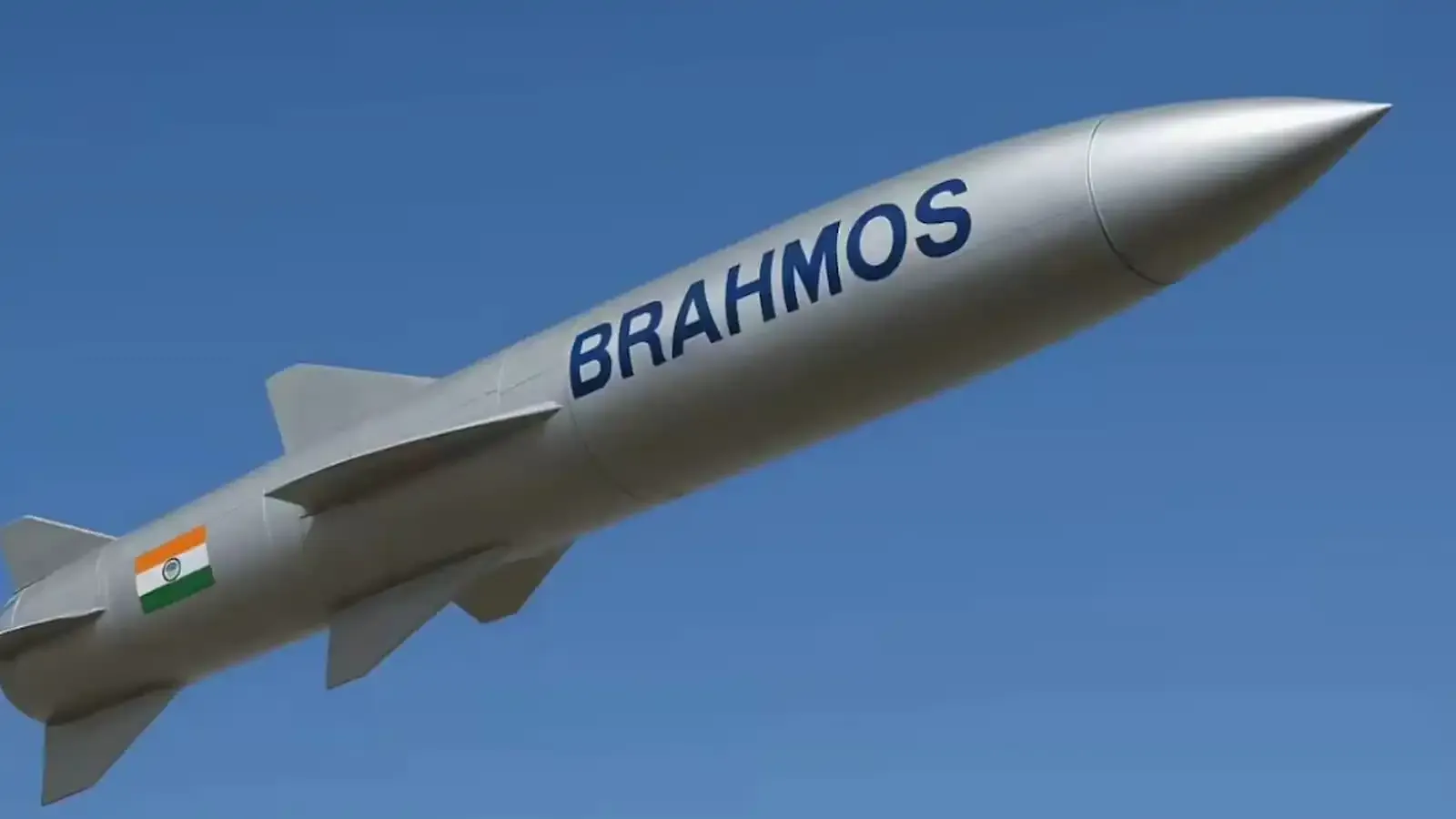
During the briefing, Tandon highlighted India's agreement to supply BrahMos cruise missiles to the Philippines.
The deal represents a major development in defence cooperation between the two countries.
It also demonstrates India's efforts to expand its role as a supplier of defence equipment to international partners.
The Philippines has been strengthening its maritime defence capabilities amid security concerns in the South China Sea.
India has consistently emphasised the importance of freedom of navigation, respect for international law and peaceful settlement of disputes.
Modi's visit could provide opportunities for further defence discussions.
However, no additional defence agreement should be considered confirmed unless announced by the governments involved.
Quad Leaders' Meeting Also Expected in Manila
The upcoming ASEAN meetings could also provide an opportunity for a Quad leaders' summit.
The Quadrilateral Security Dialogue, commonly known as the Quad, includes India, Australia, Japan and the United States.
The grouping focuses on cooperation in the Indo-Pacific, including maritime security, critical technologies, resilient supply chains and disaster response.
US Secretary of State Marco Rubio previously indicated that the four countries were planning a leaders' meeting in Manila.
The discussions could bring together Modi, US President Donald Trump, Australian Prime Minister Anthony Albanese and Japanese Prime Minister Sanae Takaichi.
However, a final date and detailed programme for the Quad meeting had not been officially confirmed as of November 12.
The proposed engagement comes amid wider diplomatic efforts to strengthen cooperation across the Indo-Pacific.
East Asia Summit to Discuss Regional and Global Challenges
Modi will also attend the 21st East Asia Summit, which is scheduled for November 17.
The East Asia Summit is an ASEAN-led forum bringing together the bloc's member states and eight dialogue partners.
These partners include India, Australia, China, Japan, New Zealand, South Korea, Russia and the United States.
The forum provides an opportunity for leaders to discuss major strategic, political and economic issues.
This year's discussions are expected to cover regional stability, economic resilience and challenges affecting the Indo-Pacific.
The meeting comes at a time of continuing international tensions and uncertainty surrounding global supply chains.
The Philippines has identified cooperation and preparedness for future challenges as important priorities during its ASEAN chairmanship.
India Favours Continued Engagement With Myanmar
The ongoing situation in Myanmar is also expected to feature in regional discussions.
Myanmar has faced political instability and armed conflict since the military takeover in February 2021.
ASEAN has sought to address the crisis through diplomatic engagement, although efforts to achieve a lasting resolution have faced difficulties.
Asked about India's position, Tandon said New Delhi supported continued engagement rather than isolating Myanmar.
India believes diplomatic dialogue is necessary to address the country's complex political and security situation.
Myanmar also shares a land border with India, making developments there relevant to India's border security, regional connectivity and economic interests.
Tandon indicated that India supports ASEAN's efforts to engage Myanmar while recognising the country's historical and political complexities.
The issue remains sensitive, and no immediate breakthrough has been announced ahead of the summit.
Why PM Modi's Manila Visit Matters for India
The visit comes at an important time for India's relationships with Southeast Asian countries.
ASEAN represents a substantial economic market and occupies a strategically significant location connecting the Indian and Pacific Oceans.
For India, stronger relations with the grouping could support several long-term objectives.
These include expanding export opportunities, improving trade arrangements, developing maritime cooperation and strengthening diplomatic relationships.
The meetings also provide an opportunity to discuss regional challenges with leaders from major economies.
At the same time, the effectiveness of the discussions will depend on whether participating countries can translate their commitments into practical cooperation.
Trade negotiations, security partnerships and regional diplomatic initiatives often require sustained engagement beyond individual summits.
What Happens Next?
Prime Minister Narendra Modi is scheduled to begin his Philippines visit on November 16.
The ASEAN-India Summit and East Asia Summit are planned for November 17, with bilateral meetings expected during the wider three-day programme.
Attention will be on the outcomes of discussions involving trade, maritime cooperation and regional security.
Any official announcement concerning the Quad leaders' meeting will also be closely watched.
For India, the Manila meetings represent an opportunity to strengthen engagement with an economically important and strategically significant region.
The visit is expected to reinforce India's commitment to ASEAN-led cooperation while advancing its broader Act East and Indo-Pacific objectives.
Editorial note: This report is based on the Ministry of External Affairs briefing of November 12, 2026, announcements by the Philippine Department of Foreign Affairs, Indian Ministry of Commerce and Industry data, and reporting by Reuters, PTI and other established news organisations. All India Story has not independently attended the briefing. The diplomatic meetings discussed in this article are scheduled events and had not taken place at the time of publication.




Conversation
Be kind and stay on topic. Comments are moderated; abuse, spam and personal attacks are removed. Report a problem