
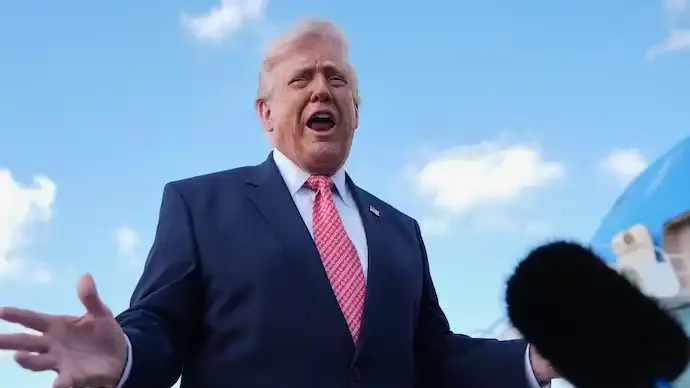
Donald Trump has reignited the debate over birthright citizenship in the United States, just days before a crucial hearing in the US Supreme Court.
The issue centres on the interpretation of the 14th Amendment, which guarantees citizenship to individuals born on US soil.
Criticism of the 14th Amendment Interpretation
Trump has argued that the Citizenship Clause of the 14th Amendment is being misused by foreign nationals. According to his statement, some individuals travel to the United States specifically to secure citizenship for their children.
His remarks have intensified discussions around immigration policy and constitutional rights.
Sharp Remarks Against the Judiciary
In his latest comments, Trump also criticised the Supreme Court, using strong language ahead of the upcoming hearing. His remarks have drawn attention due to their timing and tone, as the court prepares to examine the scope of executive authority and constitutional provisions.
What the Case Is About
The upcoming hearing will focus on the interpretation of the Citizenship Clause, which states that all persons born or naturalised in the US are citizens, provided they are subject to its jurisdiction.
The case could potentially redefine how birthright citizenship is applied in the future.
A High-Stakes Constitutional Debate
The issue has become a major point of political and legal debate in the United States. Supporters of birthright citizenship argue that it is a fundamental constitutional right, while critics believe it requires stricter interpretation.
The outcome of the case could have far-reaching implications for immigration policies.
Global and Political Implications
Changes to birthright citizenship laws in the US could impact global migration patterns and diplomatic relations. The debate is being closely followed worldwide, including in countries with significant migration links to the US.
Rising Political Tensions
The controversy has added to existing political tensions, with the issue becoming a focal point in broader discussions about executive power, judicial authority, and immigration reform.
What Lies Ahead
All eyes are now on the Supreme Court hearing, which is expected to shape the future of citizenship laws in the United States.




Conversation
Be kind and stay on topic. Comments are moderated; abuse, spam and personal attacks are removed. Report a problem