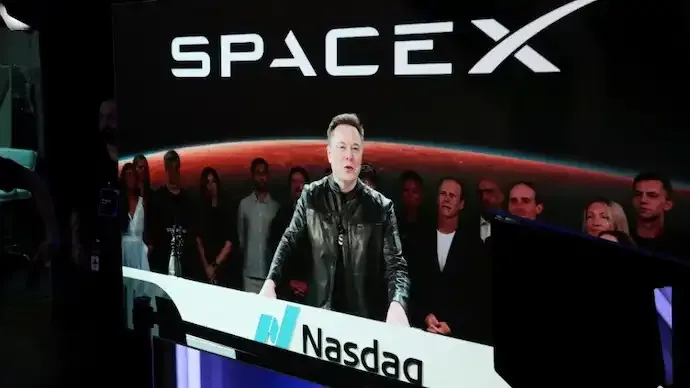
SpaceX stunned global financial markets when it launched what became the most valuable initial public offering (IPO) in history. Investor enthusiasm surrounding Elon Musk's space technology giant drove the company's valuation to extraordinary levels and cemented its position as one of the world's most closely watched public companies.
However, less than two weeks after its landmark stock market debut, SpaceX has experienced a dramatic reversal. The company has reportedly lost around $600 billion in market value within just three trading sessions, raising questions about investor expectations, valuation concerns, and the challenges facing newly listed companies.
While the decline is significant, market analysts note that such corrections are not uncommon following major IPOs, especially when initial valuations are driven by exceptionally high investor optimism.
What Happened to SpaceX's Market Value?
Following a strong debut, SpaceX shares experienced heavy selling pressure, resulting in a sharp decline in the company's overall market capitalization.
The correction erased a substantial portion of the gains recorded after the IPO, making it one of the largest short-term value declines seen after a major public listing.
Although the headline figure of $600 billion is striking, investors and analysts are focusing more on the reasons behind the selloff than the number itself.
Why Did SpaceX Shares Fall?
Several factors appear to have contributed to the sharp decline.
1. Profit Booking After a Massive Rally
One of the most common reasons for post-IPO declines is profit-taking by investors who purchased shares early.
Following strong gains after listing, many traders may have chosen to lock in profits, creating selling pressure and pushing the stock lower.
Large IPOs often experience volatility as investors reassess valuations after the initial excitement fades.
2. Extremely High Valuation Expectations
SpaceX entered public markets with enormous expectations attached to its future growth.
Investors are not only evaluating the company's current business operations but also pricing in future opportunities involving:
-
Satellite internet services
-
Commercial launches
-
Deep-space exploration
-
Government contracts
-
Future space infrastructure
When expectations become exceptionally high, even minor concerns can trigger significant market reactions.
3. Investors Want Proof of Long-Term Growth
The enthusiasm surrounding Elon Musk's vision helped drive investor demand, but public markets eventually demand measurable results.
Shareholders are increasingly focused on:
-
Revenue growth
-
Profitability
-
Cash flow performance
-
Expansion plans
-
Competitive positioning
The transition from a highly anticipated private company to a publicly traded corporation often increases scrutiny from investors.
4. Broader Market Volatility
Technology and growth-focused stocks frequently experience sharp price movements during periods of market uncertainty.
Investor sentiment can change rapidly due to:
-
Interest rate expectations
-
Economic data
-
Global market conditions
-
Sector-specific concerns
-
Changes in risk appetite
These factors can amplify declines in highly valued companies.
Why SpaceX's IPO Was Historic
SpaceX's stock market debut attracted global attention because of the company's unique position within the aerospace industry.
Founded by Elon Musk, SpaceX transformed the commercial space sector through innovations such as reusable rockets and large-scale satellite deployments.
Key Areas of Business
-
Rocket launches
-
Space transportation
-
Satellite internet services
-
Government and defense contracts
-
Space exploration technologies
Its IPO was widely viewed as one of the most significant public offerings in modern market history.
Does a $600 Billion Loss Mean SpaceX Is in Trouble?
Not necessarily.
A decline in market capitalization reflects changing investor sentiment and stock price movements rather than an immediate deterioration in business operations.
Many major companies have experienced significant post-IPO corrections before achieving long-term success.
Investors often reassess growth assumptions after the initial listing period, leading to temporary volatility.
What Investors Are Watching Now
Market participants will closely monitor:
-
Quarterly earnings reports
-
Revenue growth trends
-
Profit margins
-
Launch schedules
-
Satellite business performance
-
Future expansion plans
Strong operational results could help restore investor confidence.
Elon Musk's Influence on Investor Sentiment
Elon Musk remains one of the most influential figures in global business and technology.
His reputation for pursuing ambitious projects has helped attract substantial investor interest to ventures ranging from electric vehicles to artificial intelligence and space technology.
However, companies associated with Musk often experience heightened volatility because market expectations tend to be exceptionally high.
As a result, investor reactions can become more pronounced when performance falls short of optimistic forecasts.
The Challenge of Meeting Expectations
The biggest challenge facing SpaceX may not be competition or technology—it may be expectations.
Investors have already demonstrated confidence in the company's long-term vision. The next phase requires translating that vision into consistent financial performance and sustainable growth.
Public companies face continuous pressure to deliver measurable results, and newly listed firms often encounter intense scrutiny during their first months on the market.
What Happens Next?
SpaceX remains one of the world's most valuable and strategically important aerospace companies.
While the recent selloff has attracted headlines, analysts will be paying closer attention to the company's operational performance, financial results, and long-term growth strategy.
Future developments in satellite communications, launch services, government contracts, and commercial space projects could significantly influence the company's market trajectory.
Conclusion
SpaceX's reported $600 billion decline in market value highlights the challenges that often follow highly anticipated IPOs. After a record-breaking stock market debut, investors are shifting their focus from excitement to execution. While the correction reflects concerns about valuation and future growth expectations, the company's long-term prospects will ultimately depend on its ability to deliver consistent business results and justify the confidence placed in Elon Musk's ambitious vision.
FAQ SECTION
Q1. How much market value did SpaceX lose?
SpaceX reportedly lost around $600 billion in market capitalization over three trading sessions.
Q2. Why did SpaceX shares fall after the IPO?
Factors include profit-taking, valuation concerns, investor expectations, and broader market volatility.
Q3. Does the decline mean SpaceX is performing poorly?
Not necessarily. Stock market declines often reflect investor sentiment rather than immediate business performance.
Q4. Why was SpaceX's IPO considered historic?
The IPO became one of the largest and most valuable public offerings ever seen in global financial markets.
Q5. What businesses does SpaceX operate?
SpaceX operates in rocket launches, satellite internet services, space transportation, government contracts, and space exploration technologies.
Q6. What will investors watch next?
Investors will focus on earnings, revenue growth, profitability, operational performance, and future expansion plans.