Shopping cart
Your cart empty!


Your cart empty!
Terms of use dolor sit amet consectetur, adipisicing elit. Recusandae provident ullam aperiam quo ad non corrupti sit vel quam repellat ipsa quod sed, repellendus adipisci, ducimus ea modi odio assumenda.
Lorem ipsum dolor sit amet consectetur adipisicing elit. Sequi, cum esse possimus officiis amet ea voluptatibus libero! Dolorum assumenda esse, deserunt ipsum ad iusto! Praesentium error nobis tenetur at, quis nostrum facere excepturi architecto totam.
Lorem ipsum dolor sit amet consectetur adipisicing elit. Inventore, soluta alias eaque modi ipsum sint iusto fugiat vero velit rerum.
Sequi, cum esse possimus officiis amet ea voluptatibus libero! Dolorum assumenda esse, deserunt ipsum ad iusto! Praesentium error nobis tenetur at, quis nostrum facere excepturi architecto totam.
Lorem ipsum dolor sit amet consectetur adipisicing elit. Inventore, soluta alias eaque modi ipsum sint iusto fugiat vero velit rerum.
Dolor sit amet consectetur adipisicing elit. Sequi, cum esse possimus officiis amet ea voluptatibus libero! Dolorum assumenda esse, deserunt ipsum ad iusto! Praesentium error nobis tenetur at, quis nostrum facere excepturi architecto totam.
Lorem ipsum dolor sit amet consectetur adipisicing elit. Inventore, soluta alias eaque modi ipsum sint iusto fugiat vero velit rerum.
Sit amet consectetur adipisicing elit. Sequi, cum esse possimus officiis amet ea voluptatibus libero! Dolorum assumenda esse, deserunt ipsum ad iusto! Praesentium error nobis tenetur at, quis nostrum facere excepturi architecto totam.
Lorem ipsum dolor sit amet consectetur adipisicing elit. Inventore, soluta alias eaque modi ipsum sint iusto fugiat vero velit rerum.
Do you agree to our terms? Sign up
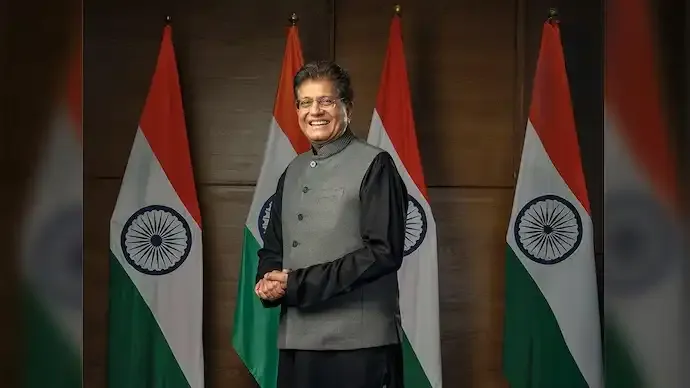
India and the United States are entering a critical stage in their trade negotiations as Union Commerce and Industry Minister Piyush Goyal prepares to hold high-level discussions with US Trade Representative Jamieson Greer in New Delhi.
The meeting is expected to play a significant role in shaping the first phase of a proposed India-US Bilateral Trade Agreement (BTA), with both sides seeking progress ahead of an important July deadline tied to US tariff policies.
As two of the world's largest economies deepen their economic engagement, the outcome of these discussions could influence trade flows, market access, investment opportunities, and broader strategic cooperation.
The India-US economic partnership has expanded significantly over the past decade, making the United States one of India's most important trading partners.
A successful trade agreement could:
The current discussions are therefore being closely monitored by industries, exporters, investors, and policymakers on both sides.
The negotiations are expected to focus on several key trade-related issues that have been under discussion for months.
Tariffs remain one of the most important topics in the negotiations.
Both countries are exploring ways to improve market access by reducing duties on selected products and addressing concerns raised by exporters.
The goal is to create a more balanced trade environment that benefits businesses and consumers alike.
Improving access to each other's markets remains a major objective.
The discussions may involve:
Enhanced market access could create new opportunities for companies operating in both countries.
India and the United States continue to strengthen economic cooperation through investment partnerships.
The talks are expected to explore ways to:
Such measures could contribute to long-term economic growth.
Global supply chain resilience has become an important priority for many countries.
India and the US are increasingly exploring opportunities to:
These discussions have gained importance amid evolving global trade dynamics.
The current round of negotiations carries additional urgency because both countries are seeking progress before a July 24 deadline linked to the US tariff framework.
Trade agreements often require extensive negotiations covering multiple sectors and regulatory issues. Reaching an understanding before the deadline could help avoid additional trade uncertainties and maintain positive momentum in bilateral relations.
The coming days are therefore viewed as particularly significant for both negotiating teams.
India and the United States share one of the world's fastest-growing economic relationships.
Bilateral trade between the two countries has expanded considerably in recent years, making economic cooperation a major pillar of the broader strategic partnership.
A successful first phase of the trade agreement could provide several advantages for India.
Indian exporters are particularly interested in reduced trade barriers and improved market access.
The United States could also benefit through:
The agreement could support broader economic and strategic objectives for both countries.
Despite positive momentum, trade negotiations often involve complex issues that require compromise.
Common challenges include:
Both sides will need to find mutually acceptable solutions to move the agreement forward.
The discussions between Piyush Goyal and Jamieson Greer are expected to help determine whether the first phase of the Bilateral Trade Agreement can be finalized in the near future.
If progress is achieved, additional negotiations may follow to address broader areas of economic cooperation and trade integration.
Businesses and investors will be closely watching the outcome for indications about future policy direction and market opportunities.
The meeting between Piyush Goyal and Jamieson Greer marks a pivotal moment in India-US trade negotiations. With the first phase of a Bilateral Trade Agreement under discussion and a key July deadline approaching, both countries are working to secure meaningful progress on tariffs, market access, and economic cooperation. The outcome of these talks could shape the future of one of the world's most important economic partnerships and create new opportunities for businesses on both sides.
Q1. Why are India and the US holding trade talks?
Both countries are working to finalize the first phase of a Bilateral Trade Agreement aimed at improving trade and economic cooperation.
Q2. Who is participating in the discussions?
Union Commerce Minister Piyush Goyal and US Trade Representative Jamieson Greer are leading the talks.
Q3. What is the main focus of the negotiations?
Key topics include tariff reductions, market access, investment cooperation, and trade facilitation.
Q4. Why is the July 24 deadline important?
The deadline is linked to the US tariff framework and adds urgency to the ongoing negotiations.
Q5. How could the agreement benefit India?
India could gain improved export opportunities, increased investment, and better access to the US market.
Q6. How could the agreement benefit the United States?
The US could secure greater access to India's growing market and strengthen economic cooperation with a major global partner.
3
Published: 1h ago

All India Story is your trusted source for comprehensive and up-to-the-minute news coverage across India. Bringing you the latest on politics, business, technology, entertainment, sports, and more, we are dedicated to keeping you informed with accurate, engaging, and insightful stories from every corner of the nation.