
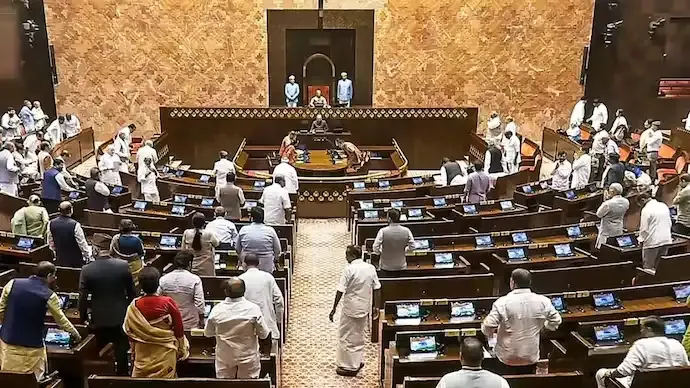
The political landscape in Bihar is witnessing a notable shift following the recent Rajya Sabha elections. The development has sparked fresh discussions across party lines, as unexpected cross-voting has altered the balance of power in the state.
At the centre of this political churn is the Bharatiya Janata Party (BJP), which appears to have gained an advantage due to support from opposition legislators.
Congress MLAs Cross-Vote in Favour of BJP
In a surprising move, three Members of the Legislative Assembly (MLAs) from the Congress party voted in favour of the BJP candidate during the Rajya Sabha elections. This comes despite Congress having a total of six MLAs in the Bihar Assembly.
The cross-voting has raised serious concerns within the Congress camp, as it indicates internal divisions and lack of cohesion. Such actions are often seen as a sign of weakening party discipline and shifting loyalties.
Absence of Leadership Weakens Party Discipline
The situation within the Congress Legislature Party in Bihar appears to be further complicated by the absence of a designated leader and whip. This lack of structured leadership is being seen as a key factor behind the cross-voting incident.
Without a clear command structure, enforcing party decisions and maintaining unity becomes difficult, especially during crucial elections like those for the Rajya Sabha.
BJP Strengthens Position Amid Political Uncertainty
The cross-voting has worked in favour of the BJP, strengthening its position in the state’s political dynamics. The development may have wider implications for future elections and alliances in Bihar.
Political observers suggest that such incidents could influence upcoming strategies of both ruling and opposition parties, especially as Bihar remains a key battleground in national politics.
Implications for Bihar’s Political Future
The recent developments highlight the fluid nature of Bihar’s political environment. Cross-voting incidents often signal deeper issues within parties, including dissatisfaction among legislators and lack of coordination.
As parties reassess their strategies, the focus will likely shift towards strengthening internal structures and preventing similar occurrences in the future.
The coming months may bring further clarity on how this shift impacts alliances and electoral outcomes in the state.

Conversation
Be kind and stay on topic. Comments are moderated; abuse, spam and personal attacks are removed. Report a problem