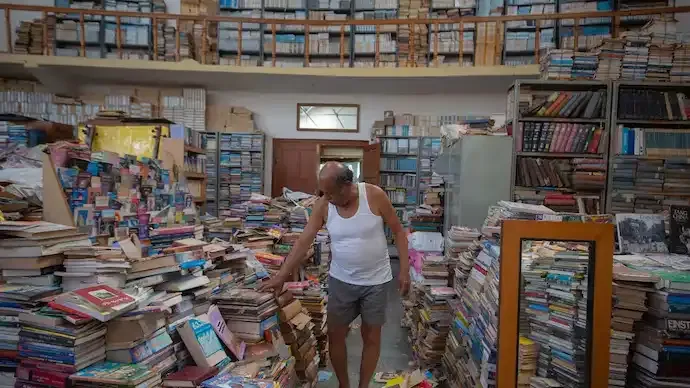
In a quiet village near Srirangapatna in Karnataka, stands one of India’s most remarkable centres of learning—created not by the state or a university, but by the lifelong dedication of a single individual. Anke Gowda, a former bus conductor, has spent more than five decades building what is today considered one of India’s largest free-access libraries, known as Pustaka Mane.
Now 75, Gowda has been honoured with the Padma Shri under the ‘Unsung Heroes’ category for his extraordinary contribution to literacy and knowledge-sharing, particularly in rural India. His story is a rare example of how individual passion can quietly transform generations.
Born into a farming family in Mandya district in the early 1950s, Gowda grew up with limited access to books. His relationship with reading began during his college years, when a teacher encouraged him to read widely and start collecting books. That suggestion altered the course of his life. At just 20, while working as a bus conductor and earning a modest income, he began spending his spare time reading and saving money to buy books.
Despite financial constraints, Gowda pursued higher education and completed a master’s degree in Kannada literature. He later worked for nearly 30 years at a sugar factory, but his commitment to books never wavered. Over time, he devoted nearly 80 per cent of his earnings to acquiring books—often prioritising them over personal comfort.
His commitment involved significant personal sacrifice. To accommodate his ever-growing collection, Gowda sold his house in Mysuru and invested the proceeds into expanding the library. The result is Pustaka Mane, a vast repository that today houses over two million books across more than 20 Indian and international languages. The collection spans literature, science, technology, philosophy, history, mythology, law, and competitive examination material, along with rare manuscripts, journals, newspapers, and nearly 5,000 dictionaries.
What truly sets Pustaka Mane apart is its accessibility. There are no membership fees, no entry charges, and no restrictions. Students, researchers, writers, and professionals from across the country visit the library, which has even hosted members of the higher judiciary seeking reference material.
Gowda and his wife Vijayalakshmi live inside the library itself, sleeping on the floor and managing daily life amid towering shelves of books. Along with their son Sagar, they personally clean, organise, and maintain the collection. Despite its scale, much of the library is still uncatalogued, and Gowda hopes for institutional support and volunteers to help preserve and digitise the volumes.
In an era dominated by digital content and shrinking attention spans, Gowda’s work stands as a powerful reminder of the enduring value of physical books and unrestricted access to knowledge. Situated in a rural setting rather than a metropolitan hub, Pustaka Mane has become a lifeline for learners who might otherwise lack educational resources.
For Anke Gowda, recognition was never the goal. His sole aim was to make books available to anyone seeking knowledge. With the Padma Shri, the nation has finally acknowledged not just a man, but a lifelong movement for free learning—one built page by page, book by book.
Prev Article
Bengaluru Schoolkids Bring Fruits Daily for Teacher After Sweet Remark
Next Article
Rise of Anti-Ambition: Why Gen Z Workers Are Redefining Career Success in India