India is preparing to build the world’s longest combined rail-and-road tunnel beneath the Brahmaputra River, a transformative infrastructure project that promises to reshape connectivity, strengthen strategic mobility and accelerate economic growth in the Northeast.
The proposed tunnel will link Gohpur in Assam’s Biswanath district with Numaligarh in Golaghat district, creating a direct corridor between the river’s north and south banks. Designed as a strategic lifeline, the project is expected to significantly improve access to Arunachal Pradesh while boosting trade, tourism and regional development.
Overcoming geography’s greatest barrier
For decades, the Brahmaputra has been both a lifeline and a barrier. During monsoon season, the river expands dramatically, disrupting transport and creating bottlenecks that affect civilian movement, supply chains and military logistics.
Existing bridges carry heavy traffic loads and remain vulnerable to weather disruptions and congestion. The new tunnel aims to provide an all-weather, resilient alternative that ensures uninterrupted mobility.
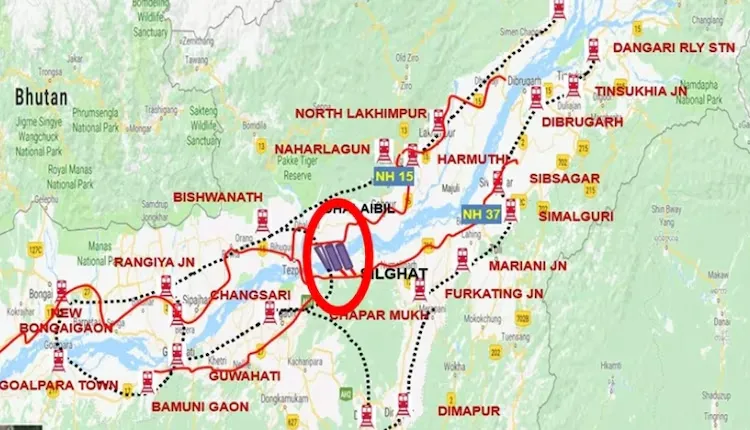
By moving beneath the riverbed, India is shifting from adapting to geography to reshaping it — a strategic step that reduces vulnerability and improves response capability in frontier regions.
Engineering scale and design
The project, estimated at ₹18,600 crore, will span approximately 33.7 km, including a 15.8 km underwater section beneath the Brahmaputra. The tunnel will be built about 32 metres below the riverbed to ensure stability and protection.
It will feature two separate tubes:
-
Tube A: Dedicated road corridor with two unidirectional lanes.
-
Tube B: Hybrid rail-road corridor with an electrified railway track for high-speed trains; road traffic permitted when trains are not operating.
Safety features include cross-passages every 500 metres, automated ventilation, fire-resistant systems and real-time geotechnical monitoring to detect erosion and structural stress. Flexible joints and reinforced segments will enhance resilience in the earthquake-prone seismic Zone V.
Strategic mobility and national security
The tunnel will dramatically improve defence logistics and rapid deployment capability along India’s northern frontier. Reliable underground mobility corridors reduce dependence on exposed routes and ensure supply lines remain functional during emergencies.
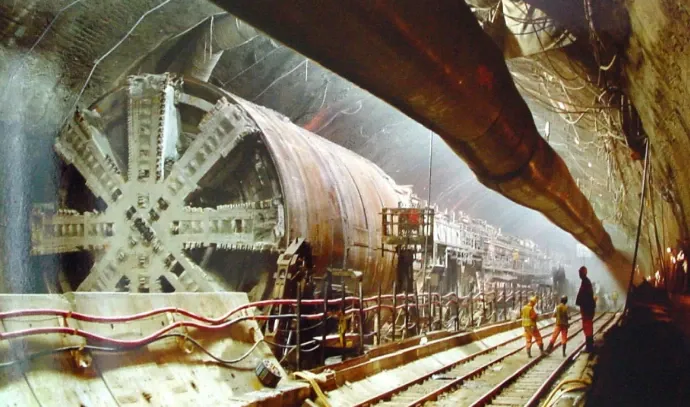
Enhanced connectivity strengthens deterrence by enabling faster troop movement and ensuring logistical continuity.
Economic growth and regional transformation
The corridor will reduce the travel distance between Gohpur and Numaligarh from about 240 km to just 34 km, cutting travel time and transportation costs.
This improved connectivity is expected to:
-
boost industrial growth around Numaligarh’s refinery and industrial zones
-
improve agricultural supply chains and market access
-
enhance logistics for tea, horticulture and hydrocarbon transport
-
attract warehousing and manufacturing clusters
Reliable infrastructure often becomes an economic multiplier, attracting investment and strengthening regional prosperity.
Unlocking tourism and regional integration
Improved connectivity will make travel across Assam and Arunachal Pradesh more accessible, encouraging tourism circuits linking tea gardens, monasteries, wildlife sanctuaries and Himalayan landscapes.
Tourism growth could generate employment, strengthen local economies and deepen integration of frontier communities into India’s growth story.
Arunachal connectivity and social integration
Remote regions often face developmental challenges due to difficult access. Improved mobility can reduce logistical costs, encourage investment and strengthen social integration.
Enhanced connectivity fosters economic participation, strengthens local livelihoods and promotes a sense of inclusion among frontier populations.
Part of India’s broader infrastructure push
The Brahmaputra tunnel aligns with India’s broader push to strengthen frontier infrastructure, alongside projects such as the Atal Tunnel and the Sela Tunnel. These initiatives reflect a strategic shift toward building resilient infrastructure in geographically challenging regions.
A strategic shift in nation-building
Beyond engineering achievement, the tunnel represents a shift in strategic thinking — transforming the Northeast from a remote frontier into a connected economic corridor.
By improving access, strengthening resilience and enabling growth, the project aims to convert geographic challenges into strategic advantages.
As India advances this subterranean corridor, the Brahmaputra may no longer define distance and isolation but instead symbolise connectivity, resilience and opportunity.