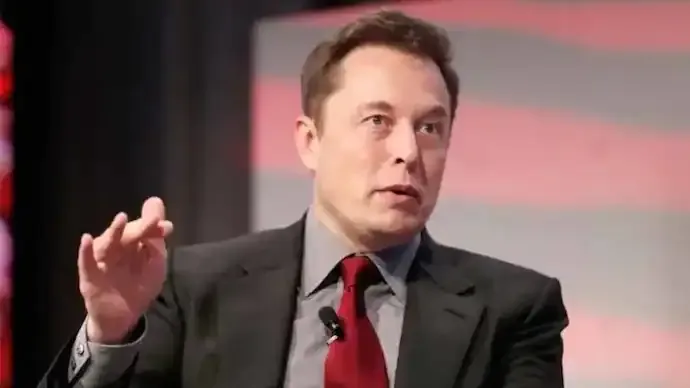
Tech billionaire Elon Musk has once again sparked global debate about the future of artificial intelligence, predicting that AI could surpass the combined intelligence of all humans within the next four to five years.
The statement came in response to a discussion on X, where entrepreneur Peter H. Diamandis shared his views on how increasing access to computing power, energy, and innovation tools could create unprecedented opportunities for humanity. Responding to the post, Musk suggested that artificial intelligence is advancing at a pace that may soon exceed human intellectual capabilities on a global scale.
The prediction has reignited conversations about the future of AI, the emergence of artificial general intelligence (AGI), and the impact advanced AI systems could have on society, business, education, and the global economy.
What Did Elon Musk Say About AI?
Musk indicated that artificial intelligence is improving so rapidly that it may eventually become more intelligent than the combined intelligence of all human beings within the next four to five years.
While Musk has made several bold predictions about technology over the years, his latest comments reflect a growing belief among some technology leaders that AI development is accelerating faster than many experts expected.
The statement aligns with Musk's long-standing position that AI could become one of the most transformative technologies in human history.
Why Is This Prediction Getting Attention?
Artificial intelligence has experienced extraordinary growth over the past few years, driven by advances in:
-
Large language models
-
Machine learning
-
Neural networks
-
Robotics
-
Cloud computing
-
High-performance AI chips
-
Data processing capabilities
Modern AI systems are now capable of performing tasks that were once considered uniquely human, including content generation, coding, research assistance, image creation, and complex problem-solving.
As these capabilities continue to expand, discussions about AI surpassing human intelligence have moved from science fiction into mainstream technology debates.
What Is Artificial General Intelligence (AGI)?
The concept often associated with such predictions is Artificial General Intelligence, commonly known as AGI.
AGI refers to a theoretical form of artificial intelligence that can understand, learn, and apply knowledge across a wide range of tasks at a level equal to or greater than human intelligence.
Unlike current AI systems, which are typically designed for specific purposes, AGI would possess the flexibility to perform virtually any intellectual task that a human can undertake.
Many technology companies and research organizations are actively pursuing AGI development, although experts remain divided on when it may become a reality.
AI Is Already Transforming Industries
Even before reaching AGI-level capabilities, artificial intelligence is reshaping numerous industries.
Key Sectors Being Transformed by AI
Healthcare
-
Disease detection
-
Medical imaging analysis
-
Drug discovery
-
Personalized treatment plans
Education
-
AI-powered tutoring
-
Personalized learning
-
Automated assessments
Business
-
Customer service automation
-
Data analytics
-
Workflow optimization
Technology
-
Software development
-
Cybersecurity
-
Research and innovation
Finance
-
Fraud detection
-
Investment analysis
-
Risk management
The rapid adoption of AI across sectors is one reason why predictions about future intelligence levels are receiving increased attention.
Experts Remain Divided on AI Timelines
While some technology leaders believe AGI could emerge within the next decade, others argue that significant scientific and technical challenges remain.
Critics of aggressive AI timelines point out that current systems still struggle with:
-
True reasoning
-
Long-term planning
-
Common-sense understanding
-
Independent decision-making
-
Reliable factual accuracy
As a result, there is no universal agreement within the scientific community regarding when or whether AI will exceed human intelligence in the way some forecasts suggest.
Musk's Long History of AI Predictions
Elon Musk has been one of the most vocal figures in discussions surrounding artificial intelligence.
Over the years, he has repeatedly emphasized both the opportunities and risks associated with advanced AI systems. He has supported AI development while also advocating for safety measures, regulation, and responsible deployment.
Musk has frequently argued that humanity must prepare for a future in which AI plays a far larger role in daily life, business operations, and scientific advancement.
What Could Happen if AI Surpasses Human Intelligence?
If AI were to become more intelligent than humans, experts believe it could lead to profound changes across society.
Potential benefits include:
-
Accelerated scientific discoveries
-
Medical breakthroughs
-
Increased productivity
-
Improved problem-solving capabilities
-
Enhanced education systems
However, concerns often raised include:
-
Job displacement
-
Ethical challenges
-
Privacy issues
-
Security risks
-
AI governance concerns
These debates continue to shape discussions among governments, researchers, and technology companies worldwide.
What Happens Next?
Artificial intelligence is expected to remain one of the fastest-growing technology sectors over the coming years. Major companies continue investing billions of dollars into AI research, infrastructure, and advanced computing systems.
Whether Musk's prediction proves accurate or not, there is little doubt that AI will play an increasingly important role in shaping the future of humanity.
The next few years could provide clearer answers about how quickly AI capabilities are evolving and whether the path toward superintelligent systems is approaching faster than previously anticipated.
Conclusion
Elon Musk's latest prediction that AI could surpass the combined intelligence of all humans within four to five years has reignited discussions about the future of artificial intelligence. While experts remain divided on the timeline, the rapid advancement of AI technologies continues to transform industries and reshape expectations about what machines may eventually achieve. As innovation accelerates, questions about opportunity, safety, and human adaptation will remain at the center of the global AI conversation.
FAQ SECTION
Q1. What did Elon Musk say about AI?
Elon Musk stated that artificial intelligence could become smarter than the combined intelligence of all humans within the next four to five years.
Q2. What is Artificial General Intelligence (AGI)?
AGI refers to a theoretical AI system capable of performing intellectual tasks at or beyond human-level intelligence across multiple domains.
Q3. Why is Elon Musk's AI prediction important?
The statement highlights growing concerns and excitement surrounding the rapid pace of AI development and its future impact on society.
Q4. Can current AI systems outperform humans?
Current AI systems can outperform humans in specific tasks but do not yet possess general human-level intelligence.
Q5. What industries are being transformed by AI?
Healthcare, education, finance, business, manufacturing, and technology are among the sectors experiencing significant AI-driven changes.
Q6. Will AI replace human intelligence?
Experts remain divided on this question, and there is no consensus regarding when or whether AI will fully surpass human intelligence.