



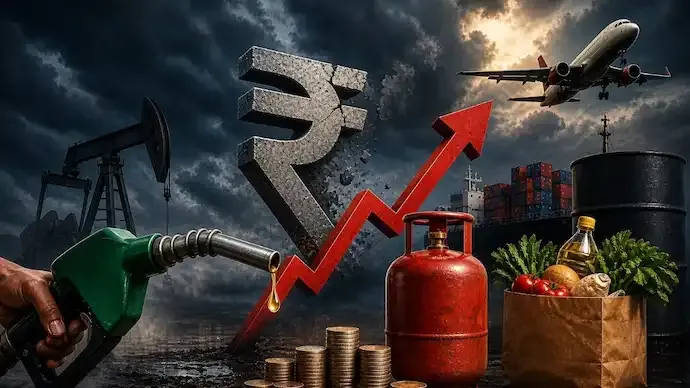
India may be forced to relax its fiscal deficit target for the current financial year as escalating tensions between the United States and Iran continue to push global crude oil prices higher. According to reports, the government is considering allowing the fiscal deficit to widen beyond its original target to absorb the economic impact of rising energy costs and growing subsidy burdens.
The development reflects the challenges faced by oil-importing economies when geopolitical conflicts disrupt global energy markets. For India, which imports a significant portion of its crude oil requirements, sustained increases in oil prices can have widespread implications for government finances, inflation, and economic growth.
Officials are reportedly evaluating various options to manage the situation while maintaining economic stability.

Fiscal Deficit Could Rise to 4.8% of GDP
According to reports, the government may allow the fiscal deficit to increase to as much as 4.8% of Gross Domestic Product (GDP).
This would be higher than the previously announced fiscal deficit target of 4.3% for the financial year that began on April 1.
A fiscal deficit occurs when government expenditure exceeds total revenue, requiring additional borrowing to bridge the gap.
While fiscal discipline remains a priority, policymakers may be willing to accept a temporary increase if global conditions continue to place pressure on public finances.
Why the US-Iran Conflict Matters to India
The ongoing conflict between the United States and Iran has intensified concerns about global energy supplies.
The Middle East remains one of the world's most important oil-producing regions. Any disruption affecting production facilities, shipping routes, or exports can quickly push crude oil prices higher.
India's dependence on imported crude means that even moderate increases in international oil prices can affect:
- Fuel costs
- Import bills
- Government subsidies
- Inflation levels
- Economic growth projections
As oil prices rise, the financial burden on both consumers and the government increases.
Higher Subsidies Could Increase Government Spending
One of the biggest concerns for policymakers is the potential rise in subsidy expenditure.
If global oil prices remain elevated for an extended period, the government may face pressure to provide support through:
- Fuel subsidies
- Fertiliser subsidies
- Welfare support measures
- Price stabilisation initiatives
Such measures can help reduce the burden on households and businesses but may also increase government expenditure significantly.
Economists note that subsidy-related spending often rises during periods of energy market volatility.
Import Costs Also Expected to Rise
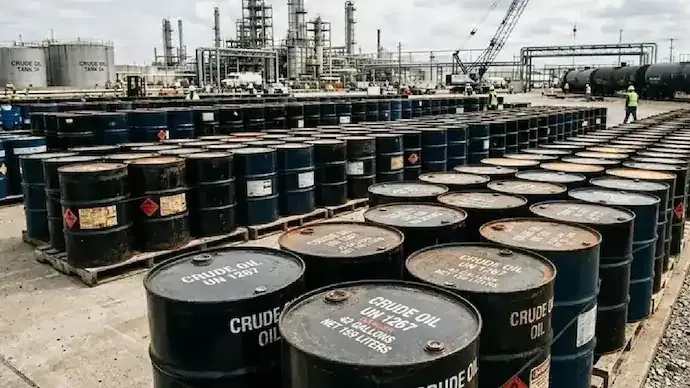
India imports more than 80% of its crude oil requirements, making the economy highly sensitive to global energy prices.
A sustained increase in crude oil costs can widen the country's import bill and put pressure on the trade balance.
Higher import expenses may also contribute to:
- Currency pressure
- Increased transportation costs
- Higher manufacturing expenses
- Inflationary risks
These factors collectively influence government finances and economic planning.
Government May Consider Spending Adjustments
Reports suggest policymakers may also explore expenditure rationalisation measures to limit the impact on the fiscal deficit.
Possible approaches could include:
- Delaying non-essential spending
- Reprioritising infrastructure projects
- Reviewing budget allocations
- Enhancing revenue collection efforts
Such measures would aim to balance the need for fiscal support with long-term deficit management goals.
However, no final decision has been officially announced.
Economists Watching Oil Markets Closely
Financial experts believe crude oil prices remain the single biggest external risk to India's fiscal outlook.
If geopolitical tensions ease and oil prices stabilise, the government may be able to remain closer to its original fiscal targets.
However, if the conflict continues to escalate and energy markets remain volatile, additional fiscal pressures could emerge in the coming months.
Several economists have already revised inflation and growth forecasts to account for the uncertainty created by rising energy costs.
Impact on Citizens and the Economy
For ordinary citizens, the fiscal deficit itself may not be immediately visible, but its effects can influence various aspects of the economy.
A larger deficit can affect:
- Government borrowing
- Interest rates
- Inflation trends
- Public spending priorities
- Economic growth
At the same time, higher oil prices can directly impact household budgets through increased transportation and fuel-related expenses.
The government faces the challenge of balancing economic stability, fiscal responsibility, and consumer protection during a period of global uncertainty.
Outlook Remains Dependent on Oil Prices
India's fiscal outlook for the year will largely depend on how global energy markets evolve in the coming months.
While the government remains committed to fiscal consolidation in the long term, temporary adjustments may become necessary if crude oil prices continue to rise due to geopolitical tensions.
For now, policymakers are closely monitoring developments in the Middle East as they assess the potential impact on India's economy, inflation, and public finances.





Conversation
Be kind and stay on topic. Comments are moderated; abuse, spam and personal attacks are removed. Report a problem