Shopping cart
Your cart empty!


Your cart empty!
Terms of use dolor sit amet consectetur, adipisicing elit. Recusandae provident ullam aperiam quo ad non corrupti sit vel quam repellat ipsa quod sed, repellendus adipisci, ducimus ea modi odio assumenda.
Lorem ipsum dolor sit amet consectetur adipisicing elit. Sequi, cum esse possimus officiis amet ea voluptatibus libero! Dolorum assumenda esse, deserunt ipsum ad iusto! Praesentium error nobis tenetur at, quis nostrum facere excepturi architecto totam.
Lorem ipsum dolor sit amet consectetur adipisicing elit. Inventore, soluta alias eaque modi ipsum sint iusto fugiat vero velit rerum.
Sequi, cum esse possimus officiis amet ea voluptatibus libero! Dolorum assumenda esse, deserunt ipsum ad iusto! Praesentium error nobis tenetur at, quis nostrum facere excepturi architecto totam.
Lorem ipsum dolor sit amet consectetur adipisicing elit. Inventore, soluta alias eaque modi ipsum sint iusto fugiat vero velit rerum.
Dolor sit amet consectetur adipisicing elit. Sequi, cum esse possimus officiis amet ea voluptatibus libero! Dolorum assumenda esse, deserunt ipsum ad iusto! Praesentium error nobis tenetur at, quis nostrum facere excepturi architecto totam.
Lorem ipsum dolor sit amet consectetur adipisicing elit. Inventore, soluta alias eaque modi ipsum sint iusto fugiat vero velit rerum.
Sit amet consectetur adipisicing elit. Sequi, cum esse possimus officiis amet ea voluptatibus libero! Dolorum assumenda esse, deserunt ipsum ad iusto! Praesentium error nobis tenetur at, quis nostrum facere excepturi architecto totam.
Lorem ipsum dolor sit amet consectetur adipisicing elit. Inventore, soluta alias eaque modi ipsum sint iusto fugiat vero velit rerum.
Do you agree to our terms? Sign up

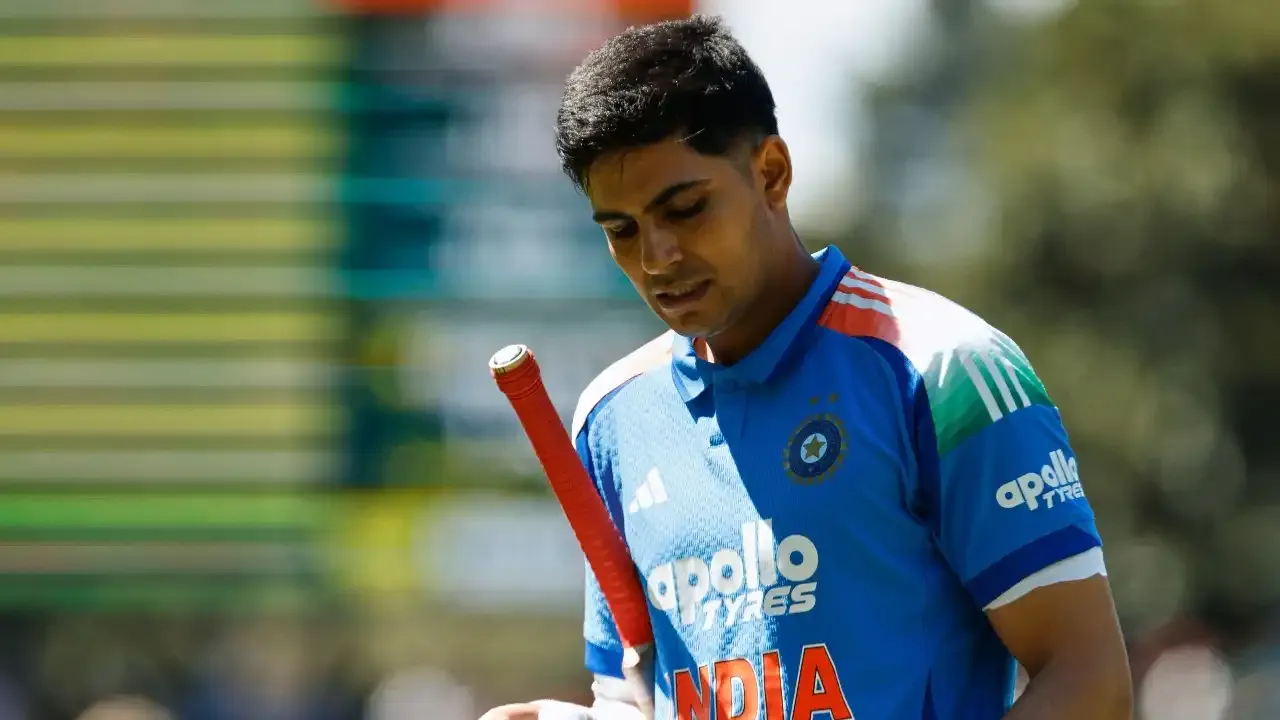
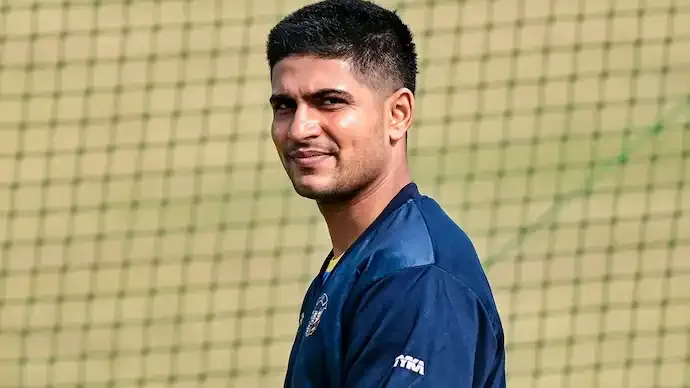
Is Shubman Gill too good for a format that doesn’t suit him?
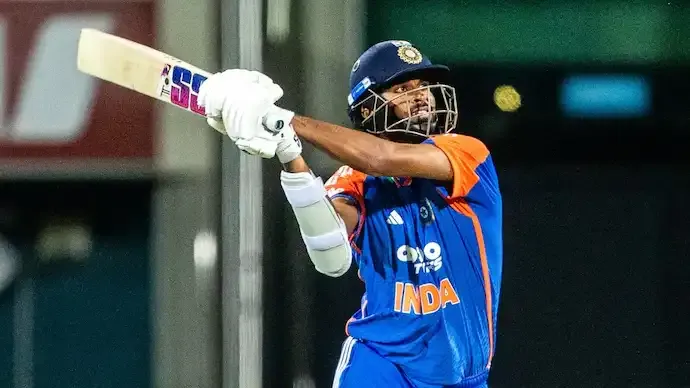
That’s the uncomfortable question India’s T20I setup is now facing. For all of Gill’s immense talent, his style seems at odds with a team that’s rediscovering its identity through aggression, intent, and a relentless tempo at the top.

Ever since Rohit Sharma reshaped India’s T20 culture post the 2022 World Cup semi-final exit — where India’s conservative batting came under fire — the team has embraced fearless play. Under Suryakumar Yadav and coach Gautam Gambhir, the approach only got bolder: attack from ball one, keep the tempo, and trust depth over caution.
Enter Shubman Gill — India’s all-format vice-captain and technically gifted opener. But in a side where Abhishek Sharma, Sanju Samson, and Tilak Varma thrive on risk-taking, Gill’s measured style feels like a throwback to a slower era.
At first glance, Gill’s numbers don’t look alarming. His partnership with Abhishek Sharma — 486 runs in 14 innings at a run rate of 9.78 — compares well with Abhishek and Samson’s 267 runs at 9.82. But the context tells a different story.
When Abhishek opened with Samson, India crossed 200+ in 6 of 12 matches. With Gill, that number dropped to just one in 12. The fluency that once defined India’s starts has faded, replaced by calculated restraint.
And the ripple effect has been significant. To accommodate Gill, Samson was pushed into the middle order, Tilak Varma was shuffled down, and Suryakumar Yadav was forced to adapt his position — breaking the rhythm that once made India’s lineup explosive from top to bottom.
Since Gill’s return in September 2025, his strike rate has hovered around 139 — below the new T20I standard for openers. Compare that to Abhishek’s 185 or Samson’s 183, and the gap is glaring. Modern T20 batting doesn’t forgive stagnation at the top — every dot ball can swing momentum.
Gill’s supporters argue he provides “stability” on tougher pitches, a Virat Kohli-type anchor. But this India doesn’t need an anchor. With depth till No. 8 and finishers like Hardik Pandya, Rinku Singh, and Shivam Dube, there’s room for calculated chaos — not conservatism.
Gill’s potential isn’t in question. He’s a generational player — already a Test and ODI captain, and a future all-format leader. But forcing him into a template that doesn’t match his natural rhythm risks two outcomes: limiting India’s T20 evolution and burdening Gill’s own confidence.
The problem isn’t his ability — it’s fit. India’s “new-age” T20 side thrives on intent over aesthetics, aggression over accumulation. Gill, for all his grace and precision, represents the old DNA that this generation consciously outgrew after 2022.
If he adjusts his tempo, India gain a world-class opener. But if not, the team may need to choose between sentiment and system.
Because in T20 cricket, style matters less than speed — and right now, Shubman Gill’s elegance might just be slowing India down.
58
Published: Nov 09, 2025

All India Story is your trusted source for comprehensive and up-to-the-minute news coverage across India. Bringing you the latest on politics, business, technology, entertainment, sports, and more, we are dedicated to keeping you informed with accurate, engaging, and insightful stories from every corner of the nation.