Shopping cart
Your cart empty!


Your cart empty!
Terms of use dolor sit amet consectetur, adipisicing elit. Recusandae provident ullam aperiam quo ad non corrupti sit vel quam repellat ipsa quod sed, repellendus adipisci, ducimus ea modi odio assumenda.
Lorem ipsum dolor sit amet consectetur adipisicing elit. Sequi, cum esse possimus officiis amet ea voluptatibus libero! Dolorum assumenda esse, deserunt ipsum ad iusto! Praesentium error nobis tenetur at, quis nostrum facere excepturi architecto totam.
Lorem ipsum dolor sit amet consectetur adipisicing elit. Inventore, soluta alias eaque modi ipsum sint iusto fugiat vero velit rerum.
Sequi, cum esse possimus officiis amet ea voluptatibus libero! Dolorum assumenda esse, deserunt ipsum ad iusto! Praesentium error nobis tenetur at, quis nostrum facere excepturi architecto totam.
Lorem ipsum dolor sit amet consectetur adipisicing elit. Inventore, soluta alias eaque modi ipsum sint iusto fugiat vero velit rerum.
Dolor sit amet consectetur adipisicing elit. Sequi, cum esse possimus officiis amet ea voluptatibus libero! Dolorum assumenda esse, deserunt ipsum ad iusto! Praesentium error nobis tenetur at, quis nostrum facere excepturi architecto totam.
Lorem ipsum dolor sit amet consectetur adipisicing elit. Inventore, soluta alias eaque modi ipsum sint iusto fugiat vero velit rerum.
Sit amet consectetur adipisicing elit. Sequi, cum esse possimus officiis amet ea voluptatibus libero! Dolorum assumenda esse, deserunt ipsum ad iusto! Praesentium error nobis tenetur at, quis nostrum facere excepturi architecto totam.
Lorem ipsum dolor sit amet consectetur adipisicing elit. Inventore, soluta alias eaque modi ipsum sint iusto fugiat vero velit rerum.
Do you agree to our terms? Sign up
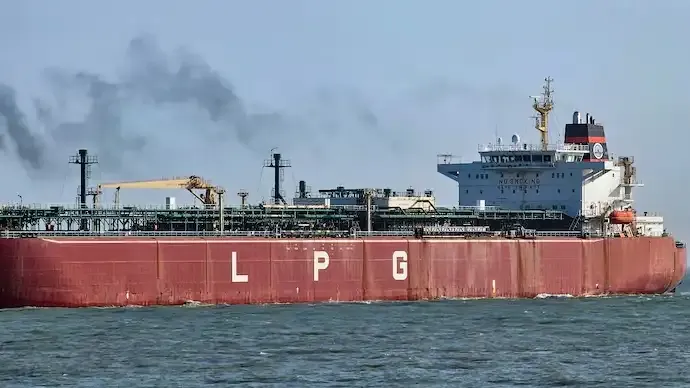
Amid escalating tensions in West Asia, there are early signs of movement in the critical Strait of Hormuz. Two India-bound liquefied petroleum gas (LPG) tankers are preparing to sail through the region, offering a glimmer of relief after a temporary halt in tanker activity.
The development comes at a time when global shipping routes have been severely disrupted due to ongoing geopolitical instability.
In the past 24 hours, crude oil shipments through the Strait of Hormuz have largely come to a standstill. Reports indicate that hundreds of vessels have dropped anchor in the region, waiting for clearer conditions before resuming operations.
The uncertainty has created a bottleneck in one of the world’s most important energy transit routes, affecting supply chains globally.
Despite the challenging situation, two Indian-flagged LPG tankers are now preparing to move through the strait. This marks one of the first signs of resumed maritime activity since tensions escalated.
Their movement is being closely monitored, as it could signal a gradual normalization of shipping operations in the area.
While the upcoming movement brings some optimism, several Indian vessels remain stranded in the region. Reports suggest that at least six LPG tankers are still awaiting safe passage through the Strait of Hormuz.
Ensuring their safety remains a key priority for authorities and shipping operators.
The Strait of Hormuz is a vital maritime corridor for global energy trade, handling a significant share of the world’s oil and gas shipments. Any disruption in this route has immediate consequences for energy markets and supply stability.
For India, which relies heavily on energy imports from the Gulf, maintaining access through this route is crucial.
The pause in tanker movement has raised concerns about delays in energy supplies and potential price fluctuations. If disruptions continue, it could lead to increased costs for importing LPG and crude oil.
This situation highlights the vulnerability of global energy supply chains to geopolitical conflicts.
Indian authorities and maritime agencies are closely tracking developments in the region. Efforts are being made to ensure the safety of vessels and crew while maintaining a steady flow of essential energy supplies.
Strategic decisions are being taken to balance risk and supply continuity.
While the movement of two tankers offers a positive signal, the overall situation remains uncertain. Much will depend on how tensions in the region evolve in the coming days.
For now, the global shipping industry continues to navigate a complex and volatile environment, with the Strait of Hormuz at the center of attention.
77
Published: Mar 21, 2026

All India Story is your trusted source for comprehensive and up-to-the-minute news coverage across India. Bringing you the latest on politics, business, technology, entertainment, sports, and more, we are dedicated to keeping you informed with accurate, engaging, and insightful stories from every corner of the nation.