Shopping cart
Your cart empty!


Your cart empty!
Terms of use dolor sit amet consectetur, adipisicing elit. Recusandae provident ullam aperiam quo ad non corrupti sit vel quam repellat ipsa quod sed, repellendus adipisci, ducimus ea modi odio assumenda.
Lorem ipsum dolor sit amet consectetur adipisicing elit. Sequi, cum esse possimus officiis amet ea voluptatibus libero! Dolorum assumenda esse, deserunt ipsum ad iusto! Praesentium error nobis tenetur at, quis nostrum facere excepturi architecto totam.
Lorem ipsum dolor sit amet consectetur adipisicing elit. Inventore, soluta alias eaque modi ipsum sint iusto fugiat vero velit rerum.
Sequi, cum esse possimus officiis amet ea voluptatibus libero! Dolorum assumenda esse, deserunt ipsum ad iusto! Praesentium error nobis tenetur at, quis nostrum facere excepturi architecto totam.
Lorem ipsum dolor sit amet consectetur adipisicing elit. Inventore, soluta alias eaque modi ipsum sint iusto fugiat vero velit rerum.
Dolor sit amet consectetur adipisicing elit. Sequi, cum esse possimus officiis amet ea voluptatibus libero! Dolorum assumenda esse, deserunt ipsum ad iusto! Praesentium error nobis tenetur at, quis nostrum facere excepturi architecto totam.
Lorem ipsum dolor sit amet consectetur adipisicing elit. Inventore, soluta alias eaque modi ipsum sint iusto fugiat vero velit rerum.
Sit amet consectetur adipisicing elit. Sequi, cum esse possimus officiis amet ea voluptatibus libero! Dolorum assumenda esse, deserunt ipsum ad iusto! Praesentium error nobis tenetur at, quis nostrum facere excepturi architecto totam.
Lorem ipsum dolor sit amet consectetur adipisicing elit. Inventore, soluta alias eaque modi ipsum sint iusto fugiat vero velit rerum.
Do you agree to our terms? Sign up
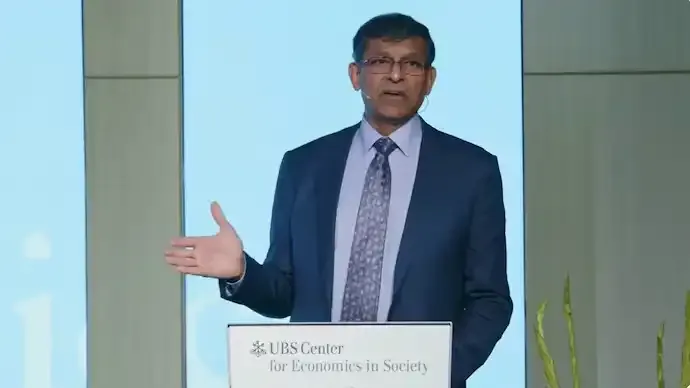
Former Reserve Bank of India Governor Raghuram Rajan has raised serious concerns about the global economy amid the ongoing conflict in West Asia. He warned that if the situation continues, it could trigger a major oil shock with far-reaching consequences for countries worldwide.
According to Rajan, the trajectory of the global economy now depends heavily on how long the conflict persists.
Rajan highlighted that even a 15 to 20 percent disruption in global energy supply could have severe consequences. Such a scenario would force countries to cut down demand sharply, creating instability in energy markets.
This kind of disruption could significantly impact production, trade, and overall economic activity across nations.
One of the biggest concerns raised is the potential surge in oil prices. Rajan indicated that prices could rise dramatically, possibly reaching between $150 and $200 per barrel if the conflict continues for another month.
Such high prices would put immense pressure on both developed and developing economies, increasing costs across industries.
India, being heavily dependent on oil imports, is particularly vulnerable to such a crisis. Higher oil prices directly affect fuel costs, transportation, and manufacturing, which can lead to increased inflation.
This could also slow down economic growth and strain household budgets, making it a critical issue for policymakers.
Beyond energy markets, Rajan warned that prolonged instability could also affect financial systems globally. Rising costs, reduced demand, and market uncertainty could create stress across banking and investment sectors.
Countries may face challenges in maintaining economic stability if the crisis intensifies.
The ongoing conflict has already started impacting supply chains and global trade. Energy disruptions tend to have a cascading effect, influencing everything from commodity prices to currency stability.
This interconnected impact means that even regions far from the conflict zone are likely to feel its consequences.
Rajan emphasized the importance of preparedness and timely policy responses. Governments may need to take proactive measures to manage inflation, secure alternative energy supplies, and stabilize their economies.
For India, this could involve diversifying energy sources and strengthening domestic resilience.
The future remains uncertain as the duration and intensity of the conflict are unclear. If tensions ease soon, the impact may be contained. However, a prolonged crisis could lead to a deeper global economic slowdown.
Rajan’s warning serves as a reminder of how closely the world economy is tied to energy stability and geopolitical developments.
83
Published: Mar 21, 2026

All India Story is your trusted source for comprehensive and up-to-the-minute news coverage across India. Bringing you the latest on politics, business, technology, entertainment, sports, and more, we are dedicated to keeping you informed with accurate, engaging, and insightful stories from every corner of the nation.