

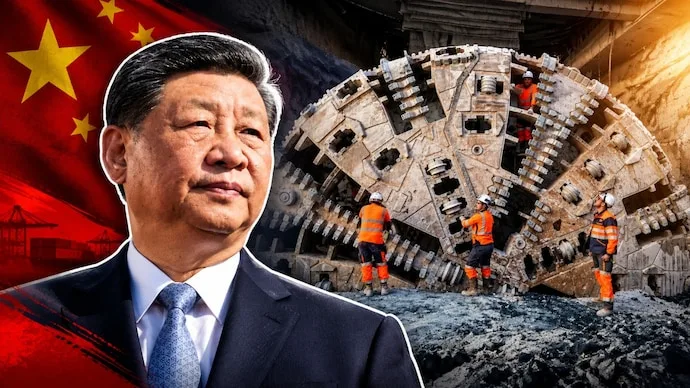

China’s export restrictions on tunnel-boring machines (TBMs) have raised fresh concerns about India’s dependence on foreign technology for major infrastructure projects. The curbs could affect metro networks, railway tunnels and underground construction, while highlighting potential vulnerabilities in India’s efforts to strengthen connectivity along the Himalayas.
China announced on October 19 that export controls on TBMs and related equipment would take effect on November 18, citing national security and non-proliferation obligations. China reportedly accounts for around 70% of the global TBM market, making its manufacturing capacity a significant factor in international infrastructure supply chains.
The move follows supply difficulties in 2024, when deliveries of tunnelling machinery manufactured at Chinese facilities were delayed, including equipment produced by German engineering company Herrenknecht.

Why China’s Restrictions Matter for India
India has accelerated infrastructure development along the Line of Actual Control (LAC) since the 2020 Galwan clashes, investing in roads, bridges, tunnels and other facilities to improve access to forward areas.
However, many border tunnels have been constructed using conventional excavation techniques rather than TBMs. The Zojila Tunnel, which achieved its final breakthrough in June 2026, and the Sela Tunnel in Arunachal Pradesh used the New Austrian Tunnelling Method. The Shyok Tunnel in eastern Ladakh employed a cut-and-cover approach.
Nevertheless, TBMs remain important for major railway, hydropower and urban infrastructure projects. The Rishikesh-Karnaprayag railway project, for instance, has used large Herrenknecht TBMs to excavate tunnels through challenging Himalayan geology.
Projects such as the Mumbai-Ahmedabad High-Speed Rail Corridor and major urban road tunnels could also face risks if access to imported machinery becomes uncertain.
India’s Previous Supply Challenges
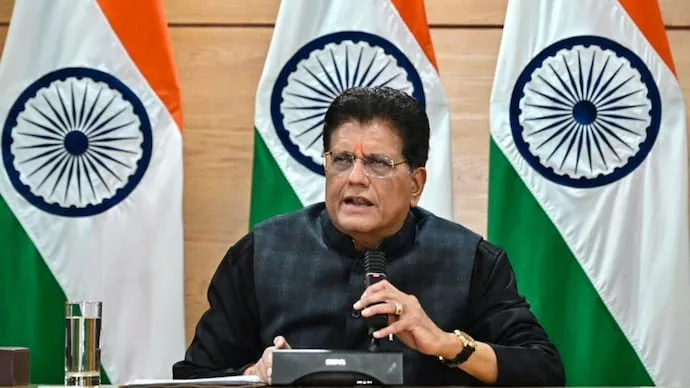
India’s dependence on foreign tunnelling equipment became evident in 2024, when Commerce Minister Piyush Goyal raised concerns about delayed deliveries with Germany’s then Vice Chancellor Robert Habeck.
The episode demonstrated that buying equipment from a German manufacturer does not eliminate supply-chain risks when machinery is produced in China or relies on components affected by Chinese export controls.
According to figures cited in the report, India’s imports of tunnelling machinery from China declined from $18 million in 2022-23 to $3 million in 2023-24 and $500,000 in 2024-25, before increasing to $800,000 in 2025-26.
Can Domestic Manufacturing Reduce Dependence?
India is pursuing local assembly, indigenous design and domestic manufacturing to reduce its reliance on imported TBMs.
Herrenknecht’s Chennai facility assembled 10 TBMs for Chennai Metro Phase 2 between July 2022 and July 2023. The company said 60% of the components came from Indian suppliers, while the remainder was sourced from Germany. It also acquired land in North Chennai in 2025 for a planned manufacturing plant.
Meanwhile, state-owned Bharat Earth Movers Limited (BEML) is pursuing indigenous TBM development, with plans for machines ranging from approximately six metres to 16.5 metres in diameter.
A proposed $1.2 billion government incentive scheme for construction and infrastructure equipment manufacturing could further encourage investment. However, meaningful self-reliance will require domestic production of critical components, advanced control systems and precision-engineered equipment, not just local assembly.
China’s restrictions could create short-term project challenges, but they also strengthen the case for India to build a resilient domestic TBM manufacturing ecosystem.





Conversation
Be kind and stay on topic. Comments are moderated; abuse, spam and personal attacks are removed. Report a problem