



Vande Bharat has evolved from being a flagship semi-high-speed train into an important part of Indian Railways' premium passenger strategy.
The reason is not simply speed, modern interiors or better onboard facilities. There is a stronger financial argument behind the expansion: passengers paying more for premium AC travel are helping support one of the few profitable segments of Indian Railways' passenger business.
Financial data for FY25 shows that AC 3-tier and AC Chair Car were the only passenger categories to report profits. Both categories are particularly relevant to Vande Bharat, with Chair Car services forming the core of the daytime Vande Bharat network and AC 3-tier becoming increasingly important with the introduction of sleeper services.

Why premium train travel matters to Indian Railways
Passenger operations remain a major financial challenge for Indian Railways.
In FY25, most passenger categories reported losses, with losses ranging from Rs 20,705.94 crore in Ordinary class to Rs 48.77 crore in First Class.
The picture was very different for AC 3-tier.
The category generated a profit of Rs 3,645.44 crore in FY25, compared with Rs 2,501.07 crore in FY24.
AC Chair Car also turned profitable, generating Rs 376.77 crore in FY25 after recording losses of Rs 203.96 crore in FY24 and Rs 297.62 crore in FY23.
The numbers point towards a clear trend: while affordable passenger categories continue to carry substantial financial burdens, premium AC segments have demonstrated an ability to generate positive returns.
Vande Bharat fits into this premium model
Vande Bharat trains predominantly use the AC Chair Car configuration for daytime services.
The trains are positioned as premium alternatives, offering faster journeys, modern interiors and additional passenger amenities. This allows Indian Railways to charge more than it does for conventional services on comparable routes.
The comparison with Shatabdi is particularly relevant. Shatabdi services also operate extensively with Chair Car accommodation and have used dynamic pricing since 2018.
There is, however, an important caveat: Indian Railways does not publish a standalone profit figure for the Vande Bharat network.
The financial case therefore comes from looking at the profitability of the passenger categories used by these trains, alongside their strong occupancy and growing passenger numbers.
Nearly 4 crore passengers travelled on Vande Bharat in FY26
Demand for the trains has increased sharply.
The Vande Bharat network carried approximately 3.98 crore passengers in FY26, a 34% increase from the 2.97 crore passengers recorded in FY25.
Since the first Vande Bharat service began in 2019, the trains have carried more than 9.1 crore passengers across over 1 lakh completed trips through March 2026.
The New Delhi-Varanasi Vande Bharat has emerged as the busiest corridor, carrying more than 73 lakh passengers since its launch.
For Indian Railways, sustained passenger demand strengthens the case for adding more premium services.
Sleeper Vande Bharat opens a bigger market
The Vande Bharat strategy is no longer restricted to daytime intercity travel.
Indian Railways launched the Vande Bharat Sleeper service in January 2026, extending the premium concept to overnight journeys.
The early numbers have been encouraging.
During its first three months, the sleeper service carried around 1.21 lakh passengers across 119 trips.
Its occupancy rate exceeded 100% during the period, indicating exceptionally strong demand relative to the available capacity.
This is particularly significant because sleeper trains can tap into longer-distance markets where AC 3-tier is already one of Indian Railways' strongest-performing passenger categories.
AC 3-tier could be crucial to Vande Bharat Sleeper
The financial performance of AC 3-tier provides an important backdrop to the sleeper expansion.
The category generated Rs 3,645.44 crore in profit in FY25 and has remained profitable over the past three financial years.
By introducing premium sleeper accommodation, Indian Railways can potentially combine the strong demand for overnight AC travel with the Vande Bharat brand.
That gives the railway network another opportunity to attract passengers who are willing to pay more for comfort, shorter travel times and better onboard services.
Passengers are willing to pay for better rail travel
The growth of Vande Bharat points towards an important shift in India's passenger market.
Indian Railways still has a huge responsibility to provide affordable transportation, and many passenger categories operate at a loss because fares are kept relatively low.
But there is also a sizeable segment of travellers willing to pay a premium for convenience.
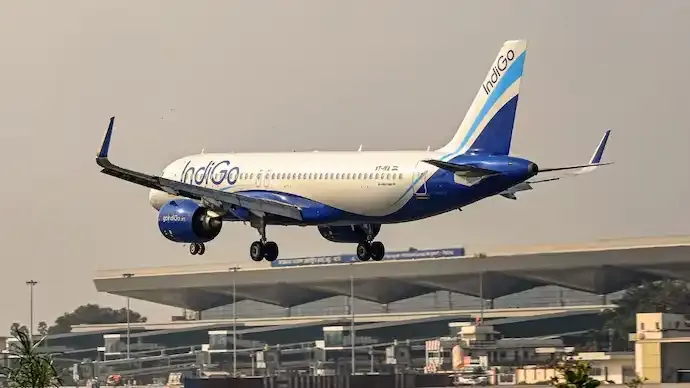
For these passengers, the choice is increasingly not simply train versus train. It can be premium train versus flight or road travel.
Vande Bharat is designed to compete in that space by offering a faster and more comfortable rail journey without necessarily reaching airline prices.
Why Indian Railways wants to expand Vande Bharat
The Vande Bharat network currently has 162 services operating across India.
With passenger numbers rising and sleeper services showing strong early demand, the trains are becoming an increasingly important component of Indian Railways' passenger strategy.
The expansion therefore has two sides.
For passengers: faster journeys, improved comfort and more premium travel options.
For Indian Railways: access to a segment where passengers are willing to pay higher fares and where the underlying AC categories have demonstrated stronger financial performance.
The bigger question is not simply how many Vande Bharat trains India will have.
It is whether premium rail services can become a larger and more sustainable source of passenger revenue while helping Indian Railways manage the enormous cost of providing affordable travel across the country.






Conversation
Be kind and stay on topic. Comments are moderated; abuse, spam and personal attacks are removed. Report a problem