
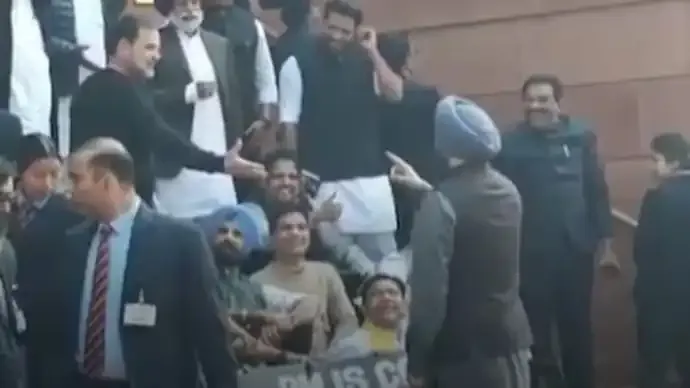
A heated political confrontation unfolded in Parliament after senior Congress leader Rahul Gandhi and Union Minister Ravneet Singh Bittu exchanged strong remarks during an Opposition protest, intensifying tensions between rival political camps. The incident quickly drew national attention as videos of the verbal exchange circulated widely, highlighting the growing friction in the ongoing parliamentary session.
The controversy began when Rahul Gandhi referred to Ravneet Singh Bittu as his “traitor friend,” a comment that triggered an immediate reaction from the minister. Responding sharply, Bittu accused Gandhi of acting against the nation’s interests, escalating the verbal clash and turning the moment into a significant political flashpoint. The exchange took place amid protests by Opposition members, adding to the charged atmosphere inside the House.
Political observers noted that the confrontation reflects the increasingly confrontational tone of parliamentary debates, where personal and ideological differences often spill into public exchanges. The incident also underscores shifting alliances and rivalries within Indian politics, particularly involving leaders who were previously associated with the same political platform before moving to different camps.
The remarks sparked reactions across party lines, with supporters from both sides amplifying clips and statements on social media. Analysts suggest that such confrontations often shape public perception of political narratives, especially during high-profile parliamentary sessions where key legislative issues are being discussed. The clash has also revived debate over political decorum and the need for maintaining respectful dialogue within democratic institutions.
While the exchange grabbed headlines, parliamentary proceedings continued with Opposition members pressing their demands and the ruling side countering criticism. Political leaders from multiple parties weighed in on the incident, emphasising the importance of robust debate while also urging restraint in personal remarks. The situation reflects the broader political climate, where sharp rhetoric has become a common feature of national discourse.
Beyond the immediate controversy, the episode highlights the evolving dynamics between leaders who once shared political associations but now represent opposing ideologies. Such confrontations often resonate beyond Parliament, influencing party messaging, media narratives, and public engagement in political discussions.
As reactions continue to pour in, the incident serves as another example of how parliamentary exchanges can quickly turn into major political talking points. With the session still underway, observers expect further debates and possible responses from party leadership as both sides seek to reinforce their positions in the ongoing political landscape.
Conversation
Be kind and stay on topic. Comments are moderated; abuse, spam and personal attacks are removed. Report a problem