West Bengal Chief Minister Mamata Banerjee appeared at the Supreme Court on Wednesday as a high-profile hearing began on petitions challenging the Special Intensive Revision (SIR) of electoral rolls in the state. The case has drawn national attention due to its potential impact on upcoming Assembly elections and ongoing debates around voter verification processes.
Ahead of the proceedings, Banerjee indicated she would remain seated quietly during the hearing, signalling a composed approach as the matter came before a bench led by the Chief Justice of India. Through her legal team, she has also sought permission to present arguments directly, stating that she is fully familiar with the details of the case and willing to follow courtroom procedures.
The petition outlines several key demands, including a request that the existing 2025 voter list remain unchanged until after the state elections. The plea also calls for greater transparency from the Election Commission, asking that the names of voters marked as “disputed” be publicly disclosed. Another major demand is that Aadhaar be accepted as sufficient proof of identity in discrepancy cases, along with other state-issued documents such as residence certificates and land allotment records.
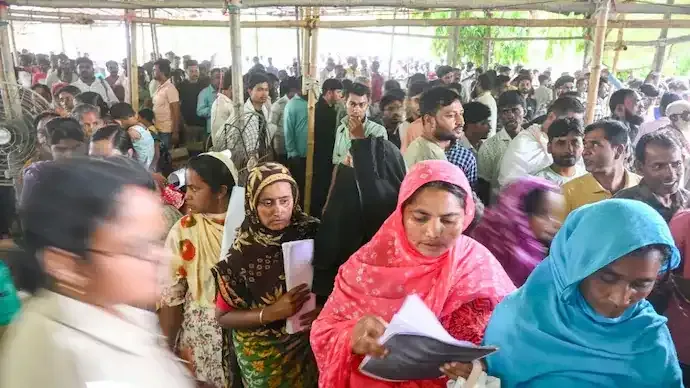
Banerjee’s application further raises concerns over alleged mass deletions of voters through bulk Form-7 entries and seeks the withdrawal of thousands of external micro-observers deployed in West Bengal’s electoral process. According to the petition, there is a risk of large-scale voter disenfranchisement if the revision exercise continues without additional safeguards. The plea also argues that voters should not be summoned for personal hearings over minor issues like spelling errors or small documentation discrepancies.
Security around the Supreme Court premises was heightened ahead of the hearing, reflecting the political sensitivity surrounding the case. Visual cues from Banerjee’s appearance, including a black stole similar to attire worn during earlier meetings on the issue, drew attention from observers who viewed it as a symbolic gesture tied to her protest against the SIR process.
The legal battle follows escalating tensions between the West Bengal government and the Election Commission. Banerjee has previously criticised the revision exercise, alleging that it disproportionately affects certain communities and could influence the electoral landscape. Opposition leaders from various parties have expressed support for her legal challenge, framing it as a broader debate over democratic processes and voter rights.
In the lead-up to the hearing, Banerjee also filed an urgent application seeking interim directions to prevent any deletions from the electoral rolls while the case is under judicial consideration. The petition stresses the need to protect voters whose names appeared on earlier rolls and to ensure that administrative procedures do not result in unintended exclusion.
As the Supreme Court examines the matter, the outcome could shape not only West Bengal’s election preparations but also future approaches to electoral roll verification across the country. The proceedings are expected to continue drawing close political and legal scrutiny, given their implications for governance, democratic participation, and the balance between administrative oversight and voter protection.