

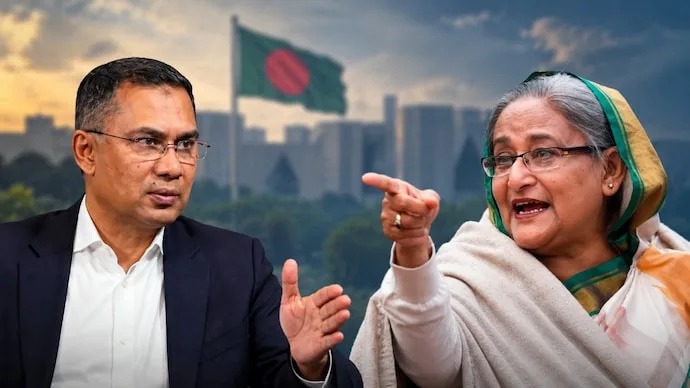

Sheikh Hasina’s criticism of Tarique Rahman over his decision to skip India’s BRICS Summit has reignited debate over strained relations between New Delhi and Dhaka. The former Bangladesh prime minister called the decision “immature” and questioned why her presence in India should prevent the current Bangladeshi leader from visiting, recalling that his father, Ziaur Rahman, travelled to Delhi while she was living there in exile.
In a written interview published on October 14, Hasina argued that Bangladesh’s participation in major regional gatherings should be guided by national interests rather than domestic political calculations. She also suggested that staying away from the summit had cost Dhaka opportunities for economic cooperation.
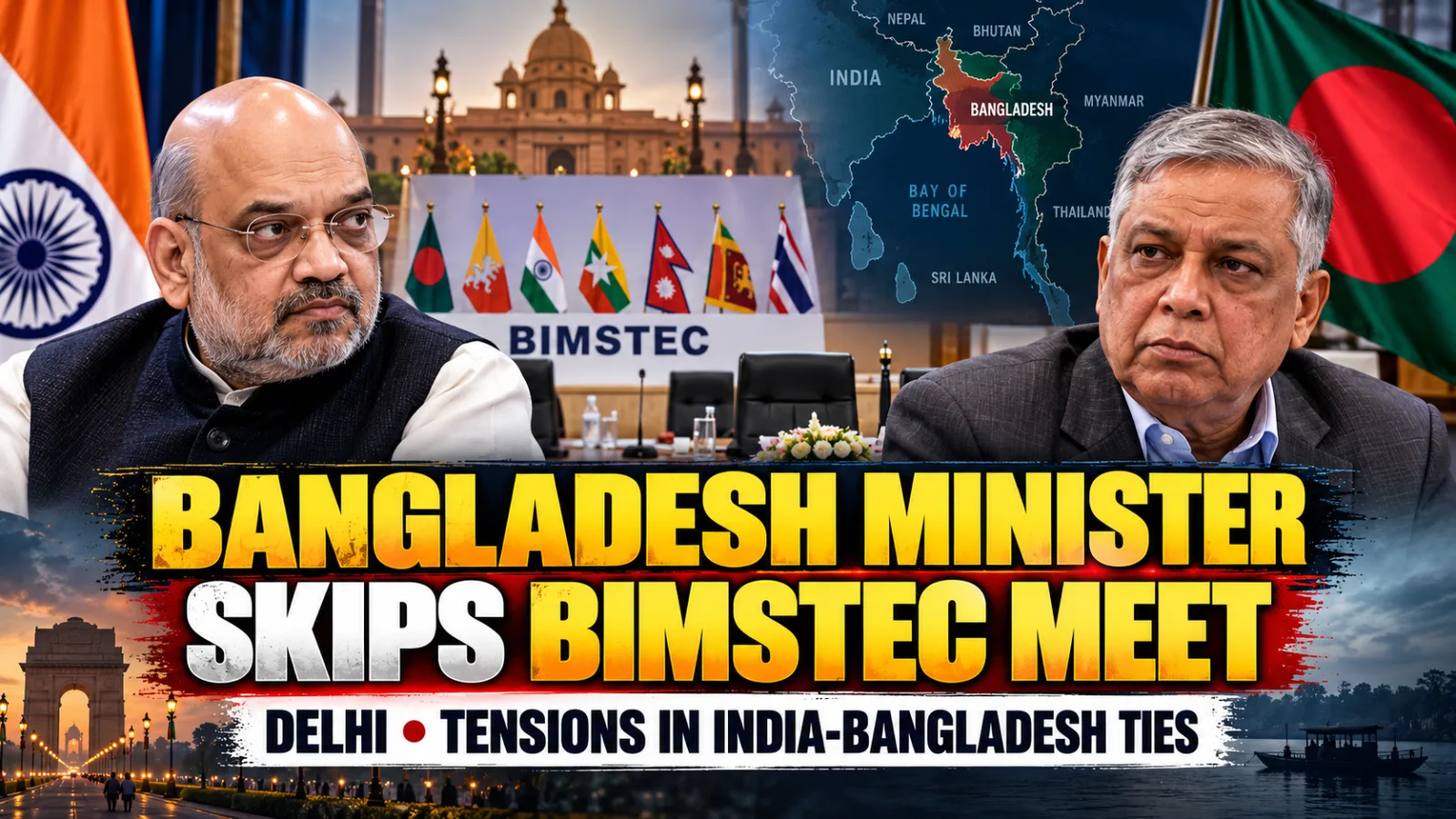
Her remarks come after Bangladesh Home Minister Salahuddin Ahmed skipped the first BIMSTEC home ministers’ meeting in New Delhi on October 13, adding to scrutiny of Bangladesh’s diplomatic engagement with India.

Hasina Recalls Ziaur Rahman’s 1979 India Visit
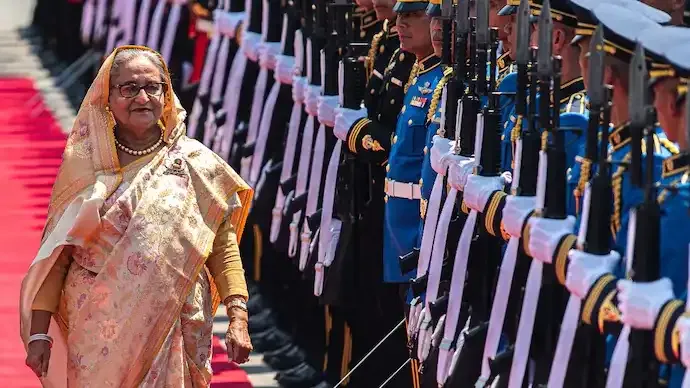
Hasina, who has lived in India since August 2024, recalled that Ziaur Rahman visited New Delhi in 1979, when she was in exile following the assassination of her father, Sheikh Mujibur Rahman, and several members of her family in 1975.
She also cited Ziaur Rahman’s visit to London in 1980, when she was living there. Hasina argued that her presence in either city had not prevented him from travelling.
She described Bangladesh’s decision to stay away from the BRICS gathering as contrary to the country’s national interests and criticised what she viewed as the use of diplomatic engagement for political messaging.
Why Tarique Rahman Skipped the BRICS Summit
India hosted the BRICS Summit in New Delhi on September 12–13, 2026. Prime Minister Narendra Modi invited Tarique Rahman to its outreach session in his capacity as chair of BIMSTEC, the regional grouping led by Bangladesh on a rotational basis.
Dhaka questioned whether the invitation was extended to Rahman as Bangladesh’s prime minister or specifically as BIMSTEC chair. Bangladesh’s foreign affairs leadership indicated that Rahman’s first visit to India should be a bilateral one, undertaken when the timing was appropriate.
India maintained that Rahman had received an invitation to the BRICS outreach session and a separate bilateral invitation. Bangladesh did not send a government delegation to the summit.
Bangladesh’s Absences Deepen Diplomatic Questions
The diplomatic disagreement continued into October, when Home Minister Salahuddin Ahmed did not attend BIMSTEC’s first home ministers’ meeting in New Delhi. Bangladesh instead sent a delegation led by Home Ministry Senior Secretary Manzur Morshed Chowdhury.
The meeting addressed regional security issues, including counterterrorism, cross-border crime, intelligence cooperation and trafficking.
Relations between India and Bangladesh deteriorated after Hasina’s government fell amid protests in August 2024. Dhaka has sought her extradition, while Hasina has rejected the criminal proceedings against her as politically motivated. Bangladesh has also linked the political atmosphere surrounding her presence in India to the prospects for Rahman’s visit.
Hasina’s latest remarks underline the continuing challenge for both countries: maintaining regional cooperation while navigating disputes over her exile, extradition and the political future of bilateral relations.
For official regional cooperation information, visit the BIMSTEC Secretariat.





Conversation
Be kind and stay on topic. Comments are moderated; abuse, spam and personal attacks are removed. Report a problem