

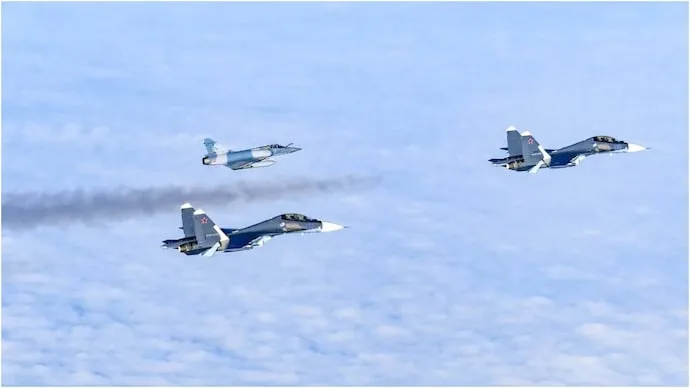

South Korea air raid alert measures were activated on Tuesday, November 24, after multiple Russian military aircraft entered the country's Air Defence Identification Zone (ADIZ) off its eastern coast, prompting the military to scramble fighter jets. South Korea's Joint Chiefs of Staff said the Russian aircraft did not enter its sovereign airspace and later left the zone.
According to a statement from the Joint Chiefs of Staff, South Korean forces were tracking the Russian aircraft as they approached the identification zone. Air Force fighter jets were deployed and carried out tactical manoeuvres to prevent any potential incident.
The military clarified that the incident did not involve an intrusion into South Korean airspace. An Air Defence Identification Zone is an area designated by a country to help identify and respond to aircraft approaching its national airspace. Entry into an ADIZ does not automatically mean that a country's sovereign airspace has been violated.

Brief Evacuation Warning Issued for Ulleung Island
Earlier on Tuesday, South Korea's safety ministry issued an evacuation warning for Ulleung Island, located off the country's eastern coast. The alert initially stated that a Russian aircraft had entered South Korean airspace.
However, the warning was withdrawn just three minutes after it was issued.
Yonhap News Agency reported that the local government had briefly issued a warning about a possible North Korean aircraft near the Ulleung area in error. The alert was subsequently cancelled.
The conflicting information surrounding the warning came as South Korea's military was monitoring Russian aircraft operating near its eastern air defence identification zone.
No Airspace Violation Reported
South Korea's Joint Chiefs of Staff maintained that the Russian military aircraft did not cross into the country's sovereign airspace. The fighter jets were scrambled as a precautionary measure while the aircraft were inside the identification zone.
The military's statement did not provide further details about the number or types of Russian aircraft involved, or how long they remained in the zone.
Relevant Link: South Korean Ministry of National Defense
Editorial note: The supplied image URL points to a graphic about Russian jets and Estonian airspace, not the South Korea incident. The image should be replaced with a relevant photograph. Also, the headline's phrase “air raid alert” may overstate the incident: the source describes a brief evacuation warning that was withdrawn, alongside a military response to aircraft entering the ADIZ.







Conversation
Be kind and stay on topic. Comments are moderated; abuse, spam and personal attacks are removed. Report a problem