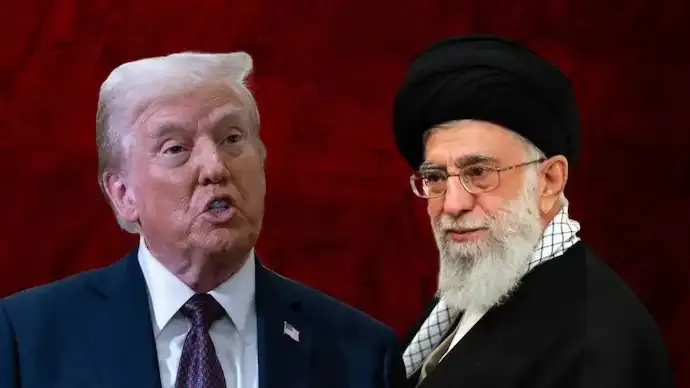
The United States has announced a sweeping new trade measure targeting countries that maintain commercial ties with Iran, escalating economic pressure amid intensifying unrest inside the Islamic Republic. US President Donald Trump said Washington will impose a 25 per cent tariff on all trade with any country that does business with Iran, with the decision taking effect immediately.
The announcement was made through Trump’s social media platform, where he declared the move “final and conclusive,” offering no details on implementation, enforcement mechanisms, or potential exemptions. The decision significantly raises the stakes for global trade partners with economic links to Iran, many of whom also maintain extensive commercial relationships with the United States.
According to Trump’s statement, the tariff will apply broadly to “any and all business being done with the United States” by countries engaging economically with Tehran. The lack of clarity around sector-specific exemptions, humanitarian trade, or energy-related transactions has triggered uncertainty across global markets.
Global Trade Impact Likely
The move could disrupt major trading relationships, particularly for countries such as India, China, Turkey and the United Arab Emirates, all of which have varying degrees of trade, energy or logistics exposure to Iran. Analysts warn that a blanket tariff approach could complicate supply chains, raise costs for importers, and invite retaliatory trade measures.
The announcement comes at a time when Iran is facing its most serious internal unrest in years. International human rights organisations have reported that more than 600 people have been killed during weeks of protests and security crackdowns. Iranian authorities have not released an official death toll, instead blaming violence on what they describe as foreign-backed groups.
Tehran has accused the United States and Israel of interfering in its internal affairs, claims Washington has repeatedly denied. Iranian state media has largely highlighted casualties among security forces while downplaying civilian deaths.
Calls for Harder Action in Washington
The tariff announcement followed increasingly aggressive rhetoric from senior US lawmakers. Republican Senator Lindsey Graham publicly urged Trump to take stronger action against Iran’s leadership, suggesting targeted military strikes without deploying ground troops.
In a social media post addressed directly to the US President, Graham praised the administration’s economic pressure campaign and argued that Iran’s leadership had crossed “red lines” by using force against protesters. He called for decisive action against individuals responsible for the crackdown, echoing Trump’s confrontational tone.
Diplomacy Still an Option, Says White House
Despite the sharp escalation, the White House has insisted that diplomatic channels remain open. Press officials said Washington continues to receive private messages from Tehran that differ from Iran’s public statements.
Trump himself suggested that negotiations were still possible, claiming that Iranian representatives had reached out to explore talks, even as economic and military pressure mounts.
Iranian officials have also acknowledged ongoing communication with US counterparts, though they have criticised Washington’s approach as contradictory. Tehran has warned that continued pressure could further destabilise the region.
Rising Tensions, Uncertain Outcomes
The new tariff order marks one of the most aggressive economic moves taken by Washington against Iran-linked trade in recent years. With no enforcement roadmap disclosed and global supply chains deeply interconnected, the real-world impact of the policy remains uncertain.
As protests continue across Iran and diplomatic efforts struggle to gain traction, the standoff between Washington and Tehran appears set to intensify, with economic fallout extending far beyond the two countries involved.
Prev Article
Donald Trump Mocks Greenland’s Defences, Pushes US Acquisition Amid China, Russia Fears
Next Article
Germany Visa-Free Transit for Indians: What It Means for Indian Passport Holders