Shopping cart
Your cart empty!


Your cart empty!
Terms of use dolor sit amet consectetur, adipisicing elit. Recusandae provident ullam aperiam quo ad non corrupti sit vel quam repellat ipsa quod sed, repellendus adipisci, ducimus ea modi odio assumenda.
Lorem ipsum dolor sit amet consectetur adipisicing elit. Sequi, cum esse possimus officiis amet ea voluptatibus libero! Dolorum assumenda esse, deserunt ipsum ad iusto! Praesentium error nobis tenetur at, quis nostrum facere excepturi architecto totam.
Lorem ipsum dolor sit amet consectetur adipisicing elit. Inventore, soluta alias eaque modi ipsum sint iusto fugiat vero velit rerum.
Sequi, cum esse possimus officiis amet ea voluptatibus libero! Dolorum assumenda esse, deserunt ipsum ad iusto! Praesentium error nobis tenetur at, quis nostrum facere excepturi architecto totam.
Lorem ipsum dolor sit amet consectetur adipisicing elit. Inventore, soluta alias eaque modi ipsum sint iusto fugiat vero velit rerum.
Dolor sit amet consectetur adipisicing elit. Sequi, cum esse possimus officiis amet ea voluptatibus libero! Dolorum assumenda esse, deserunt ipsum ad iusto! Praesentium error nobis tenetur at, quis nostrum facere excepturi architecto totam.
Lorem ipsum dolor sit amet consectetur adipisicing elit. Inventore, soluta alias eaque modi ipsum sint iusto fugiat vero velit rerum.
Sit amet consectetur adipisicing elit. Sequi, cum esse possimus officiis amet ea voluptatibus libero! Dolorum assumenda esse, deserunt ipsum ad iusto! Praesentium error nobis tenetur at, quis nostrum facere excepturi architecto totam.
Lorem ipsum dolor sit amet consectetur adipisicing elit. Inventore, soluta alias eaque modi ipsum sint iusto fugiat vero velit rerum.
Do you agree to our terms? Sign up
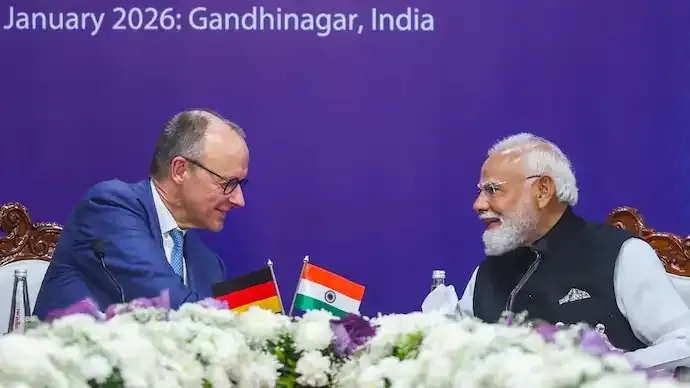
Germany has announced a visa-free airport transit facility for Indian passport holders, a move set to significantly ease international travel and deepen people-to-people ties between the two countries. Under the new policy, Indian travellers transiting through German airports on their way to a third country will no longer be required to obtain a separate transit visa, reducing paperwork, waiting time and travel uncertainty.
The decision was confirmed in a joint India–Germany statement issued following German Chancellor Friedrich Merz’s official visit to India from January 12 to 13. This marked Merz’s first visit to India and his first official visit to Asia since assuming office. The announcement was made after high-level discussions with Prime Minister Narendra Modi, reflecting growing strategic and diplomatic alignment between New Delhi and Berlin.
In practical terms, the visa-free transit arrangement allows Indian passengers to change flights at German airports without applying for a transit visa, provided they do not exit the international transit area. Germany is a major aviation hub in Europe, with airports such as Frankfurt and Munich serving as key gateways for long-haul travel to North America, Latin America and parts of Europe.
The move is expected to benefit Indian students, professionals, tourists and business travellers who frequently use German airports as stopover points. It also aligns Germany with several other European countries that have eased transit norms for Indian nationals in recent years.
Prime Minister Modi welcomed the announcement, describing it as a step that would facilitate smoother mobility and strengthen people-to-people connections. The joint statement emphasised that human exchanges form a core pillar of the India–Germany Strategic Partnership.
Both sides acknowledged the growing presence of Indian students, researchers, skilled professionals, artists and entrepreneurs in Germany and highlighted the contribution of the Indian community to Germany’s economy, innovation ecosystem and cultural life. The leaders agreed that easier travel would further encourage academic collaboration, tourism and professional exchanges.
Education emerged as a major focus area during the talks. India and Germany noted the rising number of Indian students enrolling in German universities, particularly in engineering, technology and applied sciences. The two countries welcomed the expansion of joint and dual-degree programmes and closer institutional collaboration between Indian Institutes of Technology and German technical universities.
Both leaders agreed to develop an Indo-German Comprehensive Roadmap on Higher Education, aimed at strengthening cooperation in research, innovation and vocational training. PM Modi also invited leading German universities to establish campuses in India under the National Education Policy, signalling India’s intent to internationalise its higher education sector.
The visa-free transit decision is being viewed as more than a travel facilitation measure. Analysts see it as a symbolic trust-building step that reflects Germany’s confidence in India as a long-term strategic partner. Coming amid broader cooperation in trade, clean energy, technology and security, the move reinforces the momentum in bilateral relations.
As global mobility norms evolve, Germany’s decision places India among a select group of countries whose travellers enjoy simplified transit access, further underlining the strengthening diplomatic and people-centric ties between the two nations.
65
Published: Jan 13, 2026

All India Story is your trusted source for comprehensive and up-to-the-minute news coverage across India. Bringing you the latest on politics, business, technology, entertainment, sports, and more, we are dedicated to keeping you informed with accurate, engaging, and insightful stories from every corner of the nation.