Shopping cart
Your cart empty!


Your cart empty!
Terms of use dolor sit amet consectetur, adipisicing elit. Recusandae provident ullam aperiam quo ad non corrupti sit vel quam repellat ipsa quod sed, repellendus adipisci, ducimus ea modi odio assumenda.
Lorem ipsum dolor sit amet consectetur adipisicing elit. Sequi, cum esse possimus officiis amet ea voluptatibus libero! Dolorum assumenda esse, deserunt ipsum ad iusto! Praesentium error nobis tenetur at, quis nostrum facere excepturi architecto totam.
Lorem ipsum dolor sit amet consectetur adipisicing elit. Inventore, soluta alias eaque modi ipsum sint iusto fugiat vero velit rerum.
Sequi, cum esse possimus officiis amet ea voluptatibus libero! Dolorum assumenda esse, deserunt ipsum ad iusto! Praesentium error nobis tenetur at, quis nostrum facere excepturi architecto totam.
Lorem ipsum dolor sit amet consectetur adipisicing elit. Inventore, soluta alias eaque modi ipsum sint iusto fugiat vero velit rerum.
Dolor sit amet consectetur adipisicing elit. Sequi, cum esse possimus officiis amet ea voluptatibus libero! Dolorum assumenda esse, deserunt ipsum ad iusto! Praesentium error nobis tenetur at, quis nostrum facere excepturi architecto totam.
Lorem ipsum dolor sit amet consectetur adipisicing elit. Inventore, soluta alias eaque modi ipsum sint iusto fugiat vero velit rerum.
Sit amet consectetur adipisicing elit. Sequi, cum esse possimus officiis amet ea voluptatibus libero! Dolorum assumenda esse, deserunt ipsum ad iusto! Praesentium error nobis tenetur at, quis nostrum facere excepturi architecto totam.
Lorem ipsum dolor sit amet consectetur adipisicing elit. Inventore, soluta alias eaque modi ipsum sint iusto fugiat vero velit rerum.
Do you agree to our terms? Sign up
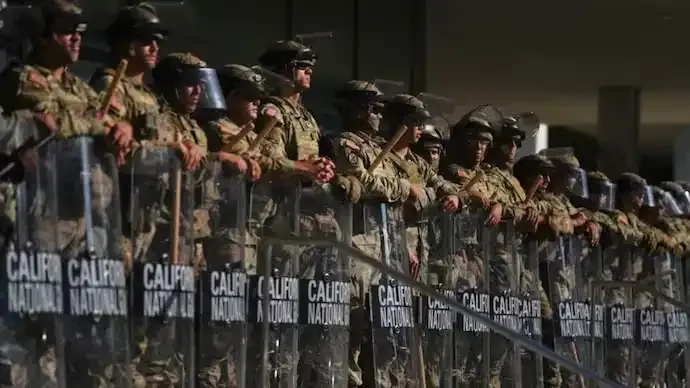
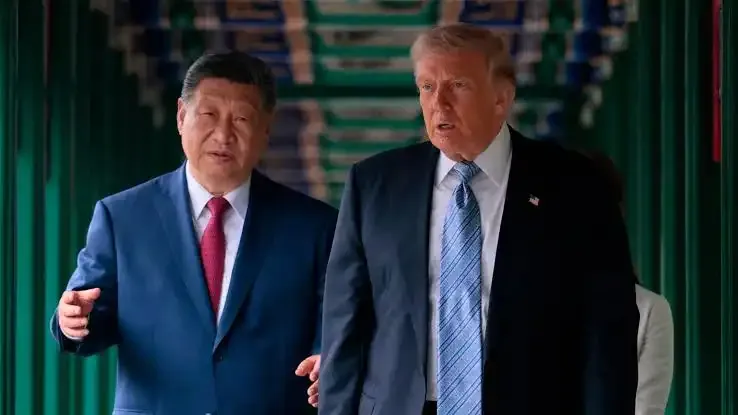
US President Donald Trump has ordered the withdrawal of National Guard troops from three major American cities—Los Angeles, Chicago, and Portland—bringing an end to a controversial federal deployment that sparked prolonged legal and political disputes with local authorities. The announcement was made on January 1, with Trump cautioning that federal forces could be sent back if crime levels rise again.
In a statement shared on his social media platform, Trump claimed that the presence of National Guard troops had contributed to a reduction in crime in the three cities. He argued that the withdrawal was being carried out despite what he described as positive outcomes from the deployments. At the same time, he issued a warning that the federal government would not hesitate to return with greater force should conditions worsen.
The troop deployments had been a major flashpoint between the White House and Democratic-led city and state governments. Leaders in Los Angeles, Chicago, and Portland consistently opposed the presence of National Guard forces, arguing that local law enforcement agencies were capable of handling public order and crime without federal intervention. Mayors and governors from these regions accused the Trump administration of using the Guard for political messaging rather than public safety.
According to city officials, the federal government exaggerated isolated incidents of violence during largely peaceful protests to justify the deployments. The presence of troops, they said, escalated tensions on the ground and undermined trust between communities and law enforcement. Several local governments filed lawsuits challenging the legality of the federal action, arguing that it amounted to unconstitutional overreach.
The matter soon moved into the courts, where judges repeatedly ruled against the administration. In multiple decisions, courts found that the federal government failed to demonstrate an imminent threat to federal property or personnel that would warrant the deployment of National Guard troops. Judges also noted the lack of evidence supporting claims that local authorities had lost control of public order in the affected cities.
Trump has consistently defended his decision, maintaining that the deployments were necessary to curb crime and protect federal buildings. He has accused local leaders of failing to maintain law and order and has framed the use of federal forces as a last resort. However, court rulings and publicly available crime data have frequently contradicted assertions of surging violence.
The deployments first began in June, amid nationwide protests triggered by Trump’s hardline immigration policies, including expanded deportation measures. Demonstrations spread across multiple cities, prompting the administration to send federal forces not only to Los Angeles, Chicago, and Portland, but also to Washington, DC. In the capital, Trump temporarily asserted federal control over local law enforcement, again citing concerns over crime.
In recent months, the scope of the deployments had already been reduced as legal challenges placed the missions in uncertainty. The latest order formalises the drawdown and effectively ends the National Guard’s presence in the three cities, at least for now.
Despite the withdrawal, Trump’s warning of potential redeployment signals that tensions between the federal government and Democratic-led cities over public safety, policing, and federal authority are likely to persist well into 2026.
166
Published: Jan 01, 2026

All India Story is your trusted source for comprehensive and up-to-the-minute news coverage across India. Bringing you the latest on politics, business, technology, entertainment, sports, and more, we are dedicated to keeping you informed with accurate, engaging, and insightful stories from every corner of the nation.