
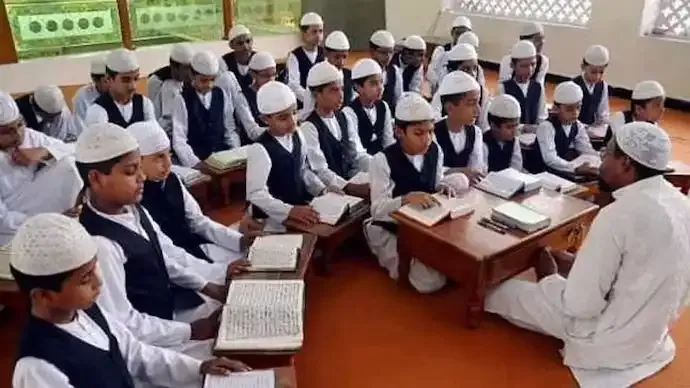
Thousands of madrassa students in Uttar Pradesh are reassessing their academic futures after the Supreme Court struck down the state madrassa board’s authority to award Kamil (UG-equivalent) and Fazil (PG-equivalent) degrees. The ruling, delivered on November 5 last year, held that the practice violated the University Grants Commission (UGC) Act, which reserves degree-granting powers exclusively for universities.
The verdict has left nearly 32,000 students uncertain about their next steps, prompting many to explore conventional university programmes.
A System in Transition
Madrassa education follows a structured hierarchy—Munshi and Maulvi (Class 10 and 12 equivalents), followed by Kamil and Fazil levels focusing on Islamic theology and Arabic. While these qualifications are widely recognised within religious institutions, students aiming for mainstream careers typically shift to BA or MA programmes for broader academic mobility.
Students Face Academic Disruptions
Individual cases highlight the scale of disruption:
-
Saqlain Raza, a Fazil first-year student from Varanasi, said he must now pivot to pursuing a BA and later an MA, though much of his previous academic effort may not count.
-
Ghulam Masih, a Kamil first-year student in Siddharthnagar, plans to seek university enrolment but hopes for a legal remedy through a pending petition seeking affiliation of madrassa students with Khwaja Moinuddin Chishti Language University.
-
Mohammad Saad Nizami from Mau district said his studies halted after his February 2024 exam, costing him nearly 18 months. Without government intervention, he fears he may be forced to drop out entirely.
Government and Court Responses
Uttar Pradesh Minister of State for Minority Welfare Danish Azad Ansari said the government is working on a solution and assured that teachers employed in aided madrassas would not lose their positions despite the derecognition of their degrees.
Meanwhile, the Teachers’ Association Madaris-e-Arabia has moved the Supreme Court seeking university affiliation for madrassa students so their examinations and degrees can be regularised. The court has sought responses from the state government, UGC, and the madrassa board.
Debate Over Standards and Affiliation
Not everyone supports mid-session affiliation.
BJP minority morcha president Kunwar Basit Ali argued that madrassa syllabi for Kamil and Fazil do not meet university standards and suggested fresh admissions instead.
Madrassa teachers, however, warn that most students are from economically weaker families and cannot afford high private university fees, calling for a state-supported solution.
With legal deliberations underway, students await clarity on a path forward that preserves their academic years and future prospects.


Conversation
Be kind and stay on topic. Comments are moderated; abuse, spam and personal attacks are removed. Report a problem