The killing of radical leader and Dhaka-8 candidate Sharif Osman Hadi has plunged Bangladesh into political uncertainty just months ahead of its February elections. While emotions remain high and investigations inconclusive, analysts argue that neither the banned Awami League nor the opposition BNP stands to gain meaningfully from the murder. Instead, the incident appears to advantage extremist factions that thrive on instability, fear and electoral disruption.
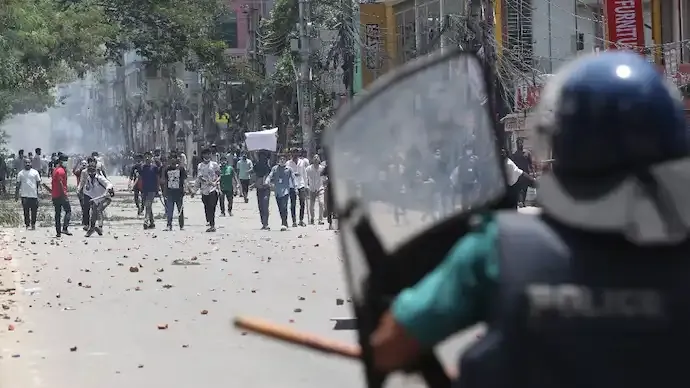
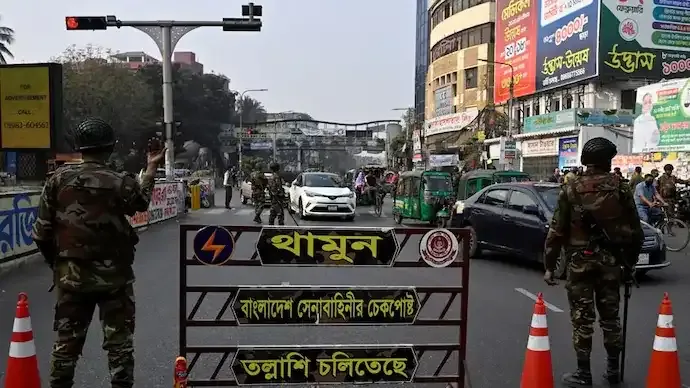
Hadi, a spokesperson of the anti-Hasina platform Inquilab Mancha, was shot dead by bike-borne assailants on December 12 in Dhaka. Since then, the murder has been leveraged by radical groups to amplify communal tension and anti-India rhetoric, even as police admit they have no confirmed leads on the shooter’s whereabouts.
Why Awami League and BNP gain little
Political observers note that the now-banned Awami League has little incentive to destabilise an election it is barred from contesting. The Bangladesh Nationalist Party (BNP), meanwhile, is widely viewed as the frontrunner in the upcoming polls.
In Dhaka-8 specifically, BNP heavyweight Mirza Abbas is contesting the seat, making Hadi—an independent candidate—politically insignificant in comparison. Analysts argue that removing Hadi does not alter BNP’s electoral calculus in any substantial way.
Focus shifts to Islamist groups
Experts instead point towards Jamaat-e-Islami and its student wing Islami Chhatra Shibir as indirect beneficiaries of the chaos following Hadi’s death.
Geopolitical analyst Nahid Helal has argued that the killing created an opportunity to derail the electoral process, intimidate minorities, attack media institutions and weaken mainstream political actors. He noted that Jamaat-linked candidates were also eyeing Dhaka-8, and the removal of a radical independent candidate reshaped the contest in their favour.
Security researcher Raja Muneeb echoed this view, stating that extremist groups—not traditional parties—tend to gain from targeted killings that heighten fear and uncertainty ahead of elections.
Allegations deepen suspicion
The controversy intensified after BNP leader Nilofer Chowdhury Moni alleged that Mohammad Shishir Monir, a Jamaat-e-Islami leader and Supreme Court lawyer, had twice secured bail for Faisal Karim, the man accused of shooting Hadi, prior to the attack.
While Jamaat leaders have denied involvement, the allegations have further fuelled speculation about internal extremist rivalries and political manipulation.
Anti-India narrative and unrest
Following Hadi’s death, radical groups accused India of harbouring the shooter—claims repeatedly denied by Dhaka police due to lack of evidence. Despite this, protests targeted Indian diplomatic missions, worsening bilateral tensions.
Former Indian diplomat Veena Sikri has warned that Islamist groups may be acting with external encouragement, exploiting Bangladesh’s fragile political transition under the interim administration led by Muhammad Yunus.
Who really gains?
Taken together, expert assessments suggest that the real beneficiaries of Osman Hadi’s killing are radical and Islamist factions seeking to destabilise Bangladesh’s political environment rather than participate in a conventional electoral contest. The murder has created space for fear-driven mobilisation, communal polarisation and challenges to the legitimacy of the upcoming polls.
As Bangladesh moves closer to its elections, the unresolved killing underscores how political violence continues to be used as a tool—not to win votes—but to undermine democracy itself.